



Introduction
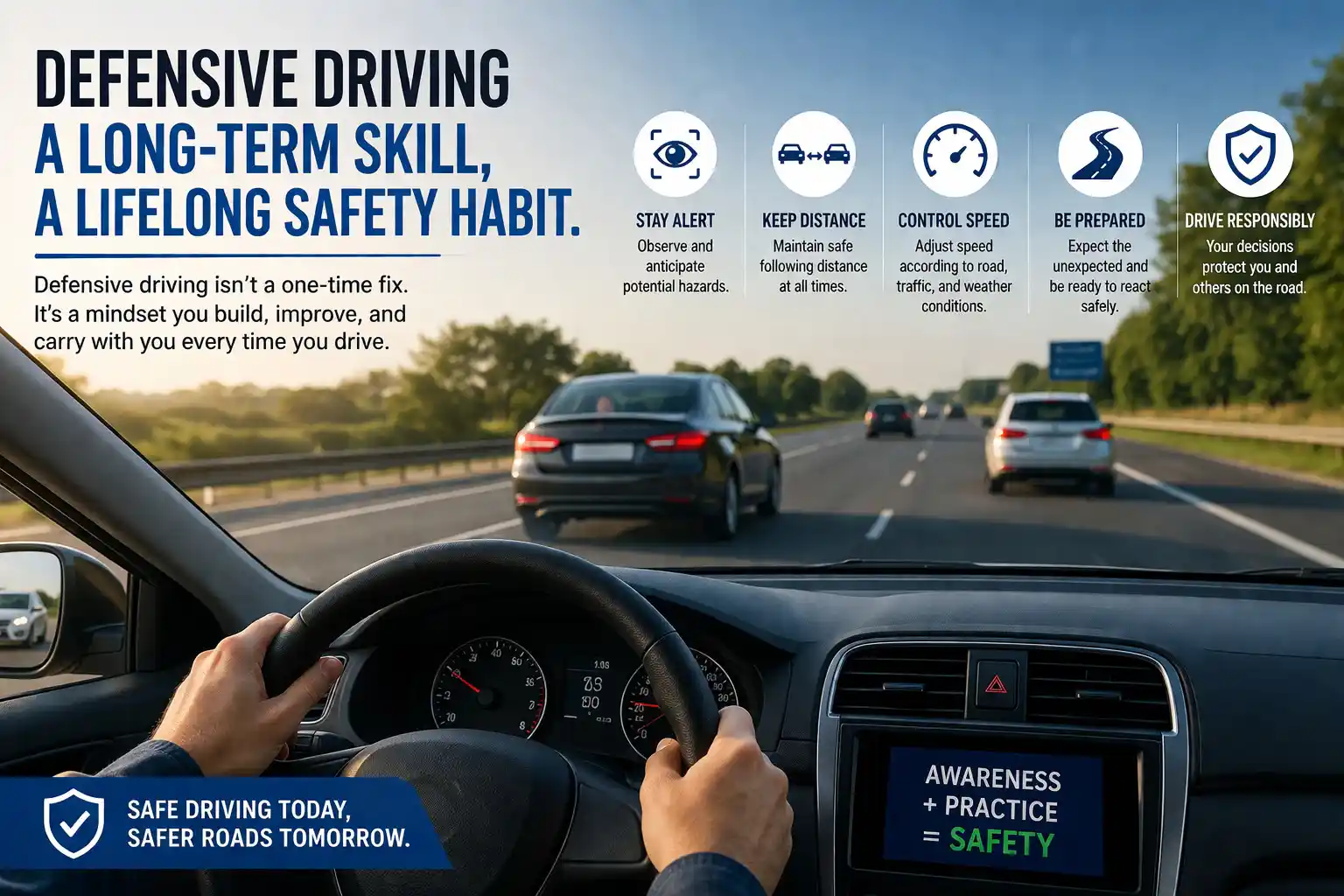
Do you learn defensive driving all at once, or do you keep getting better? When traffic safety can be much better with a long term skill solution like Defensive Driving than most of us know. This is not something that can be learned in a day (or even probably a week), but it is rather a habit that becomes formed over time through vigilance and practice.
Driver training in Hyderabad and defensive driving are even more important however, as urban center have the best amount of complex traffic conditions. The nature of driving makes it hard to have one solution to all problem, making drivers face unpredictable situations every day for which they need to learn continuously.
What is Defensive Driving?
Defensive driving is a collection of skills and techniques that anticipate potential problems, helping drivers respond safely. Not only does it exceed standard driving knowledge, but centers around awareness, patience, and making decisions before risky situations arise.
Defensive drivers are eyes and ears open at all times rather than reacting last second to events. They keep their distance, scan the environment continuously, and adjust when conditions on the roadway change.
This is the first step to knowing what defensive driving is and why you cannot just fix it once.
6 Defensive Driving is Not a One-Time Fix
Driving conditions are constantly changing. Traffic flows, road networks and driver behavior change over time. For this reason, a single lesson or short training sessions cannot equip a driver for every circumstance.
The skills you learn in your training need to be practiced frequently for them to become automatic. Even evidence based techniques you learn well will wither in application if not regularly used.
Which is why, as a skill more than just for now, defensive driving is so important. It is not a one-time thing, it needs to be improved and adjusted constantly.
2) Experience Matters when it Comes to Defensive Driving
Defensive driving skills are largely a function of experience. When drivers come across various road settings, they get edified on how to tackle them in a little more instrumental way.
There are several times during which the teachers–of nature or life, if you will–will impart lessons that cannot often be taught in a classroom, such as sudden braking when not ready for it, heavy traffic from work end or bad weather over the course of our daily commutes. These experiences are confidence-building and lead to quicker reactions over time.
But experience by itself is not enough. But it needs to be paired with appropriate direction and cognition to avoid dangerous driving behavior.
Continuous Learning and Skill Development
Defensive driving is like any other skill—it gets better with practice. Actually, regular driving and the will to try following safety techniques help build up on good habits.
It is to reevaluate how you behave on the roads. Improvements over time, such as smoother braking and more effective mirror use lead to safer driving.
Therefore, by keeping the renewed knowledge unparalleled and up to date, this approach of ongoing learning makes defensive driving a life-long process rather than an occasional event.
Adapting to Modern Traffic Conditions
More cars and updated road infrastructure create a situation where driving now needs far more attention than ever before. Advanced skills are required to navigate new challenges including the distractions of texting while driving, fast moving traffic beyond that which we have experienced and complex intersections yet to be seen today.
This means that defensive driving has to keep up with these conditions. Must Keep Learning: Just as pedestrians, drivers need to stay current with rules, tech and best practices.
And this adaptability further strengthens the case for defensive driving being a long-term habitual behaviour.
Building Safer Driving Habits
Habits are formed through repetition. Defensive driving techniques become automatic behaviors when put to practice before.
For instance, looking at mirrors before changing lanes, or keeping safe distance; they become muscle memory after some time. These habits are proven to lower the risk of accidents immensely.
These habits take time to build and cannot be learned in a single class.
Role of Professional Training
This is where skilled driving schools come in, which do much for the groundwork of preventive managerial ability. The structured lessons allow drivers to learn the correct techniques and apply them in real-life situations.
An all-weather driving simulator provides utilities used by car forensics. But casA a practical defensive driving school, teaches practical skills that can be practiced every day on the street — anything from turning to braking strategies or avoid collision, A ground-driving in accident avoidances and controlled skid.) The way they go about the things helps instil awareness and confidence into the learner behind the wheel.
Initial training is good, but the true value comes from practicing these skills over time.
Long-Term Benefits of Defensive Driving
Thinking about defensive driving as a lifelong skill has a number of advantages. The feature reduces the risk of accidents, increases confidence and generally makes driving more efficient.
Those who employ defensive driving repeatedly are more likely to be prepared if a sudden event occurs. They are also better controlled and composed in times of stress.
In the long run, this creates safer roads and a more responsible attitude to driving.
Conclusion
Is defensive driving a sprinkle of pixie dust or is it a long term skill we should all know? Defensive driving as such in long term is a must-have skill for every driver. The goal is not what you learn once and forget about, but an ongoing process of improving and adapting.
If one is trained properly from any such institute like Onroad Motor Driving School and keeps up the practice, they would build strong defensive habits for a lifetime. But with the ever-changing traffic conditions, making a long term investment in your driving skills is not just beneficial but essential for your safety and peace of mind on the road.