



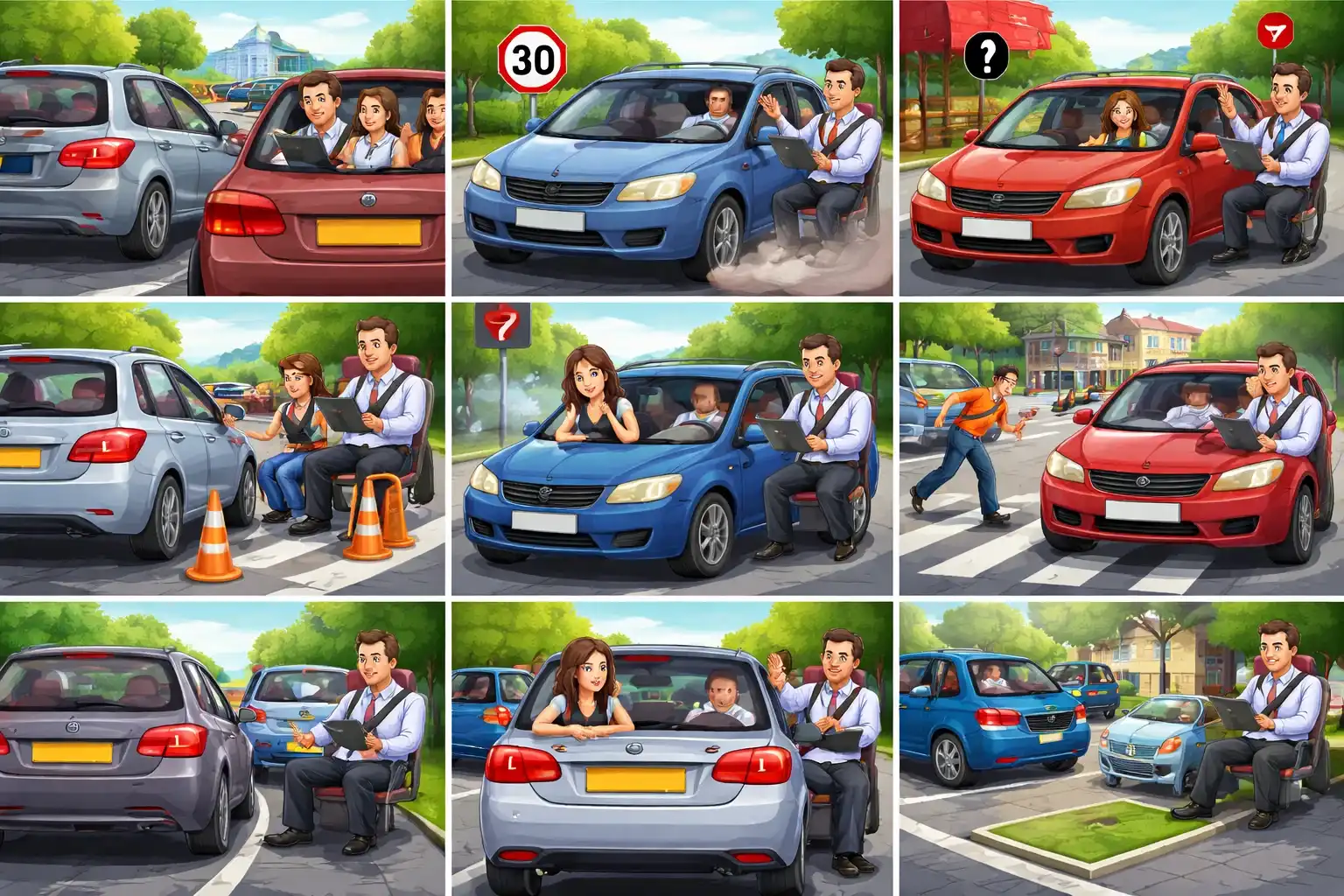
Why the Driving Test May Not Have Been Passed
Driving test is an important activity in getting permanent driving license in India. Most students feels very confident before the test, but after a test an error becomes apparent which seems to be a small mistake is resulting in failure. And when you are preparing for the driving test in a city like Delhi, where the roads are complex and examiners are much strict about safety measures, preparation becomes all the more necessary.
The number of persons who fail the driving test is not that they do not possess a basic knowledge of driving, but because they are nervous, too confident or have little knowledge about traffic discipline. Many learners are looking for driving school near me ministry approved to make sure they don’t fail first time. Appropriate coaching, systematic training and knowledge of popular errors can all help.
Proper Observation and The Use Of Mirrors
The most frequent error made by students is a lack of regular mirror and blind spot observation. Examiners pay close attention to checking the rear-view and side mirrors, prior to changing lanes, making a turn or stopping. To be absent with the mirrors shows you have little roadcraft.
Driving isn’t solely an exercise in controlling the car- it’s about being tuned into the traffic around you every second. Regular use of mirror demonstrates maturity and a sense of responsibility which examiners believe new drivers should possess.
Poor Clutch and Gear Control
Another common reason for failing the test is due to poor clutch control, particularly with regards to manual cars. Jerks, stalling of engine or wrong gear shifts prove lack of practice. In Delhi’s driving test tracks the precision clutch release and gears-up-shift are minutely judged.
Most learners will stall when doing hill starts or negotiating tight spots. Practicing professionally under these experienced teachers helps contribute to eliminating such problems and building good muscle memory.
Ignoring Traffic Signs and Signals
Slavish adherence to traffic signs and road markings is expected of candidates. Failing to stop at a stop line, running a light or failing to yield when you’re supposed to will get you instantly disqualified.
The learner driver phase is the time in which you first learn road signs, however not many candidates brush up before their driving test. Confident application is firmly supported by strong theory.
Incorrect Steering Control
Improper steering, particularly when turning and in reverse, is a common mistake. Too much crossing of hands, overdriving or underdriving may compromise the stability and indicate lack of control.
The smoothness of the steering action is assessed during the test. Regular use in tight spaces increases turning accuracy and overall vehicle control.
Faulty Parking and Reverse Driving
Fear spots when they are learning to drive and all this double reverse parking or doing parallel park. Getting the distance wrong, not being straight, or coming into contact with boundary lines can mean game over.
Reverse tests are common in Delhi where applicants reverse on tracks. Repetition has the effect of reducing anxiety and increasing accuracy when you practice in similar conditions. Those trainees taking more formal training usually do better in these areas.
Not Using Indicators Properly
Just not using indicators when turning or changing direction, how hard is that? Even when no other cars are nearby, examiners will require you to signal.
Signs express intent and are a safety measure. Revising, they say, shows a lack of mastery on the rules of traffic.
Driving Too Fast or Too Slow
Another segment that a lot of learners have difficulty with is the speed control. Too fast is reckless and way too slow gives an impression of lack of confidence.
Driving at a steady / suitable speed for the conditions is a sign of maturity. Judges are looking to see if you have control, while safely moving around.
Nervousness and Lack of Confidence
Anxiety affects performance significantly. Some students get things wrong they would never get wrong during practice times. Sweaty palms, rash judgments and second thoughts can add stress to a good drive.
Confidence is built through repetition and simbolic help. Most people search for the best driving school near me to get trained under supervision and keep on practicing till you gain confidence to appear for your RTO test.
Poor Lane Discipline
Lane discipline is heavily regulated in the road test. Swerving, switching lanes without signaling and tailgating are among the most common culprits.
Examiners consider whether you understand about riding in the right place on the road and leaving enough room from other vehicles. Good habits while driving from the start is easier to be inculcated with proper training session.
Incomplete Vehicle Checks Before Starting
Examiners also look for students making mirror adjustments, putting on their seatbelts and sitting correctly before driving. That is carelessness to overlook these simple steps.
It starts calmly and systematically; this signals preparation. Setting mirrors to the right positions and buckling one’s seat belt before switching on engines should become an established pattern, as well as a routine.
The Role of Structured Learning Behind The Wheel behind-the-wheel-training_STRUCTURED-LEARNING-FOR-DRIVING
Self-practice is worthwhile, but instruction perfects a technique and fosters road sense. Onroad Motor Driving School, from Delhi has been training students with formal driving lessons to develop good and safe driving practice for safety on road, confidence and updated traffic road regulations. As a result, learners are brought up with the would-be driving exam on their heads, not driving proper for life.
When research options, most of the candidates query online for best driving school near me to locate schools that provide skilled & professional trainers, good quality vehicles and practical track practice in the same pattern as RTO tests.
Preparing for Success in 2026
The driving test in 2026 is open, high-tech driven but examiners still place safety and discipline first above all. Know your weak areas and make them strong by consciously and actively working to correct mistakes — it is as simple as that!
Practice, combined with learning road rules and in-control driving behavior provides a base upon which to build. The test is not just a license, but your ability to prove that you are ready to be on the road.
Conclusion
Small but avoidable mistakes are the most common reasons for failing driving tests. Each mistake, be it poor mirror use or bad clutch control, lack of confidence or lax lane discipline, divulges a deficit in preparation. Having the ability to identify these common concerns and acknowledge them while they are only potentially potential correlation between previous writers on the topic can drastically improve success ratios.
With the right attitude, practice, and focused support of learning as provided by Onroad Motor Driving School in Delhi, leaners can be sure they’re fully prepared to take their driving test and feel assured about what they’ve been practising. In the end, good driving habits formed in practice will benefit them long past they’ve gotten their full license.