



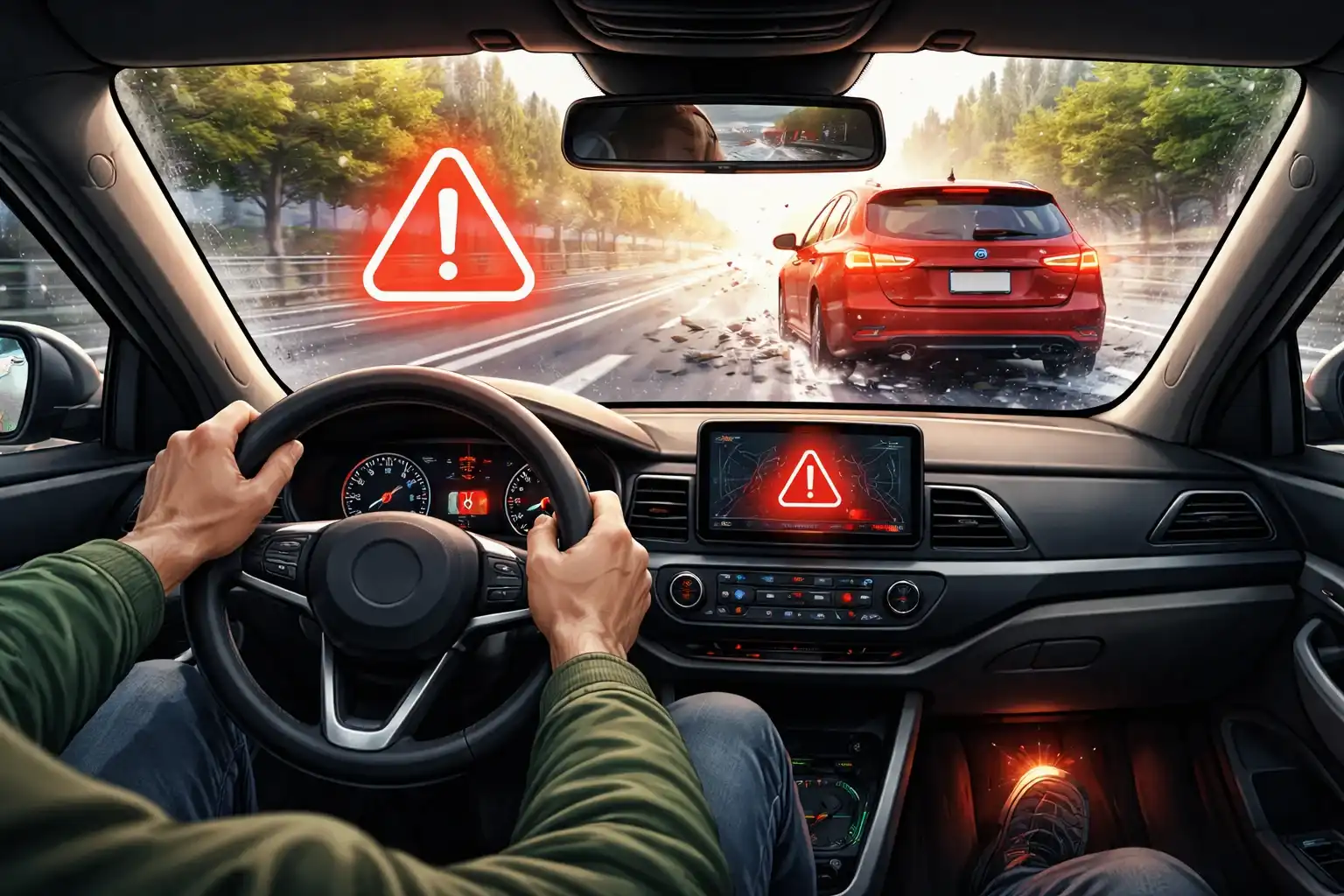
Needless to say, driving needs full focus and a split-second decision. Even the most experienced drivers can encounter unexpected situations, where sudden braking is required. For novice players, these situations can seem anxiety-inducing and convoluted. Nevertheless, knowing how to respond when faced with emergency braking can significantly minimize the likelihood of accidents and enhance your overall safety on the road.
Proper technique is a key element of driver education. A lot of learners joining driving classes in Delhi are also taught to remain calm and drive safely when they need an emergency brake.
Understanding Sudden Braking Situations
The philosophy behind sudden braking is that it happens when drivers need to immediately stop as they encounter a difficult location or the change of traffic. They can occur when a vehicle in front suddenly stops, a pedestrian unexpectedly crosses the road or traffic signals change quickly.
Drivers need to remain very vigilant, especially in high-traffic areas like Delhi where traffic conditions can change at a moment’s notice. While you may not always be able to see a sudden stop coming, knowing how to react in the moment can save a little situation from becoming part of an accident.
Driving schools like Onroad Motor Driving School, a driving school located in Delhi, teach learners how to deal with these kinds of situations through practical training and real-world scenarios on the road.
Stay Calm and React Quickly
Staying calm: The first step, and the most important step when it comes to sudden braking. Panic can produce overreactions behind the wheel, slamming on the brakes too hard or not being able to control where you are steering.
If the driver needs to make an emergency stop, they must press the brake pedal with sufficient force and pressure without loosening either hand from the steering wheel. As long as we maintain control of the wheel, it keeps the car steady and prevents it from drifting into another lane.
Learning the basics of emergency braking during driving classes in Delhi can help beginners feel more ready to take on real-life road situations.
Maintain a Safe Following Distance
One of the best ways to cope with emergency braking situations is to avoid them from becoming an emergency in the first place. Which also gives more time to react if the vehicle ahead suddenly slows down or crashes.
During good driving conditions, the rule of thumb is two to three seconds between your car and the one in front. In slow-moving or rainy conditions, drivers should allow even greater distance.
A safe following distance lessens the need for hard braking, and helps drivers maintain control of their vehicles.
Use Proper Brake Control
How one applies the brakes correctly (especially in a panic braking situation) is extremely critical. Rather than immediately slamming the brake pedal, drivers should apply firm and controlled pressure.
Many modern vehicles have Anti-lock Braking System (ABS) integrated into them. These systems avoid locking of the wheels during emergency braking, making it possible for the driver to retain steering control. When ABS is engaged, the driver gets a slight vibration through the brake pedal. This is normal and shows that the system is functioning.
Braking is one of the central skills taught during structured training programs. This is a practical safety skill that many people searching for the best car driving classes near me online want to learn under professional guidance.
Two Hands on the Wheel
Improper control of the steering wheel during sudden braking actions can lead to special driving conditions and loss of vehicle stability. Holding onto the wheel with both hands helps the driver stay balanced and safe.
Do not make cuts in steering unless it is very necessary. Before turning, if you have the choice to break and steer at once, you should not do so as this might maximize your chance of losing control or hitting another vehicle.
Interfaces from institutions like Onroad Motor Driving School guide practitioners through steering control in addition to a braking technique as they can respond better while an emergency arises on as well.
Be Aware of Your Surroundings
This is where situational awareness comes into play when driving safely. Drivers have to constantly keep an eye on what is going on in the traffic around them, including other vehicles behind and beside them.
In the event of sudden braking, candle awareness of surrounding vehicles help avoid rear collisions or lateral impacts. Just like checking mirrors often while driving, strategy policy helpers keep defenders aware of how traffic is changing around them in the decision space.
This habit is instilled in many learners, during lessons for driving classes in delhi where instructors teach how to keep an eye on their road environment and anticipate unsafe situations.
Avoid Distractions While Driving
One common cause of unwanted delay in reaction time during emergency braking situations is distraction. Things such as using a mobile phone, changing the music or excessive talking can decrease the driver’s concentration on the road.
Just a momentary distraction can delay braking response by several seconds — more than enough time to cause an accident. Beginners should really make an effort to keep their focus entirely on the road ahead.
Defensive driving is one of the main components taught in professional training programs; understanding how focus can help avoid an emergency stop.
Practice Emergency Braking Techniques
Trust that you know how to deal with abrupt braking; that is similar to the things become second nature. When it is done in safe conditions, drivers can feel how a car responds to emergency braking.
Driving instructors frequently walk learners through fake emergency situations so they can get a feel for how they would react when it really matters, however virtual and controlled the circumstances. Hands-on experience allows novices to gain confidence and prepare for conditions on the road that they never even thought about.
Driving schools like Onroad Motor Driving School offers well-defined training classes to practice these skills under the guidance of trained professionals.
Conclusion
Slicing through the chaos of traffic that defines daily highways, sudden stops are an integral part of driving — whether in sheer diffusion capacities in urban life. Although these conditions are sometimes unavoidable, many a life can depend on how the driver responds to them.
Having good habits, to keep calm under pressure, controlling distance effectively, gentle braking and situational awareness are all key weapons in the hands of a competent driver when it comes to executing an emergency stop successfully. The more you learn and practice these skills, the easier it is to apply them.
Conclusion cover in top level Driving Schools in Delhi to study a decent educational drives and also obtain skills for getting started proper. In short, the new drivers will be shaped early on become a responsible driver by driving schools in Dubai like Onroad Motor Driving School: they learn how to practice precaution and building confidence for handling unexpected circumstances.