



Introduction
Every expert in their respective field will say that driving is one of the important skills in any man or woman life which gives you independence and comfort but at the same time, for many beginners it only brings fear and stress. All of these concerns are completely reasonable, especially when it comes just feel like a voice warning you about speed or traffic. Fears are common, and the first step towards confident driving and safely getting in those wheels is to understand what they are and how these difficult parts can be approached.
Why Driving Fear is Common
Most of the time, learning to drive brings fears when you are not familiar with the whole process of driving or making mistakes while driving or worried about being safe. There is so much to manage at once for new drivers (steering, braking, watching other traffic and following rules).
The underlining way to kill this fear is realizing that it is a part of the learning journey and can be minimized with time and practice!
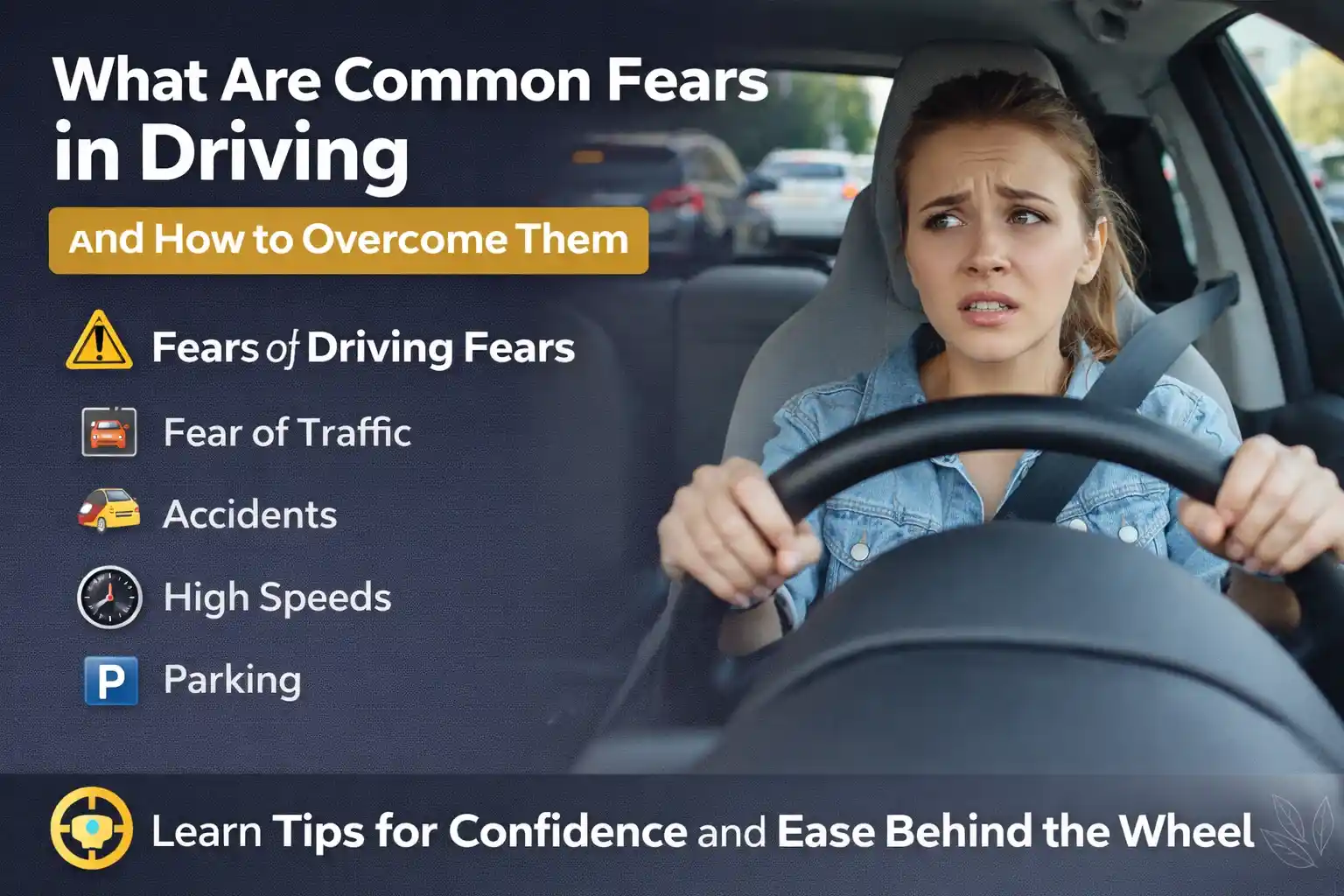
Fear of other people and busy roads
The most frequent fear, however, is having to drive in heavy traffic. There are so many cars honking from all directions and everybody is moving everywhere; it often feels overwhelming.
The solution: Beginners should practice in quiet places, before gradually tackling more busy roads. Gradual exposure builds confidence without the pressure.
Fear of Causing an Accident
We all fear to make a mistake that could cause an accident. Fear often manifests as hesitation, which paradoxically turns into more risk.
So having solid fundamental skills and a knowledge of the road rules can eliminate this fear. Similar to following proper defensive driving techniques, such as keeping a safe distance and being alert to the road ahead allows you to take care of situations without incident.
Fear of High Speed
For beginners, driving at higher speeds could be intimidating. The fear of lack of control or over-reacting is common.
The solution is gradual exposure. Begin with ascending speeds and then increase as your confidence builds. It also provides a safe environment to allow drivers to adapt to higher speeds.
Fear of Parking
Another problem that a lot of learners face is parking. It might seem states an exciting challenge but the reality is tight spaces and precision fears trigger the anxieties in humans.
The best solution is to practice regularly. The key to confidence and accuracy is learning some straightforward techniques, practicing them in empty spaces, and all with time.
Fear of Driving Alone
Driving without an instructor or a well-balanced, composed person can be scary. Most novices follow a stepped path where initially most rely on guidance and get nervous.Hell when driving alone for the first time.
To get to that point, begin by making brief solo drives through familiar areas. The longer and more complicated the distance, the more confidence you gain from it.
Fear of Judgment from Others
There are those who worry others drivers will judge them, especially if they’re slow or make mistakes.
Keep reminding yourself: everybody was a newbie someday. This fear is lessened by just focusing on your driving not other drivers.
How Proper Training Helps
Step 2: Book Professional Training for Your Driving Fears Structured lessons give you more of a safe space for learning.
Focus on helping the learner feel confident through practical training and guidance. On an informative note, the very kind of professional help allows to overcome fear and develop good driving skills.
Importance of Consistent Practice
One of the biggest elements in developing confidence is consistency. Repeated practice helps in acclimatise to the various situations and reaction speed.
There are big differences in how a little short daily practice helps to reduce fear and improve skills.
Developing a Positive Mindset
So in order to not be afraid anymore, you have to be positive. Avoid placing emphasis on what might go wrong, rather focus the attention on learning and development.
Mistakes should be considered as a part of the process. Confidence is gained When you keep accepting the challenges and keep practicing.
Learning Defensive Driving
Defensive driving techniques allow drivers to foresee dangers and react accordingly. It allays anxiety and increases safety.
Defensive driving means being aware of surroundings, obeying traffic laws, and feeling in control.
Common Mistakes to Avoid
Do not rush the learning process as it can add stress and lower confidence. Majoring in the Minors or just not reading instructions can also set one back.
One more error is not even attempting to approach stressful areas of your life. It’s important to face challenges little by little in order to progress.
Benefits of Overcoming Driving Fear
Driving, once fears are conquered, is a good time. A person who is confident tends to decide better and deal with the situations more collectedly.
It also enhances independence, helps them travel anywhere without having to depend on someone else by onroad motor driving school.
Conclusion
Being aware of what are common fears in driving that a lot of beginner drivers face, as well as knowing how to overcome it, allows learning with the appropriate mindset. It is unlikely that fear will be removed completely, but through proper instruction and practice with patience it can be minimized.
Anyone can become a confident, good driver in time if you give yourself those confidence building blocks step by step and work on your improvement.