



Introduction
One of the issues in this fast urbanizing world is Road Safety However, in times of heavier traffic, uncertain road conditions and different driving behaviors do occur accidents with greater frequency. This is where defensive driving comes into play. By learning how does defensive driving training improve road safety, drivers can learn how they can develop good habits and which techniques to use on the roads to minimize risk and also be confident while driving.
What Is Defensive Driving?
Defensive driving consists of the skills and techniques that allow drivers to avenge potential hazards and react ahead. Defensive drivers keep an eye out, stay in control, and make educated choices rather than respond at the last minute.
This is about awareness, patience, and responsibility, the key components of driving safely in the thick of it
Defensive driving–an indispensable skill for the contemporary traffic
Current roads are mixed, and things get worse with modern traffic especially in urban areas where there are three parties involved – cars, bikes and pedestrians as final users of infrastructural utilities versus public transport. This makes driving more complex.
An important aspect of defensive driving is an understanding of these dynamics and preparing for unexpected situations which ultimately decreases your possibility of an accident.
Improving Awareness and Observation Skills
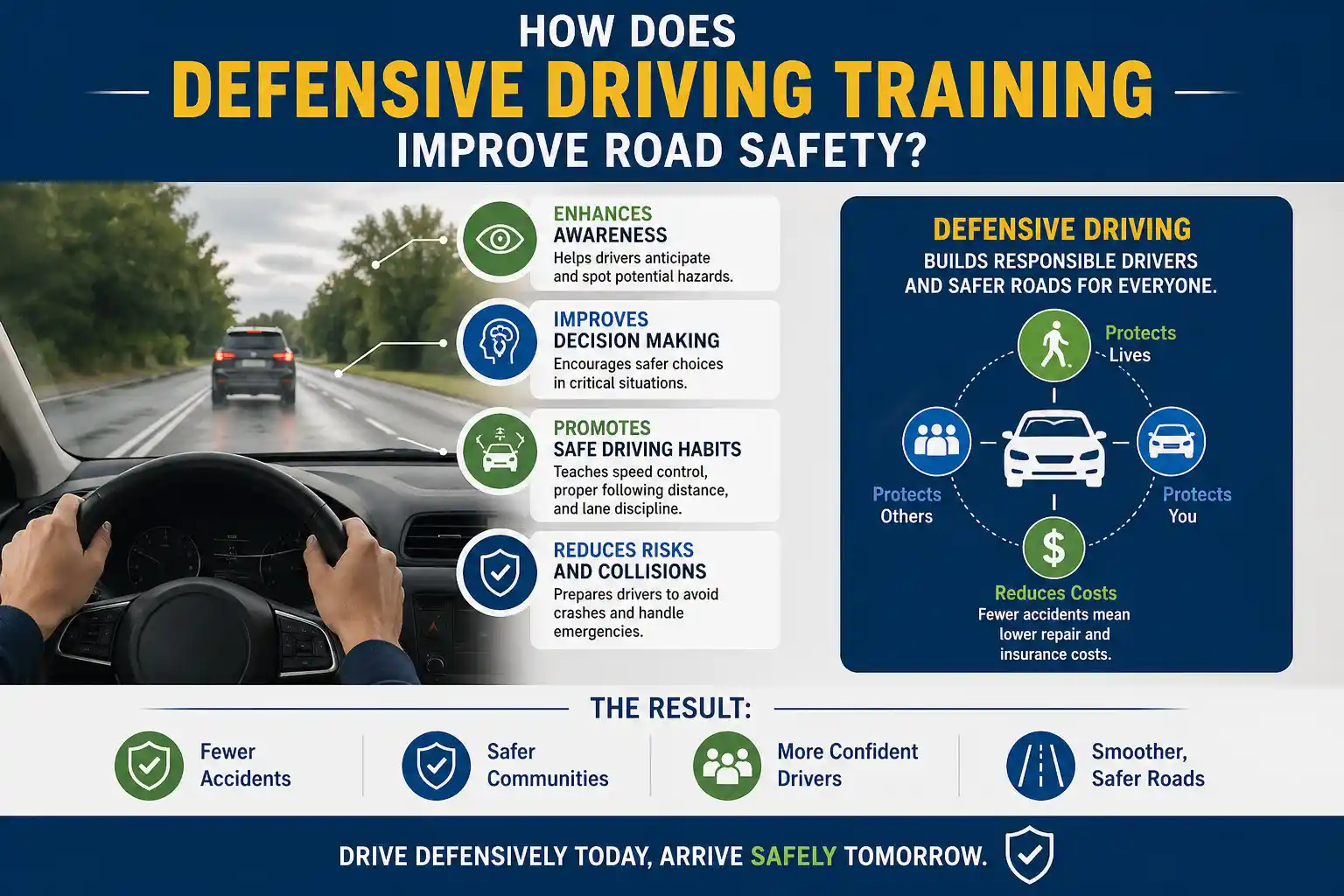
In fact, better awareness is one of the big advantages of defensive driving training. Drivers become trained to monitor their environment at all times, this includes other automobiles and automobiles on the roadway, signals being sent via road signs, as well pedestrians that may be moving around.
This enhancement brings improvement amount identification of any potential hazards much earlier, and consequently drivers can take preventative action.
Better Decision-Making on the Road
Defensive driving teaches a driver how to make effective and timely decisions. Good decision-making — like avoiding sudden lane changes and slowing down in heavy traffic — must be understood as required conduct.
Drivers learn how to be able to remain calm and make the safest choice from a list of options for any scenario.
Keeping a Safe Distance and Control of Speed
Keeping a safe distance between your vehicle and the one in front of you is one of defensive driving’s main principles. This provides drivers with a time buffer in the event that both cars come to an abrupt stop.
Speed control is equally important. Defensive driving promotes a gentler speed (less than the pace of road rage) that will ultimately save lives.
Handling Emergency Situations
Events such as sudden braking, objects on the road, or bad weather are scenarios that need an immediate response.
Drivers undergo defensive driving training so they know how to handle such emergencies that may happen and prevent panic, allowing for a faster response time.
Reducing Risk of Accidents
Defensive driving minimizes risk of accident, relying on prevention. New drivers learn how to prevent typical errors related to distracted driving, tailgating and aggression.
This forward-thinking approach creates safer roads for all.
Building Confidence in Drivers
Retention of safety while riding also requires confidence. Heavy traffic can be especially nerve-racking for most beginners.
This is one of the theories behind defensive driving training — Improving skills leads to reducing stress and gaining confidence.
Encouraging Responsible Driving Behavior
Driving defensively encourages responsible behavior covering topics like abiding by traffic regulations, respecting other drivers, and being patient on the road.
A measure like this not only enhances the safety of individuals but the overall discipline on roads as well.
Role of Professional Training
To learn defensive driving, you should go through structured training. Professional driving schools offer guided practice to real experiences.
Onroad Motor Driving School currently provides driving training programs related to safety, awareness and confidence building driven by a dedicated team. You can state that this type of training helps learners to apply defensive driving techniques in real-time life scenarios but still keep it informative.
The Mistakes That Defensive Driving Can Help You Avoid
Some of the common mistakes that cause many accidents are overconfidence, lack of attention and a poor judgment.
Despite going through years of training, drivers can also suffer from common mistakes that affect their commitment to road safety, which is why defensive driving training has proven effective in identifying and avoiding these issues for the betterment of experience behind the wheel.
Long-Term Benefits of Defensive Driving
Defensive driving has additional advantages apart from just being safe in the moment. This aids not only in de-stressing but it also helps with fuel efficiency and reduced maintenance.
Above all, it guarantees a safer driving experience for the driver and those nearby.
Conclusion
Learning how defensive driving training improves road safety emphasizes the need for responsible and proactive driving. Defensive driving helps by creating better awareness, decision-making and subsequently confidence which reduces risks and ultimately creates safer roads.
Once properly trained, practicing safety habits behind the wheel can embed these behaviors to drive a much lower risk of accidents and injury for everyone.