



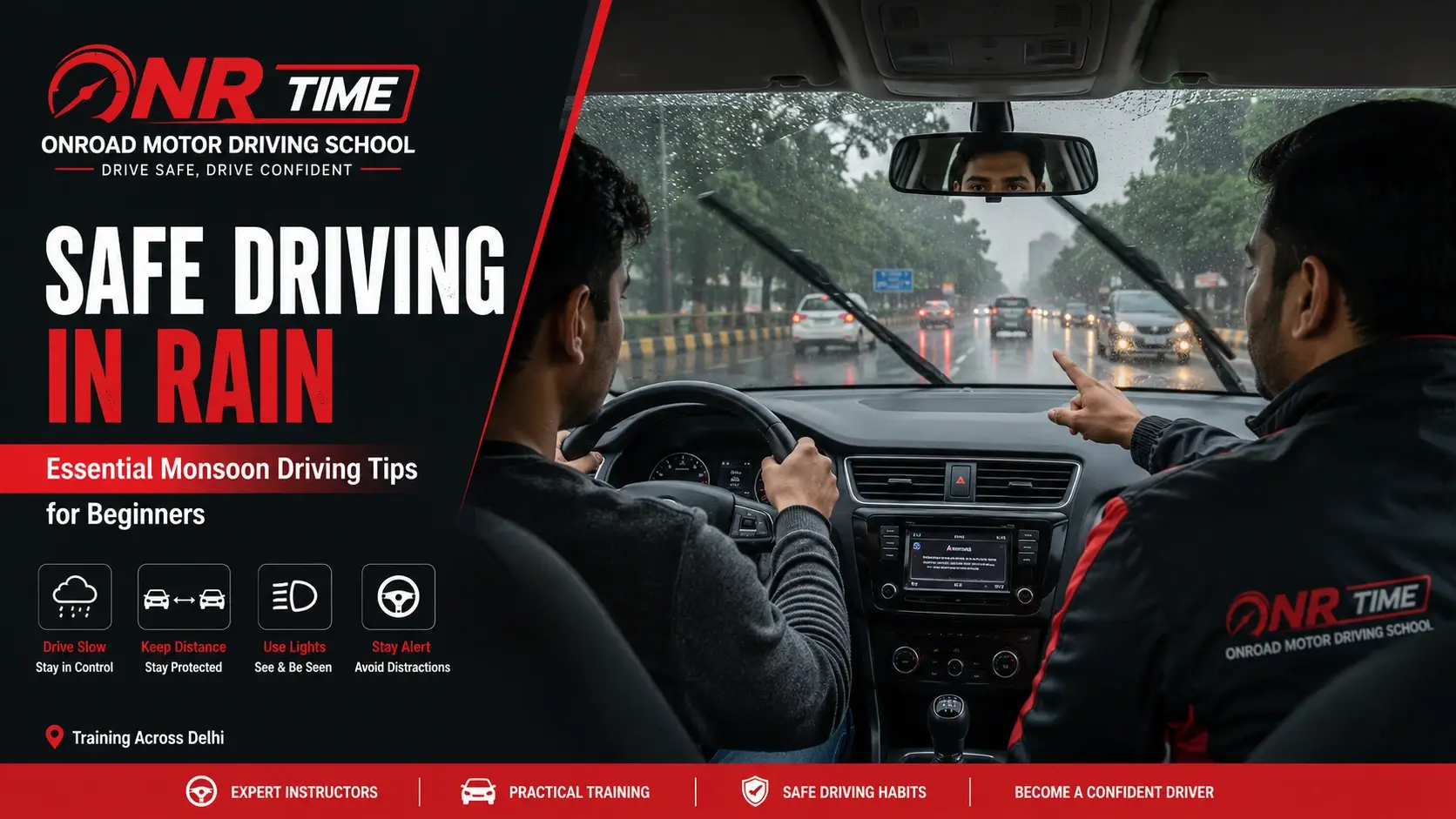
Driving in rain is a whole different mindset than the normal road. And during the time of monsoon in Delhi, the roads get slippery, visibility becomes sudden lower and persons start behaving hardly on roads. Rain causes problems for drivers irrespective of their experience, but it is particularly daunting for novice drivers and learner licence holders who find that even minor driving errors can turn into serious hazards in the wet.
When it comes to driving in the monsoon new drivers are easily intrigued by steering and braking but not aware that feeling safe also relies on awareness, slow down, handling the vehicle and making defensive decisions. Pioneering in on-road driving lessons in Delhi, professional instructors at Onroad Motor Driving School regularly train beginners to deal with wet roads calmly and safely.
It does seem that driving in rain is a bit harder.
It rains It changes the function of tires with meshes. Water wears down traction, creates deterioration in braking ability, and can even make steering seem a little cloudy. Drivers are also faced with glare, fogged windows, or visibility issues due to water splashes from bigger vehicles and potholes hidden completely by the rain in heavy downpours.
Panic tends to be a greater danger in beginners. Common mistakes when driving in rain (such as the sudden brake, sharp steering inputs or over-driving near another vehicle)
The truck understands the way it behaves in wet weather, allowing drivers to be composed instead of reacting out of instinct.
Take your foot off the pedal before it rains
The first among the rain driving tips is: reduce your speed ahead of time instead of waiting until you realize the road is dangerous. Tire grip on wet roads is reduced—and poor grip increases further near painted lane markings, potholes and waterlogged areas.
By driving slightly slower, the drivers get more reaction time and have contend with a great deal better control throughout turns or sharp stopping situations. Over half of some monsoon accidents in Delhi are caused by cautious drivers who keep on proceeding at dry-road speeds even as conditions dry out.
Handling a fast car during rain can be deadly serious if aggressive inputs are tried — smooth acceleration and gentle braking really are the name of the game.
Maintain a Longer Following Distance
Wet roads greatly increase stopping distance. Or a few more meters to stop safely when brakes were applied while raining
This is a change that new drivers don’t always understand, and are still tailgating in traffic. Defensive Driving in Rain — Maintain sufficient distance that can give you time to react without causing any sudden braking.
This is doubly true close to buses, trucks and high-speed SUVs- as the water spray can temporarily obscure visibility.
How to Properly Use Head Lights During Heavy Rain
Most novice drivers mistakenly use high beams in rain believing brighter lights enhance visibility. High beams, on the other hand, bounce back in a veiling spray of rain or falling snow.
Low-beam lights increase visibility of the road while also allowing other drivers to spot your car much earlier. In this case, a visibility drop of less than 50 meters is reported during a rainy day in Delhi.
It is always advisable to not use hazard lights when driving continuously because it gives false impression to the drivers nearby that your vehicle is stationary.
Avoid Sudden Steering Movements
When drivers make tight or sudden turns, wet roads make skidding much more likely. New drivers should keep steering movements smooth and controlled, especially when cornering or changing lanes.
When the vehicle is feeling shaky, best to just let off the accelerator progressively and keep steering. Often panic loses traction more.
Onroad Motor Driving School, professional driving instructors train learners to keep calm and not over-correct when the tires lose grip momentarily.
Be Careful Around Waterlogged Roads
Potholes, damaged roads or deep sections can be hidden in standing water making it dangerous to drive over.
Drivers also underestimate the amount of water it takes to hydroplane. Due to the accumulation of water, the tires lose contact with the road surface – which seriously limits steering and braking control.
You are taught that water is too much or traffic ahead has stopped the road and generally it is wiser to stay on routes altogether.
The Importance of Preparing Your Vehicle for Drive During the Monsoon
Monsoons, however, are not a driver skill-based driving condition. Road safety is also influenced by vehicle condition.
Even things like worn-out tires, weak brakes, damaged wipers or low tread depth can severely limit your control on the road during rain. Often beginners skip maintenance checks because the car works well enough when not in wet conditions.
All you need to check before driving in Delhi during the monsoon are working headlights, brakes and tire pressure and windshield wipers.
Rain-Based Driving School: Why Professional Training Is Better For Beginners
Real-world experience is needed to be able to drive in the rain as it cannot be learnt through theory alone. Train in traffic with supervision — Beginners learn more quickly and build confidence faster when practising skills on the road.
Onroad Motor Driving School provides practical training that includes defensive driving, road awareness, safe vehicle handling in poor weather conditions and parking control. To make distance sound less scientific, we aim too produce drivers that share the understanding… in other words avoiding a fear based instinct.
Conclusion
Driving in rain comprises less of devil-may-care confidence and more about keeping a cool head whilst reading the road. Slow down, keep a safe distance from the vehicle in front of you, steer gently and stay defensive — these four principles define monsoon driving safety.
With Delhi drivers in mind, good wet-road habits for writ crash prevention are important to establish as early as possible in their motoring career. The safest way of driving responsibly battling erratic rains would still be through a professional guidance through the Onroad Motor Driving School offering practical road experience who will also correct your driving behaviour.