



Automated Driving Tests In India and How It Works
Self-driving tests are now becoming popular all over India as Regional Transport Authorities (RTAs) in various states are moving towards automated test centers. The intention of such tests is to have fairness, transparency and accuracy and the extent to which human intervention can be reduced. Automated tests tend to be more stressful for learners, by contrast, because sensors, cameras and software are constantly monitoring the car’s every move. Knowing the time limits and how to avoid common pitfalls is crucial to passing the test. At On Road Motor Driving School, we heavily equip learners to be more than ready for automatic driving tests.
What is an Automated Driving Test?
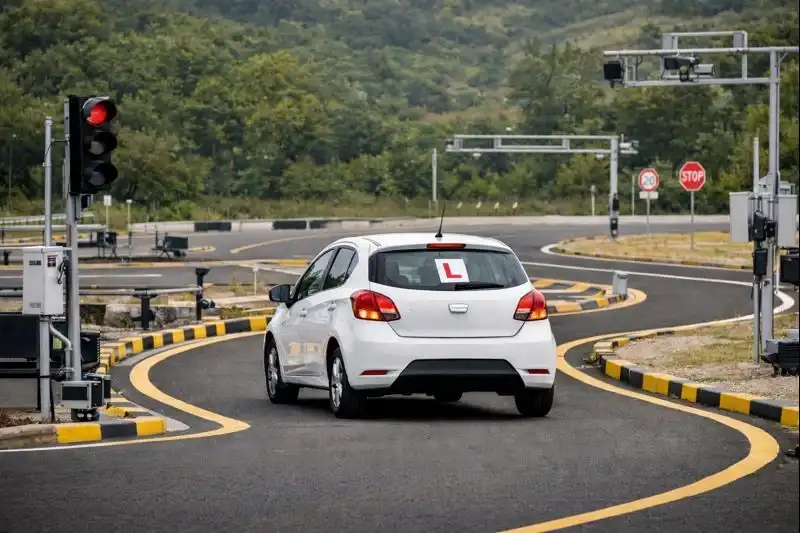
A computer controlled driving test is administered on a specialized track lined with sensors and cameras. The performance of the candidate is continuously scanned by computer and activity takes decision on pass or fail according to present parameter. There is no test-giver talking in your ear during the test. You have a certain time limit to do every movement right. Any departure from the itinerary, delay or breach of rules is recorded by the system on the spot.
Getting To Know The Time Constraints When it comes to automated driving lessons
Time constraints are of great importance in automatic driving tests. The forward, reverse parking, hill start and figure-of-eight exercise must all be completed in a stipulated time. These limits are created to measure driving accuracy, and confidence and control.
Slowing down can have similar negative effect as speeding up. The vast majority of that failed lot is because they are pausing and over-thinking it, stopping when they shouldn’t or taking too long lining up. At the same time, machines are not affected by nervousness or lack of expertise. If it hits zero, the system will have failed the test — no matter how nicely you drove.
At On Road Motor Driving School, students are well drilled to know how to balance time constraints with control in order to finish every section well within the time limit.
Importance of Time Management While Taking the Test
Good use of time, reveals that the driver has good control over the vehicle. Automatics assume clean, steady moving with no second braking or extended periods of stopping. Prospects who overthink every move easily can squander precious seconds. Knowing when to gently press the gas pedal, to confidently steer or drive without delay really matters in automated tests.
Practicing working under timed conditions before the test can also reduce anxiety and improve performance. Knowing the test pattern lets learners know what to expect and act with confidence.
Three Common Missteps That Will Lead To Failure
One of the most frequent errors is touching or straddling the sensor lines. The slightest rotation of the wheel off-circuit is immediately recorded. Many learners are failed because they misjudge the steering angles,particularly in reverse or round-the mnunver turns.
Another common mistake is stalling the car. The problem with manual cars is that bad clutch control can stop the engine, resulting in instant disaster. Panic braking is also a big deal. It gets confused and you increase your chances of timing out with hard or frivolous braking.
Misapplication of signals is yet another mistake that gets very little attention. With automated tests we often need to mark places in some way. Neglecting to signal can lead us toward total loss even if we are behind the plan.
A few candidates also lose because they do not stop at designated stop points or they overshoot them. Unmanned systems demand accurate stopping, with little room for error.
Role of Confidence and Mental Preparation
Trust is the challenge in automated driving tests. An anxious driver will overgrip the wheel, turn too much, and pause needlessly. This results in improperly aligned vehicles and time wasted. Keeping your cool and believing in the training is key to maintaining smooth control over the run.
Psychological readiness is preparing yourself that the system is not making personal judgments against you. It is only recording data. Realizing this is a load off your back so that you can fully concentrate on the way.
How Professional Training Can Increase Your Chances Of Success
Training makes all the difference in the world where automated driving tests are concerned. On Road Motor Driving School provides test-like tracks and real-road experience for learners. Learners are taken through clutch- control, steering precision, speed management and the correct use for indicators.
Timed mock tests work effectively in pinpointing poor areas in the lead-up to the actual exam. What it does do is build muscle memory that can translate into natural repetitions so you don’t have time to overthink anything on the test.
Tricks To Avoid Errors In The Exam
Remaining calm is one of the biggest elements. Aim for maximum comfort in any vehicle, adjust your seat, mirrors and steering before beginning the exam. Take a moderate pace, not trying to go faster or slower. Don’t look at where the tires are directing you, and don’t countersteer.
Paying close attention to pre-test instructions and having a good sense of the track layout, in advance, can help avoid confusion. Perhaps most importantly, you’ll want to train regularly with guidance and approach the test as part of your regular routine rather than a stressful event.
Conclusion
Robotic challenges have to do with precision, confidence and control in a very limited time frame! As brutal as the system may appear, adequate preparation should enable you to pass without an issue. Time management, avoiding the most common mistakes and having professional help always increase your ratio of success. We are in the business of assisting students to conquer automatic driving tests and be safe drivers for life at On Road Motor Driving School. With knowledge of what to expect and practice, passing the test on your first try is readily achievable.
Automated Driving Tests In India and How It Works
Self-driving tests are now becoming popular all over India as Regional Transport Authorities (RTAs) in various states are moving towards automated test centers. The intention of such tests is to have fairness, transparency and accuracy and the extent to which human intervention can be reduced. Automated tests tend to be more stressful for learners, by contrast, because sensors, cameras and software are constantly monitoring the car’s every move. Knowing the time limits and how to avoid common pitfalls is crucial to passing the test. At On Road Motor Driving School, we heavily equip learners to be more than ready for automatic driving tests.
What is an Automated Driving Test?
A computer controlled driving test is administered on a specialized track lined with sensors and cameras. The performance of the candidate is continuously scanned by computer and activity takes decision on pass or fail according to present parameter. There is no test-giver talking in your ear during the test. You have a certain time limit to do every movement right. Any departure from the itinerary, delay or breach of rules is recorded by the system on the spot.
Getting To Know The Time Constraints When it comes to automated driving lessons
Time constraints are of great importance in automatic driving tests. The forward, reverse parking, hill start and figure-of-eight exercise must all be completed in a stipulated time. These limits are created to measure driving accuracy, and confidence and control.
Slowing down can have similar negative effect as speeding up. The vast majority of that failed lot is because they are pausing and over-thinking it, stopping when they shouldn’t or taking too long lining up. At the same time, machines are not affected by nervousness or lack of expertise. If it hits zero, the system will have failed the test — no matter how nicely you drove.
At On Road Motor Driving School, students are well drilled to know how to balance time constraints with control in order to finish every section well within the time limit.
Importance of Time Management While Taking the Test
Good use of time, reveals that the driver has good control over the vehicle. Automatics assume clean, steady moving with no second braking or extended periods of stopping. Prospects who overthink every move easily can squander precious seconds. Knowing when to gently press the gas pedal, to confidently steer or drive without delay really matters in automated tests.
Practicing working under timed conditions before the test can also reduce anxiety and improve performance. Knowing the test pattern lets learners know what to expect and act with confidence.
Three Common Missteps That Will Lead To Failure
One of the most frequent errors is touching or straddling the sensor lines. The slightest rotation of the wheel off-circuit is immediately recorded. Many learners are failed because they misjudge the steering angles,particularly in reverse or round-the mnunver turns.
Another common mistake is stalling the car. The problem with manual cars is that bad clutch control can stop the engine, resulting in instant disaster. Panic braking is also a big deal. It gets confused and you increase your chances of timing out with hard or frivolous braking.
Misapplication of signals is yet another mistake that gets very little attention. With automated tests we often need to mark places in some way. Neglecting to signal can lead us toward total loss even if we are behind the plan.
A few candidates also lose because they do not stop at designated stop points or they overshoot them. Unmanned systems demand accurate stopping, with little room for error.
Role of Confidence and Mental Preparation
Trust is the challenge in automated driving tests. An anxious driver will overgrip the wheel, turn too much, and pause needlessly. This results in improperly aligned vehicles and time wasted. Keeping your cool and believing in the training is key to maintaining smooth control over the run.
Psychological readiness is preparing yourself that the system is not making personal judgments against you. It is only recording data. Realizing this is a load off your back so that you can fully concentrate on the way.
How Professional Training Can Increase Your Chances Of Success
Training makes all the difference in the world where automated driving tests are concerned. On Road Motor Driving School provides test-like tracks and real-road experience for learners. Learners are taken through clutch- control, steering precision, speed management and the correct use for indicators.
Timed mock tests work effectively in pinpointing poor areas in the lead-up to the actual exam. What it does do is build muscle memory that can translate into natural repetitions so you don’t have time to overthink anything on the test.
Tricks To Avoid Errors In The Exam
Remaining calm is one of the biggest elements. Aim for maximum comfort in any vehicle, adjust your seat, mirrors and steering before beginning the exam. Take a moderate pace, not trying to go faster or slower. Don’t look at where the tires are directing you, and don’t countersteer.
Paying close attention to pre-test instructions and having a good sense of the track layout, in advance, can help avoid confusion. Perhaps most importantly, you’ll want to train regularly with guidance and approach the test as part of your regular routine rather than a stressful event.
Conclusion
Robotic challenges have to do with precision, confidence and control in a very limited time frame! As brutal as the system may appear, adequate preparation should enable you to pass without an issue. Time management, avoiding the most common mistakes and having professional help always increase your ratio of success. We are in the business of assisting students to conquer automatic driving tests and be safe drivers for life at On Road Motor Driving School. With knowledge of what to expect and practice, passing the test on your first try is readily achievable.