


Driving is an important skill to learn, particularly in a hectic city such as Delhi, where car conditions can be unpredictable. Many new drivers ask us if they should learn to drive in an automatic or a manual car. This question is even more relevant when people look for a car driving school near Delhi or find Car driving school fees in Delhi.
The answer in short is yes: Automatic cars are, in general, easier to learn than manual ones. But the overall story is contingent on your learning objectives, comfort zone, and long-term driving requirements.
Understanding the Basic Difference
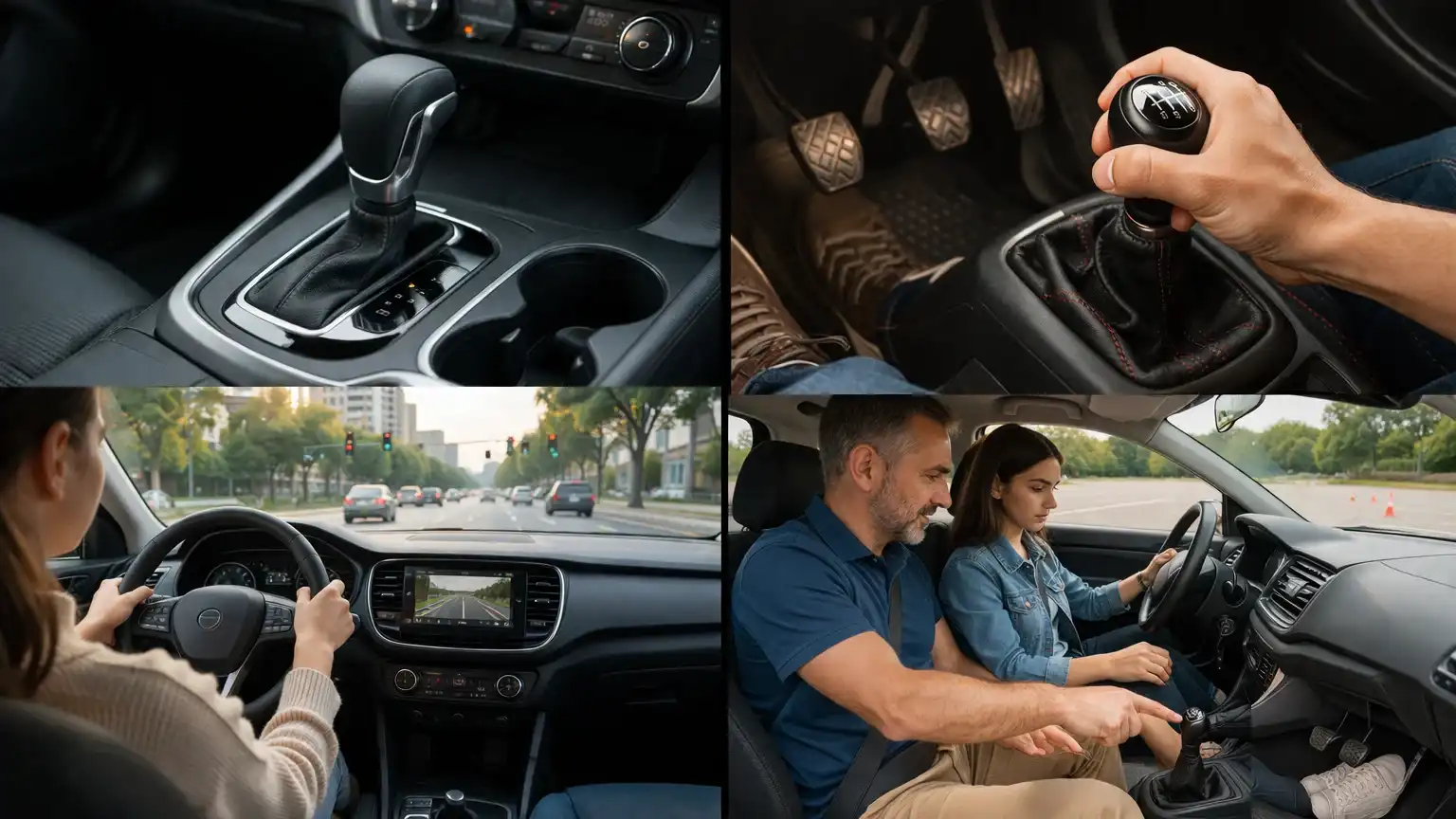
The key difference between automatic and manual cars is related to the gears. A manual car is designed so that the driver can operate the clutch and change gears manually. This involves coordinating hands and feet plus timing and practice.
In an automatic vehicle, the gear shifting is done by the car itself. All you have to do is drive, accelerate, and brake. It also makes learning much easier in general, especially for novice riders who could be intimidated by heavy street traffic.
Due to this ease, drivers looking for a Car Driving School near me tend to prefer learning automatic first.
Why Driving an Automatic Car Is Easier for Learners
Automatic cars relieve new drivers of mental stress. Without worrying about clutch control and gear shifting, there’s more room to think about steering, road awareness, and traffic rules.
In a metropolis such as Delhi, which makes good use of slow and congested traffic, manual cars could become tiresome to drive due to continuous gear shifting. Automatic cars are smoother to handle in stop-and-go traffic without increasing the stress levels.
New drivers typically feel more assured quicker in automatic vehicles. This is part of why instructors at places like onroad motor driving school highly recommend automatic training for first-time learners who are feeling anxious.
Challenges of Learning Manual Cars
Driving a manual requires more coordination and practice. They have learned to manage the balance of clutch and accelerator; without it, they cannot possibly start the car or drive themselves at an incline. Also for beginners there are issues such as cars stalling or jerking at early stages.
Though this may seem frustrating initially, it also strengthens driving skills over time. Once you learn to drive a manual, driving an automatic becomes super easy.
Some students analyze the manual versus automatic differences when comparing Car driving lessons resources and notice that manual training is a bit less expensive, which may help them with their choice.
Which One Should You Choose?
Your needs determine how you convert things—whether manually or automatically.
But if you want to learn fast and drive effortlessly, then it’s better to take the automatic. And it is well suited for everyday city driving, especially in congested sections of traffic like that in Delhi NCR.
If you desire full control of the vehicle and will be driving in a variety of conditions, learning manual may actually help your cause. It also offers a great freedom because once you master it, you can drive both manual and automatic vehicles.
A reputable RTO Approved Driving School in my area will generally provide both options and advise you according to your comfort level and ambition.
Learning Time and Confidence Level
It is easier to learn automatic cars, as they take less time usually. For learners, they get comfortable within a couple of days of practice. With fewer controls to handle, learners can concentrate better on road safety and traffic awareness.
Manuals, meanwhile, are going to take longer. It takes time for smooth control as well as regular practice to achieve the same. That said, the skills you acquire are more nuanced and can differentiate you as a well-rounded driver.
In on-road motor driving school also, the instructors have seen that students learning automatic cars develop ability quicker than manual for drivers (and this is particularly true for first-time drivers).
Cost and Practical Considerations
Cost can also be a factor when deciding between automatic and manual. The learners compare Car driving school fees in Delhi before proceeding.
Lessons for manual driving are sometimes a little cheaper because it is more common and easier to keep everything in proper working condition. Automatic training may not be cheap, but many learners appreciate the comfort it offers.
In addition to training costs, you also need to consider what type of vehicle you will be using. While automatic cars are on the rise, in India manual and auto gear transmission (AGT) cars remain widely used.
Why it Matters to Select the Proper Driving School
Regardless of what type of option you choose, the most important thing is most always to decide on excellent-quality training. Driving with a professional school guarantees that you develop good habits, learn how to deal with traffic, and take classes on the road.
Choosing a good Car Driving School nearby means you will be taking lessons in an organized manner from instructors experienced enough to guide you on this path.
One such driving school in Delhi is Onroad Motor Driving School, where you get systematic training for your road adventures. Just like with driving, the teachers train students step by step through automatic and manual training until they feel confident to drive by themselves.
Final Thoughts
So is it easier to learn how to drive an automatic car rather than learn to drive a manual? For most beginners, automatic cars are easier and faster to learn. They reduce stress, including in heavy traffic, and build confidence more quickly.
Nevertheless, being in complete control of an automobile bolsters your driving skills, and you learn more by driving a manual vehicle.
Consider your comfort level, daily driving needs, and long-term goals before reaching the decision if you are looking for a car driving school near Delhi or comparing Car driving school fees.
onroad motor driving school makes you choose the best way by making two-way options as well as the guidance. Ultimately, the right decision is the one that helps you feel confident, safe, and prepared for the road.
Driving is an important skill to learn, particularly in a hectic city such as Delhi, where car conditions can be unpredictable. Many new drivers ask us if they should learn to drive in an automatic or a manual car. This question is even more relevant when people look for a car driving school near Delhi or find Car driving school fees in Delhi.
The answer in short is yes: Automatic cars are, in general, easier to learn than manual ones. But the overall story is contingent on your learning objectives, comfort zone, and long-term driving requirements.
Understanding the Basic Difference
The key difference between automatic and manual cars is related to the gears. A manual car is designed so that the driver can operate the clutch and change gears manually. This involves coordinating hands and feet plus timing and practice.
In an automatic vehicle, the gear shifting is done by the car itself. All you have to do is drive, accelerate, and brake. It also makes learning much easier in general, especially for novice riders who could be intimidated by heavy street traffic.
Due to this ease, drivers looking for a Car Driving School near me tend to prefer learning automatic first.
Why Driving an Automatic Car Is Easier for Learners
Automatic cars relieve new drivers of mental stress. Without worrying about clutch control and gear shifting, there’s more room to think about steering, road awareness, and traffic rules.
In a metropolis such as Delhi, which makes good use of slow and congested traffic, manual cars could become tiresome to drive due to continuous gear shifting. Automatic cars are smoother to handle in stop-and-go traffic without increasing the stress levels.
New drivers typically feel more assured quicker in automatic vehicles. This is part of why instructors at places like onroad motor driving school highly recommend automatic training for first-time learners who are feeling anxious.
Challenges of Learning Manual Cars
Driving a manual requires more coordination and practice. They have learned to manage the balance of clutch and accelerator; without it, they cannot possibly start the car or drive themselves at an incline. Also for beginners there are issues such as cars stalling or jerking at early stages.
Though this may seem frustrating initially, it also strengthens driving skills over time. Once you learn to drive a manual, driving an automatic becomes super easy.
Some students analyze the manual versus automatic differences when comparing Car driving lessons resources and notice that manual training is a bit less expensive, which may help them with their choice.
Which One Should You Choose?
Your needs determine how you convert things—whether manually or automatically.
But if you want to learn fast and drive effortlessly, then it’s better to take the automatic. And it is well suited for everyday city driving, especially in congested sections of traffic like that in Delhi NCR.
If you desire full control of the vehicle and will be driving in a variety of conditions, learning manual may actually help your cause. It also offers a great freedom because once you master it, you can drive both manual and automatic vehicles.
A reputable RTO Approved Driving School in my area will generally provide both options and advise you according to your comfort level and ambition.
Learning Time and Confidence Level
It is easier to learn automatic cars, as they take less time usually. For learners, they get comfortable within a couple of days of practice. With fewer controls to handle, learners can concentrate better on road safety and traffic awareness.
Manuals, meanwhile, are going to take longer. It takes time for smooth control as well as regular practice to achieve the same. That said, the skills you acquire are more nuanced and can differentiate you as a well-rounded driver.
In on-road motor driving school also, the instructors have seen that students learning automatic cars develop ability quicker than manual for drivers (and this is particularly true for first-time drivers).
Cost and Practical Considerations
Cost can also be a factor when deciding between automatic and manual. The learners compare Car driving school fees in Delhi before proceeding.
Lessons for manual driving are sometimes a little cheaper because it is more common and easier to keep everything in proper working condition. Automatic training may not be cheap, but many learners appreciate the comfort it offers.
In addition to training costs, you also need to consider what type of vehicle you will be using. While automatic cars are on the rise, in India manual and auto gear transmission (AGT) cars remain widely used.
Why it Matters to Select the Proper Driving School
Regardless of what type of option you choose, the most important thing is most always to decide on excellent-quality training. Driving with a professional school guarantees that you develop good habits, learn how to deal with traffic, and take classes on the road.
Choosing a good Car Driving School nearby means you will be taking lessons in an organized manner from instructors experienced enough to guide you on this path.
One such driving school in Delhi is Onroad Motor Driving School, where you get systematic training for your road adventures. Just like with driving, the teachers train students step by step through automatic and manual training until they feel confident to drive by themselves.
Final Thoughts
So is it easier to learn how to drive an automatic car rather than learn to drive a manual? For most beginners, automatic cars are easier and faster to learn. They reduce stress, including in heavy traffic, and build confidence more quickly.
Nevertheless, being in complete control of an automobile bolsters your driving skills, and you learn more by driving a manual vehicle.
Consider your comfort level, daily driving needs, and long-term goals before reaching the decision if you are looking for a car driving school near Delhi or comparing Car driving school fees.
onroad motor driving school makes you choose the best way by making two-way options as well as the guidance. Ultimately, the right decision is the one that helps you feel confident, safe, and prepared for the road.