



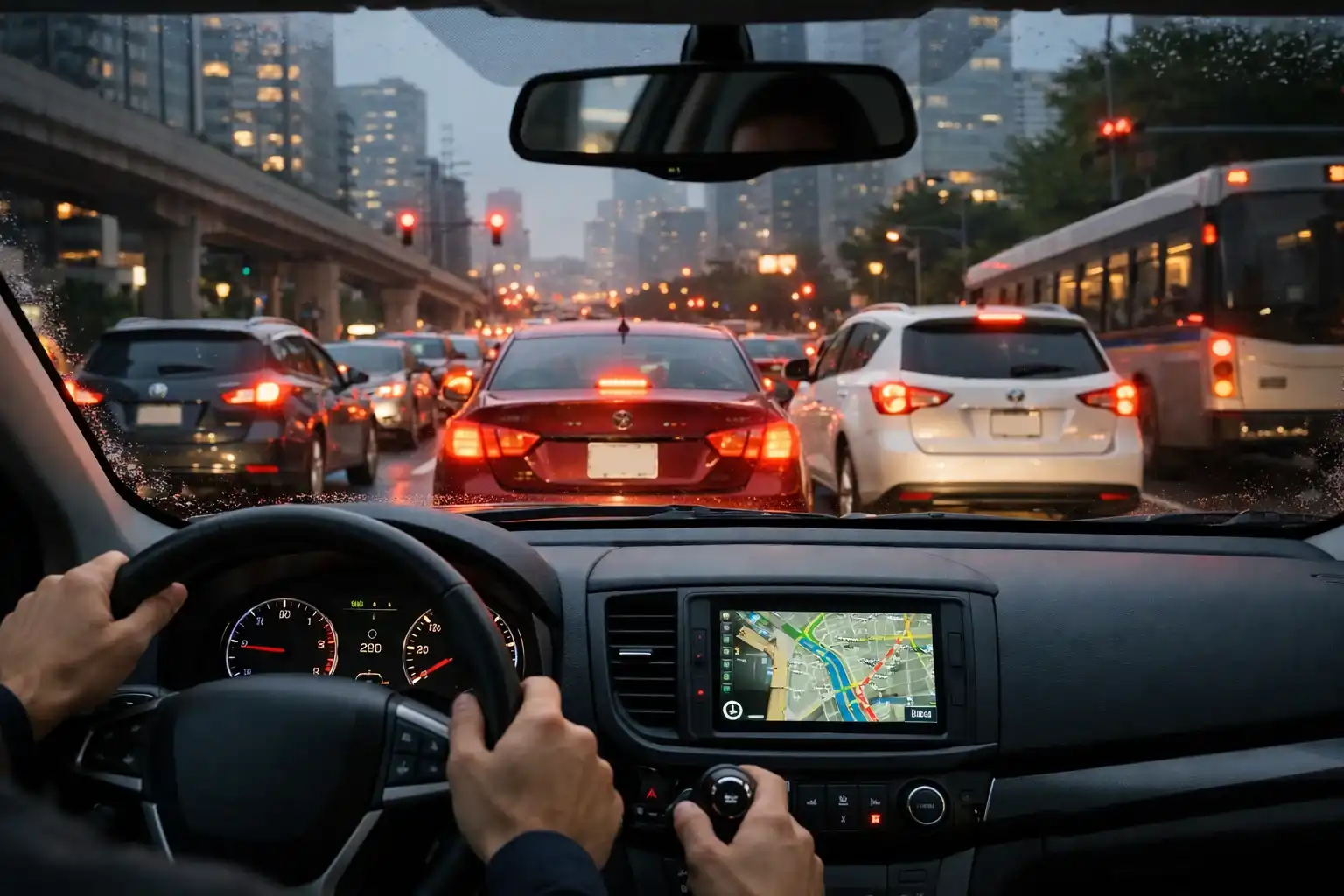
Introduction: The Trouble With Urban Driving
Rushing to get through busy city traffic can be one of the most nerve-wracking experiences for beginners and veterans alike. Conjested roads, aggressive drivers, fast lane switching rear enders, oblivious jaywalkers and never ending stop-and-go can make anyone’s head explode from the drivers seat. On the roads in cities like Delhi, which have heavy traffic congestion round the clock, acquiring safe driving skills is no longer just a skill; it’s your day-to-day need.
Most accidents in towns are a matter not of fundamental ignorance on the part of drivers, but rather an inability to use safe driving habits under actual traffic conditions. Being able to keep your peace, keep your head, and foresee potential problems is crucial. Slowing down in heavy traffic is about attention, patience and good behavior, not speed or an ability to muscle through.
Calm and Focused Behind the Wheel
Mental calmness is one of the most critical habits for driving safely during heavy traffic. Traffic congestion and slow speed may cause impatience among drivers, acting impulsively or taking risks. As frustration mounts, reaction times shrink and mistakes become more common.
When we stay focused, it involves giving our full attention to the road and not allowing ourselves to be distracted by things like cell phones or conversation or outside noise. Speeds change in an instant in this stop and go traffic. A driver who stops abruptly or a pedestrian walking onto the street are situations needing an instantaneous answer. Relaxed and attentive driving encourages you to respond safely without fear.
Keep Your Distance from Other Traffic
In an urban environment, it is often that automobiles will remain very close in proximity to one another, but keep a safe distance behind other vehicles. Tailgating can reduce your reaction time and may lead to rear-end collisions. And even in slow-moving traffic, there are frequent reasons to slam on the brakes, and a safe gap allows you plenty of time to do so gently.
Keeping distance also gives a clearer view of the road. You’re able to see brake lights, turns, or impediments sooner so that you can more effectively prepare yourself for the next movement instead of making a last second decision.
Use Mirrors and Indicators Properly
Dense traffic demands constant vigilance of your vehicle’s surroundings. Mirrors assist in enabling you to read the flow of traffic and avoid blind spots. Frequent checks of your side and rear-view mirrors can help you start to safely change lanes or make a turn.
Signals are just as crucial for they share your intentions with other motorists. Numerous traffic woes in the city stem from drivers who don’t signal while switching lanes. Providing an advance signal allows others, such as cross-traffic and cars or trucks, to adjust and minimizes confusion on the road. Clear messages via signalization Minimizes traffic congestion to improve driving safety.
Control Your Speed and Refrain from any Sudden Movements
Race the traffic almost never lead to a time savings, and substantially increased the risk for crashing. Safe city driving is all about keeping up a steady and controlled speed as well as ‘sticking’ to traffic flow. Sudden acceleration and deceleration not just waste fuel; they can also result in a chain reaction of cars having to slam on brakes.
Control gain and distress in driving. And while it may be annoying for drivers to engage in slow acceleration, gradually stop or make considered lane changes, these cautious actions put us all at less risk. On city roads with dense traffic, patience almost always works better than aggressive driving.
Watch for Pedestrians and Two-Wheelers
City streets are designed to be shared by a variety of road users: those on foot, on cycles and two-wheelers. In overcrowded traffic, these type of road users generally move erratically; thus the need to “Keep an eye out”. Pedestrians can walk between vehicles, while two-wheelers have a narrow passage.
Traffic will slow down when approaching crossings, the markets and residential areas. Anticipating erratic movements prevents accidents and keeps the traffic moving safely. The best defense against dangerous city motoring is defensive driving — also known as expecting the unexpected.
Plan Your Route and Timing
Find a few miles and see the difference when you give extra attention before starting the engine. Planning your route with less stress and less traffic. You can consult the traffic reports on navigation tools to make sure you pick smoother roads and save yourself some time.
When possible, less crowded driving hours also results in less pressure and more concentration. Urban areas will always have traffic, but responsible planning can help make driving smarter and safer for everyone.
Importance of Professional Driving Training
The problem with many is that they can master car control basics, but not those peculiar to real-world traffic. City driving is something for which there is no specific set of instructions – yet pro-driving instructors can teach people how to do so safely. Trained instructors help to build confidence and teach useful techniques that are beyond basic laws of the road.
The best driving school near me is what many people search for online, they want professional help that prepares them well for the real traffic scenarios. Good quality training will cover defensive driving, sound road sense and the ability to confidently deal with difficult traffic situations.
How Onroad Motor Driving School is Beneficial for Safe Driving
Dao Onroad Drivez Driving School Delhi Dao Onroad Motor Driving School is a New Delhi based driving school that focuses on providing cost-effective training to people all across Delhi. There is also a focus on real-life examples, including driving in heavy traffic, lane maintenance and effective braking.
Onroad is not just another driving school! We design our individual lesson plans designed to develop and reinforce well practiced academics. This assist young drivers to use the driving laws in correct manner by applying them on city life on daily basis.
Building Long-Term Safe Driving Habits
Defensive driving is not a drill, but a reflex learned through repetition and vigilance. Drivers who habitually obey traffic regulations, remain patient and concentrate on the road will eventually develop a better judgment of roads. Over time these techniques contribute to stress reduction and create a more carefree driving experience.
City traffic will never be entirely easy, of course, but with the right mindset and some sharp instincts it’s manageable. Defensive driving, discipline, and calm are the three virtues that most contribute to long-term road safety.
Conclusion
Safely maneuvering through heavy traffic involves more than just technical understanding–it takes patience, alertness, and taking responsibility for your decisions. All of this is a help on the busy city roads and when all road users keep their heads you would hope like life in general,makes everybody’s journeys safer.
Professional education and repeated practice are helpful to train confidence driving in the urban environment. Whether you are a novice driver just starting out, or someone in need of some extra training to put into your toolkit, simply concentrating on safe driving habits makes for smoother journeys and safer roads for everyone.