



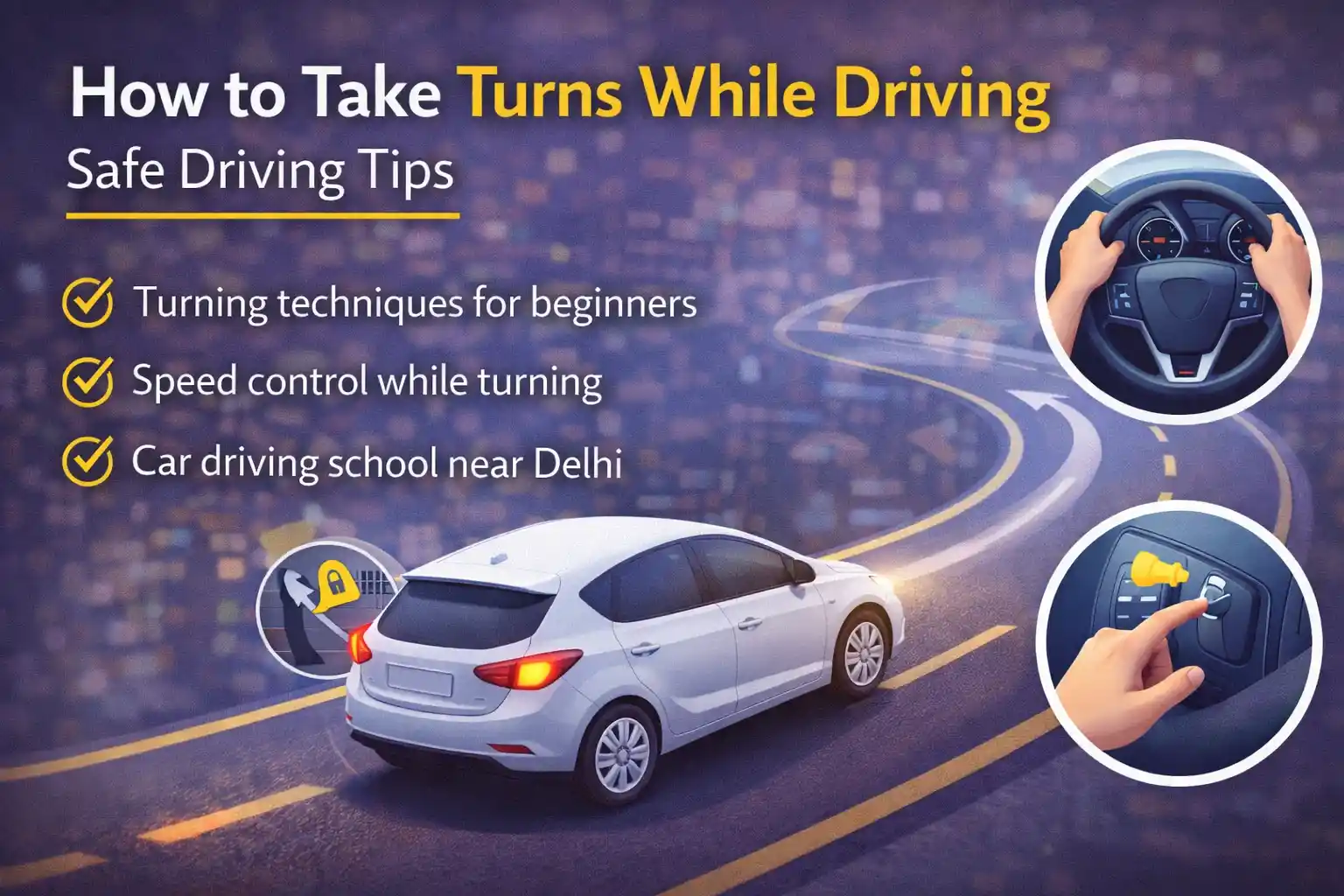
Turning is one of the most simplest, yet most essential driving skills every driver should know. Turning well and safely are essential whether you are driving on city roads, highways, or narrow lanes. If you are new, definitely turning sounds bewildering but it happens naturally once you can practice or approach it overtly.
For the learners looking to find a car driving school near delhi or good Car Driving School nearby, proper turning is one of the essential parts of professional driving skill.
Why Proper Turning Is Important
Steering the wheel in another direction is not what turning means as it requires judgement, timing and awareness Poor turning can lead to accidents, intrusion into other lanes, or losing control.
Turning is a critical skill that promotes proper lane discipline, prevents accidents, and facilitates the free flow of traffic. These skills go a long way in building confidence overall in driving early on.
These are the behaviours that I am training at an RTO Approved Driving School near me.
Understanding the Basics of Turning
You should head into a turn with lowered speed and in the appropriate lane. It’s easy to lose control of the vehicle when you’re taking a corner at high speed.
Before making a turn, mirrors and surroundings should be checked u2026 always. This assists with the detection of other vehicles, pedestrians, and obstructions in close proximity.
All these essentials are taught in every nearby driving school, when it comes to building on, driving habits.
Using Indicators Correctly
The importance of indicators in safe turning. This way other drivers know you are turning, and thus reduce the chance of confusion or accident.
Make sure to use your indicators a few seconds before any turn. That allows the other drivers enough time to respond.
Car driving school near delhi they are a Everyday learners well Convince at use of indicators.
Hand Position on Steering Wheel
Fingers on the activators means better turning control. The recommended method is to “push and pull” for smooth steering.
This means cross your hands only when necessary, as crossing your hands, decreases control. Remember to grip steady, it helps to make it turn more seamlessly.
The coordination and confidence associated with steering techniques were further enhanced through practice.
Taking Left Turns Safely
Use the appropriate lane to handle turns – if you are making a left turn, use the left lane. If you come to them, slow down and look for pedestrians, bicycles, and cars approaching from the opposite way.
Don’t jerk the steering wheel and go at a constant speed. Avoid sharp or sudden movements.
By following these steps, a left turn can be performed at a traffic light in a safe and controlled manner.
Taking Right Turns Safely
Bonus step — pay special attention when making right turns. Be in the right lane and wait for a clear gap.
Always check mirrors and blind spots before turning Whenever the path is clear, turn sharply without haste.
This practice takes place in an RTO approved driving school near you for the sake of attending safely.
Turning at Intersections
One of the more common accident locations is at intersections. Always approach intersections with caution.
Always follow the traffic signals, to comply with road signs, and movement of other vehicles. Yield if you need to and do not be hasty.
At a driving school in Sydney, intersection behaviour is one of the many things that students are taught in their sessions, and extensive practice for various scenarios leads to confidence.
Speed Control While Turning
Proper speed is key to executing a safe turn. Slow down when approaching a bend and accelerate carefully after.
If you are moving too quickly the vehicle can lose grip and be thrown off balance, above all at sharper bends.
Smoother driving also means better control of your driving speed.
Checking Blind Spots
Blind spots are parts of the car that cannot be seen in the mirrors. If you don’t check them, you can have an accident when you turn.
Check your blind spot before turning by checking your blind spot quickly over your shoulder.
A driving institute in motihari makes sure you are bringing this habit because of the safety purposes.
Common Mistakes to Avoid
For example turning without indicating, taking the corner rather fast or not checking mirrors correctly are some of the mistakes that beginners regularly make.
Driving with too much or too little angle is also common mistake from novice riders resulting in poor positioning.
Taking lessons under a professional, helps correct such mistakes at early stages.
Practicing: The Key to Effective Turn Executing
Ideal Scenario — Ideally, you’ll want to get used to the turning techniques. Practice in low traffic areas before moving on to roads that are busier
Make sure to practice in ever changing driving conditions to gain confidence and test your skills.Students compare car driving school fees in Delhi and later join programs that provide enough field work.Role of Professional Driving Training
Like professional training offers a framework and mentorship. Instructors guide learners to follow the right approach and steer clear of common mistakes.Onroad Motor Driving School emphasises practical driving skills like turning, lane discipline and road safety. Car driving school near delhi, for all those who are seeking for it.Once you know how to drive, a novice can learn to develop safe and effective driving habits.Conclusion
Turning is a basic skill of driving, which requires coordination, caution, and practice. Using indicators, keeping speed, checking areas nearby are all proper techniques for making smooth and safe right turns while driving. It takes time to build confidence and improve driving skills — no doubt — and practicing certainly helps; avoiding some of the more common mistakes helps. As a beginner, the best start will be an RTO Approved Driving School near me or any trusted Car Driving School nearby. Then with overall practice and guidance from specialists, driving is secure to do.