



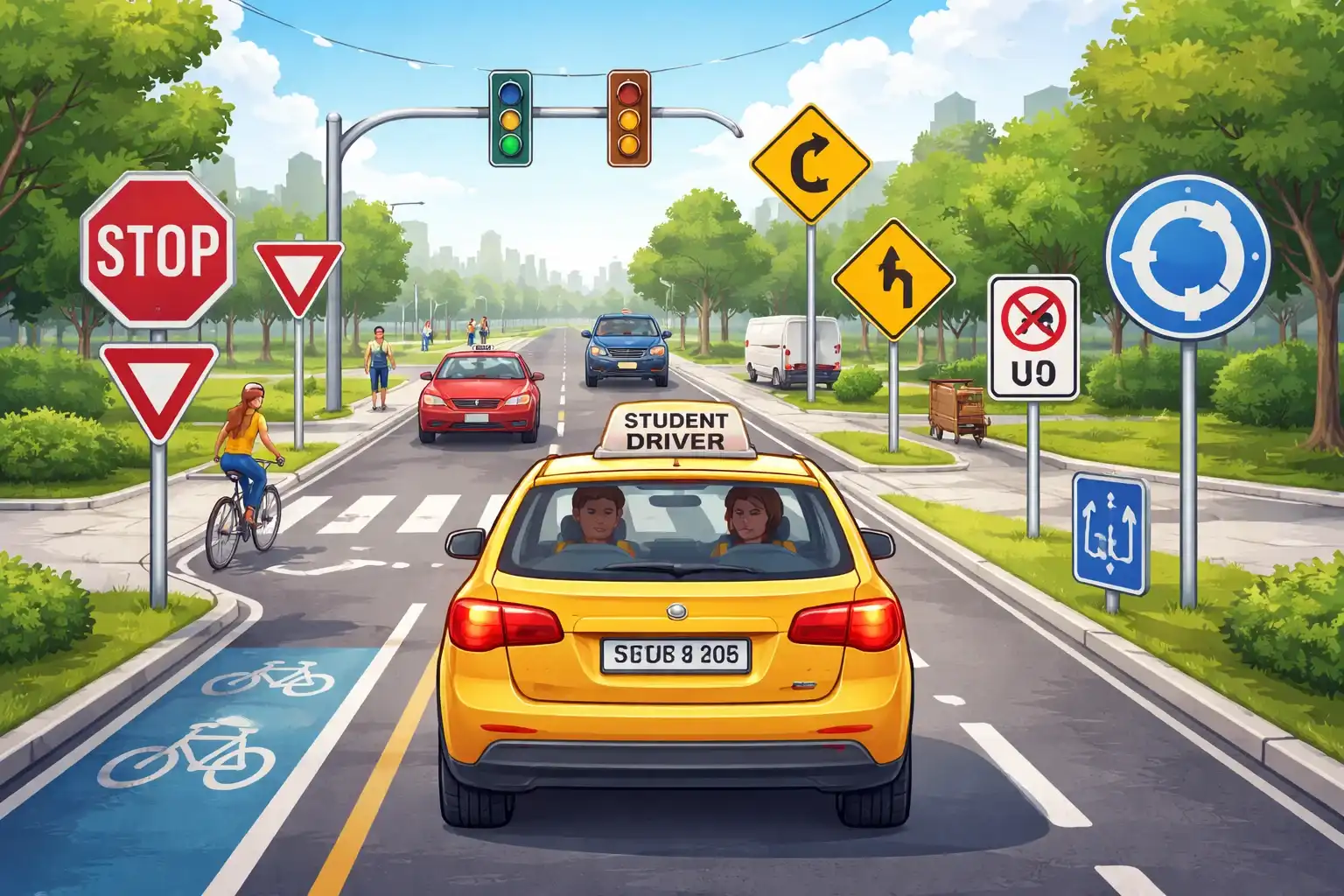
Learning to drive is an exciting rite of passage, but it carries serious responsibilities. Before one can dive into driving a vehicle, they have to learn the basic traffic laws that make roadways safe for drivers and pedestrians. The act of driving is less about manipulating a machine than it is the system, discipline and civic awareness.
For the person looking up the best driving school near me, knowing traffic laws before practical training can help to make lessons smoother and more effective.
Value of Traffic Rules
Rules of the road are made to keep order and decrease car accidents. In a city like Delhi, where you have traffic jams and combined movement of vehicles; knowledge and adherence to the road rules becomes extremely important. Rules regulate drivers’ expectations and limit clashes at intersections, on motorways and in residential localities.
By beginning lessons with a good theoretical starting point, students find confidence and learn safe driving techniques from the outset. Professionals training centres such as Onroad Motor Driving School in Delhi focus on road rules and awareness, before letting you for your practice ride.
Road Signs and Their Meanings
Road Signage: One of the first things that comes with learning is road signage. The traffic signs are split into three categories: regulatory, warning, and informative. Regulatory signs feature speed limits, no-entry areas and compulsory traffic directions. The signs must be obeyed as they have legal standing.
Alert notices warn drivers of factors which may pose a risk such as tight turns, pedestrian crossings and school zones. Menuboard signs direct and announce your business. The ability to identify these signs on the road can be helpful in avoiding sudden reactions and ensuring everybody’s safety.
A student that fully comprehends road signs is better prepared for lessons and the test whilst on the road.
Speed Limits and Lane Discipline
Speed limits aren’t pulled out of the air, they are a well considered decision based on road use, traffic volume and safety. Speeding not only raises the likelihood of accidents, there are also harsh penalties in place.
Equally important is lane discipline. By staying in your groove, and not doing unnecessary lane changes, traffic is much better. And on highways, the right lane is used for passing and the left lanes are all regular-flow. In city driving, maintaining lane and order is the key to less confusion and panic brakes.
These basics are usually focused on at driving schools since over speeding and using lanes wrongl, are the two fundamental activities of accident creation.
Rules of Right of Way and Intersection
Is important to know what right of way means while driving. On unsignalized cross roads right is almost always prevailing. And the priority should always be given to pedestrians crossing at zebra crossings.
Traffic lights are to be obeyed at signalized intersections. “jumping one traffic signal is a serious offence, and a common cause of urban accidents. It is something that learners need to develop: patience and a good observation; even though the road may seem deserted.
Schools such as Onroad Motor Driving School ensure that students get hands-on experience of intersecting under the supervision, which is one of the most challenging factors for city driving.
Use of Indicators and Mirrors
Indicators and Mirrors Correct use of Indicators and Caution is a fundamental rule which is quite Marked. When you signal, others know what you are doing, which helps them adjust accordingly (e.g., stop for someone turning or get over so a car can merge). This one small practice avoids clashes and confusions.
Rear-view and side mirrors should be examined frequently, particularly before braking or changing lanes. Were you not even informed that defensive driving all starts with the eyes and mirrors give an eye to what goes on around?
Instructors repeatedly tell students that the road shares information though indicators, brake lights and positioning.
Seat Belts and Safety Measures
Both driver and passengers are required to wear seat-belts. They greatly diminish the danger of injury during abrupt stops or accidents. Like, the riders of the two wheelers should always wear helmets.
Sitting in the right seat, making mirror adjustments before driving, engaging the handbrake at a stop may seem like small behaviors but together they are part of safety.
These are what learners tend to take for granted, and we however have strictly reinforced these during the first sessions so that responsible behavior starts on day one.
Mobile Phone Usage and Distractions
It is against the law and very dangerous to drive while using a handset. Just a second or two of inattention can cause catastrophic accidents. Students need to learn the discipline of focusing on nothing but what is in front of them.
Other diversions, like loudly playing the radio, eating while driving or arguing with others in the vehicle can also slow response times. Driving responsibly means being attentive and aware of your surroundings.
You can only learn the best driving school near me, that emphasizes on defensive driving and efficiently avoiding distractions.
Parking Rules and Basic Etiquette
It is very imp for parking in the right place and avoid no parking. Illegal parking is bad for the flow of traffic, and can also mean fines or a tow.
“Listening to some basic road etiquette – not honking unnecessarily, making way for emergency services and keeping a safe distance from cars in front – is representative of good driving behaviour. Common curtesy on the road helps to reduce stress as well as assist with a smoother flow of traffic.
Preparing for Practical Driving
Before you start driving, your students should be familiar with all aspects of vehicle controls, including clutch, accelerator, brake and gear change control. Knowing how the car reacts to inputs prevents panic during actual driving scenarios.
Professional institutions like Onroad Motor Driving School in Delhi prefer a steady exposure. Students start in closed environments before they are moved out on to busy roads. This systematic method allows students to literally learn traffic rules in practice.
Conclusion
The rules of the road are designed to keep us safe. Learners_syllabus_traffic_signs Road Signs and Traffic Limits To master road signs and speed limits; The use of lanes; Defensive driving techniques.
The difference in learning and application of these rules is attacked by which institute an individual chooses. Everybody looks for the best driving school near me when it’s all about organized education, qualified instructors and regular focus on safety on road.
By studying and obeying traffic laws before even getting on the road, novices have a better chance at acing their driving test while adopting wisdom that will help keep them safe behind the wheel for years to come.