



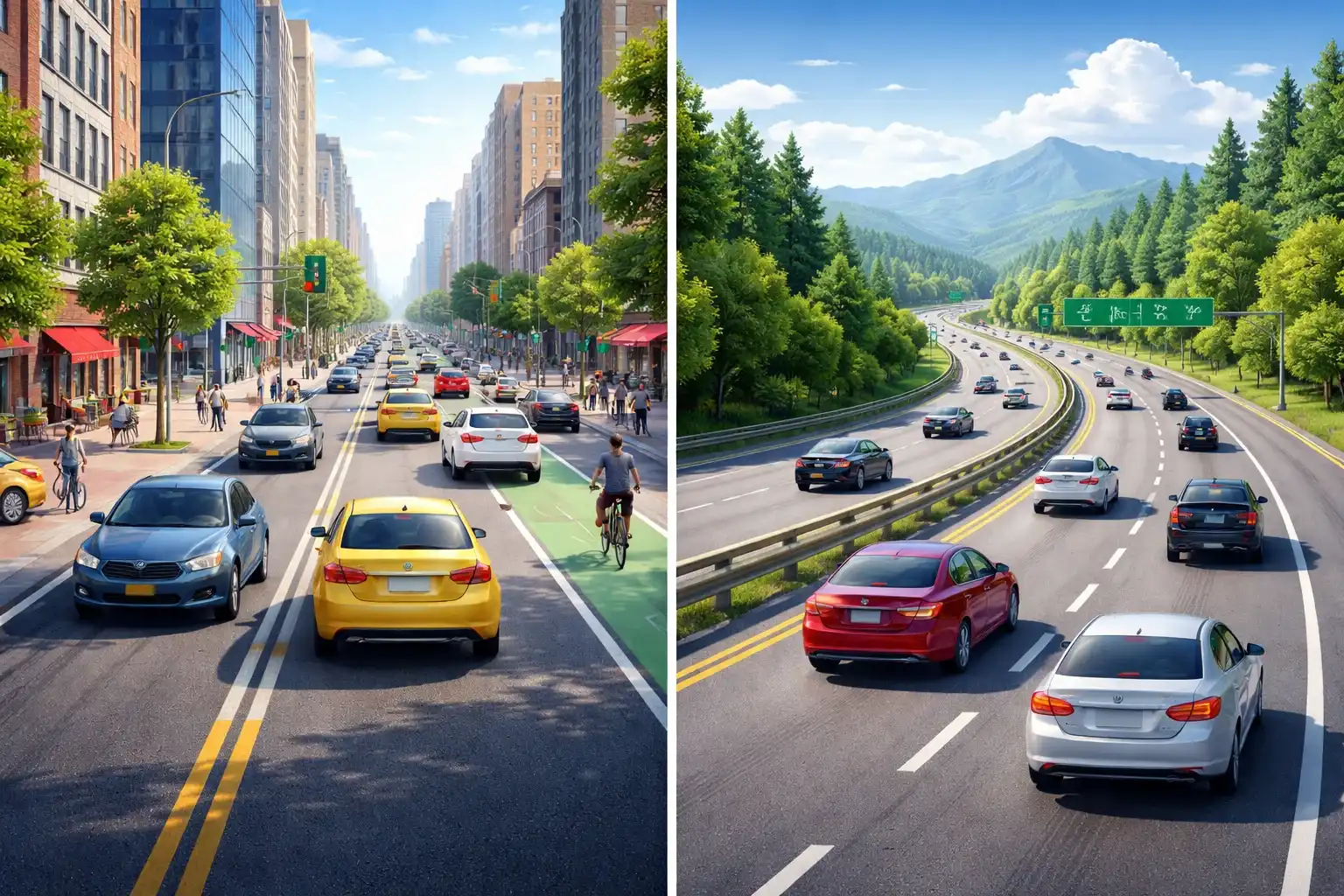
Driving is key life skill, but not every driving environment is the same. New drivers quickly realize that city driving is a different animal from highway driving. They all require different skills, knowledge and confidence. There are learners who enrol themselves in driving classes in Delhi, frequently question as to which of them is tougher and how they could get ready for each. Difference between city driving and highway driving — The knowledge gained can make you a safer, confident driver.
Traffic Conditions and Road Environment
Traffic density is the most obvious difference between city and highway driving. The city roads bustle with cars, buses, bikes, auto-rickshaws and pedestrians; and in places even animals. In Delhi in particular, traffic patterns can turn on a dime depending on the hour of the day.
Highway driving, in contrast, typically takes place on wider roads with fewer stoppages. It has fewer traffic signals and cars traveling in the same direction at constant speed. Though roads are open on highways and may seem a lot easier to drive, they require better control and vigilance due to high speeds.
Students enrolling in driving classes in Delhi have realised that city driving fosters patience and on the spot judgement, whereas highway driving imparts stability and lane discipline.
Speed and Control
Speed is another major difference. In cities, speed limits are lower due to the presence of heavy traffic and pedestrian movement. Drivers have to stop abruptly or slow during a lot. This will involve consistent usage of brakes, clutch control in manual vehicles and keen observation.
Highway driving consists of much higher speed limits. Usually, vehicles are in constant flow, so the driver must be able to handle the steering wheel and maintain a safe distance from traffic. Starting to break suddenly at high speeds is not a good idea. All they care about is ignoring slowdown, double lane to highway merging, and tailgating (because it’s a formula 1 be damned race) but when you really ask them what the real problem is—its not that of disobeying rules on roads—the key No, not all roads are placed equal like highways..
The instructors at Onroad Motor Driving School explain that beginners need to learn control at slower speeds before venturing onto long stretches of highway. Step by step, considered passing is the best way how to gain confidence.
Attention and Awareness
City driving demands continuous attention. Pedestrians cross at any moment, cars switch lanes without warnings, and the traffic lights are every few blocks. Drivers have to be vigilant at every moment. Since you are always looking at mirrors, checking blind spots and reacting to signals, multitasking becomes crucial.
Driving on the highway demands a different kind of attention. Though there are fewer stops, drivers have to stay up mentally for longer stretches. It can even become a risk factor. These include monitoring speed, keeping in the correct lane and predicting what other fast-moving vehicles will do.
Highway Fear: Many learners searching for the best car driving classes near me may also be a bit wary of highway fear itself. The professional training reduces anxiety because one is taught defensive driving for both environments.
Gear Usage and Driving Technique
Particularly in a bustling city like Delhi, drivers change gears more often due to fluctuations in speed. Slow-moving traffic uses first and second gears frequently. Timing of clutch control is very important to detect jerks and stalling.
On freeways, we are in high gears exclusively. Drivers change gears less often because speeds are steady. In such situations, clutch control is less relevant than good steering stability and keeping a safe distance from other road users.
Experienced instructors at Onroad Motor Driving School stress upon this technical difference during practical classes. One key point is that understanding how gear needs change as the road conditions vary can help in making an overall better mode of driving decisions.
Stress Levels and Mental Pressure
For beginners, driving in the city can be stressful. There is pressure from honking, traffic jams and tight parking spaces. Missteps can happen when you lose your stranglehold on your temper or rush into decisions.
Speed can be anxiety-inducing, especially when you’re a new driver. It is vital to have confidence and a good distance judgment when overtaking oncoming large vehicles like trucks.
In-depth training on mental composure along with driving skills is one of the aspects in a professional driving class in Delhi.
Fuel Efficiency and Vehicle Wear
Frequent acceleration/braking leads to increased wear-and-tear of your brakes and clutch plates.
Most highway driving is more fuel-efficient because vehicles are moving at constant speeds. But those higher speeds depend on proper engine performance maintenance and tire condition.
At Onroad Motor Driving School, learners are also taught basic vehicle care and how maintenance varies with driving conditions. Such useful knowledge makes drivers more responsible car owners.
Which One Is Harder?
There is no simple answer. City can be a test of patience and nimble reflexes. The highway is a test of confidence and long-distance focus. City driving tends to be more difficult for new drivers because of the complexity of dealing with traffic. Once drivers get used to it, highway driving can seem easier—instead of the stop-and-go motion common in city traffic, flow is generally smoother.
Visit to get the best car driving classes near me structured learning that offers education ranging from in a controlled environment. As the learners are not moved to highways suddenly (as proper training is provided), they never feel a burden.
Final Thoughts
City driving and highway driving are two facets of the same skill set. Both need awareness, control and responsible decision making. City roads do teach you a lot on how to deal with traffic and unpredictable situations, but highways walk you through the art of speed control and staying focused.
Becoming knowledgeable in the field helps avoid pitfalls. Onroad Motor Driving School (Delhi) trains its learners step by step, so they know the ground reality and psychologics of both driving styles. If you practice regularly, learn with patience, and develop helpful habits, any driver will be capable of navigating both busy city streets and fast-moving highways.
Arguably, the best approach is not to pick one environment over another. It is that you respond to every road with safety, assurance and duty.