



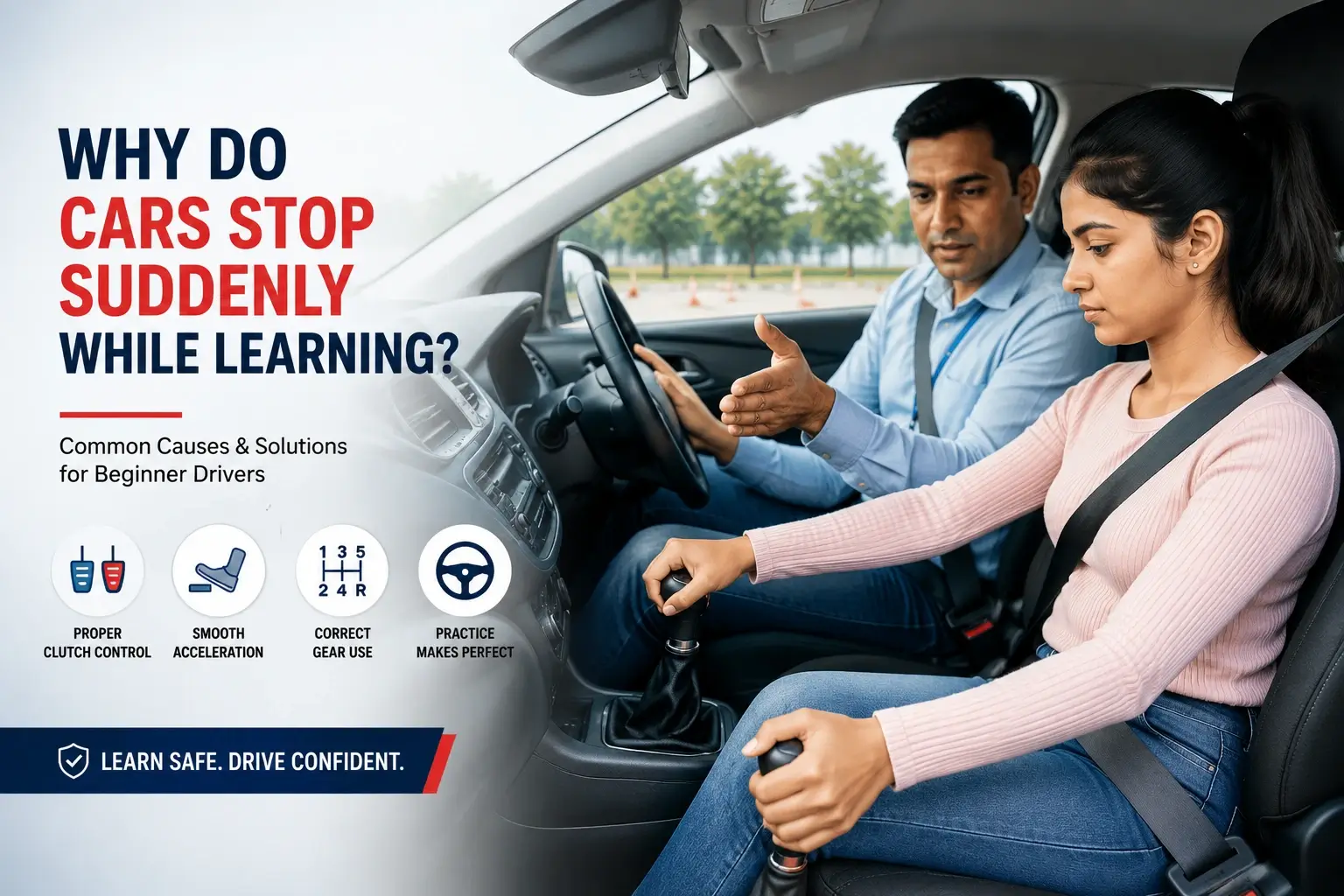
Learning how to drive is a rite of passage but new drivers often run into the same issue when they take their first few lessons: The car just stopped going anywhere. Many of us have thought, and whilst learning why do cars stop suddenly. Stalling this problem is often during exam and you may well call Stalling — it is one of the most common learner driver problems when driving a manual car.
If you’re a fledgling chauffeur in Delhi, knowing why does a car stalls and how to prevent it can make lessons easier, safer and more pleasurable. The bright side is stalling at first is perfectly normal, and it happens less with practice with onroad motor driving school.
Why Cars Stall When Studying To Drive
This is because when the engine can’t pull in power and movement, a car will stall. In manual transmission cars, this usually happens when the clutch and accelerator are not operated in synchronization.
Beginner drivers are still building muscle memory and car control, so sudden stops were not unusual as they began learning to drive a manual. Perhaps the most fundamental skill each novice driver must learn is how the clutch interacts with the engine.
Arguably The Most Common Reason is Bad Clutch Control
The single most common cause for cars stalling when learning is poor clutch control. A lot of learners find that they are quite hasty in releasing the clutch pedal when they are moving off.
The engine is attached to the wheels via a clutch. If you let it off prematurely before the engine is able to get enough power through from the accelerator, it cant keep going and will stall.
Teaching clutch control: Lift the clutch gently until you are in the bite then apply a little throttle before releasing the pedal completely. This process becomes automated with consistent practice.
Understanding the Biting Point
The biting point is the moment at which a clutch has started to connect the movement of your engine to that of your wheels. Most learner drivers either release the clutch before they should, or hold it incorrectly.
In order to get the smoothest of starts especially with the Delhi traffic where chances are you have to stop and restart multiple times.
Insufficient Acceleration
Another common driving mistake made by beginners is failure to put enough gas on the pedal while releasing the clutch.
Any time a vehicle begins to move, more power is needed from the engine. When there is not enough acceleration, the engine speed falls too low and this results in an unintended stop of the vehicle.
New drivers usually centre their attention on the clutch and forget about the accelerator. Coordinating both pedals is a fundamental step in driving lessons for those just starting out.
Starting in the Wrong Gear
Trying to start a vehicle in second or third instead of first gear can also result in stalling.
First gear places the greatest amount of torque on the wheels, which is what you need to get your vehicle moving from a standstill. When a learner gets into the habit of going from gear 1 on to gear 7 without stopping and wondering why the engine struggles to pull away as easily.
No wonder, then, that driving instructors often stress the importance of gear awareness; picking the right gear enhances control over your vehicle and decreases stalling.
Panic and Nervousness When Driving
The first driving sessions for many learner drivers are an anxiety experience. When you get nervous, you may have a tendency to rush with pedals, hesitate or forget what steps are needed in driving.
If learners get stressed, they may either release the clutch too quickly or forget to apply enough acceleration. These types of errors most commonly result in the car stopping while driving.
Confidence grows through practice. With an increase in the driving skills, the relaxation level of learners improves and they handle the vehicle smoothly.
How NOT To Stall A Car – And, Where To Learn
Training and practice in each and every technique-of course, the most direct way to not stall a car. Focus on clutch control before other driving elements
A large area to drive slow, practising getting in the clutch’s biting point. You are practicing soft throttle to match clutch friction instead of rushing it.
Good habits are encouraged from the beginning and help to reduce frustration on the road.
Why Professional Driving Lessons Matter
It simplifies your learning curve since you learn from experienced session experts. They use explanations on how a vehicle works that is simple to grasp and offer students real-world exercises that fine-tune clutch control and gear work — two things.
They prefer structured lessons to give learners a safe environment in which they can establish their confidence and learn the skills that they will need, which is why driving theories for learner drivers are predominantly used by those who seek a reliable driving school in Delhi. It gives instructors the ability to identify concepts that students struggle with and provide targeted feedback that allows students to learn more effectively.
Conclusion
Learning to drive, probably the most common reasons you’ll stop suddenly are due to clutch control, timing of acceleration & gear selection and beginner driving behavior. Since a certain degree of car stalling is entirely normal, especially for novice drivers, it should be no encouragement to ditch the testing altogether.
With the right amount of practice imparted under the supervision of professionals in driving schools in Delhi, individuals can easily get through these obstacles and perfect their driving skill for a smoother and even more controlled driving experience. The very first step to being a better driver and limiting stalling is knowing why it happens.