



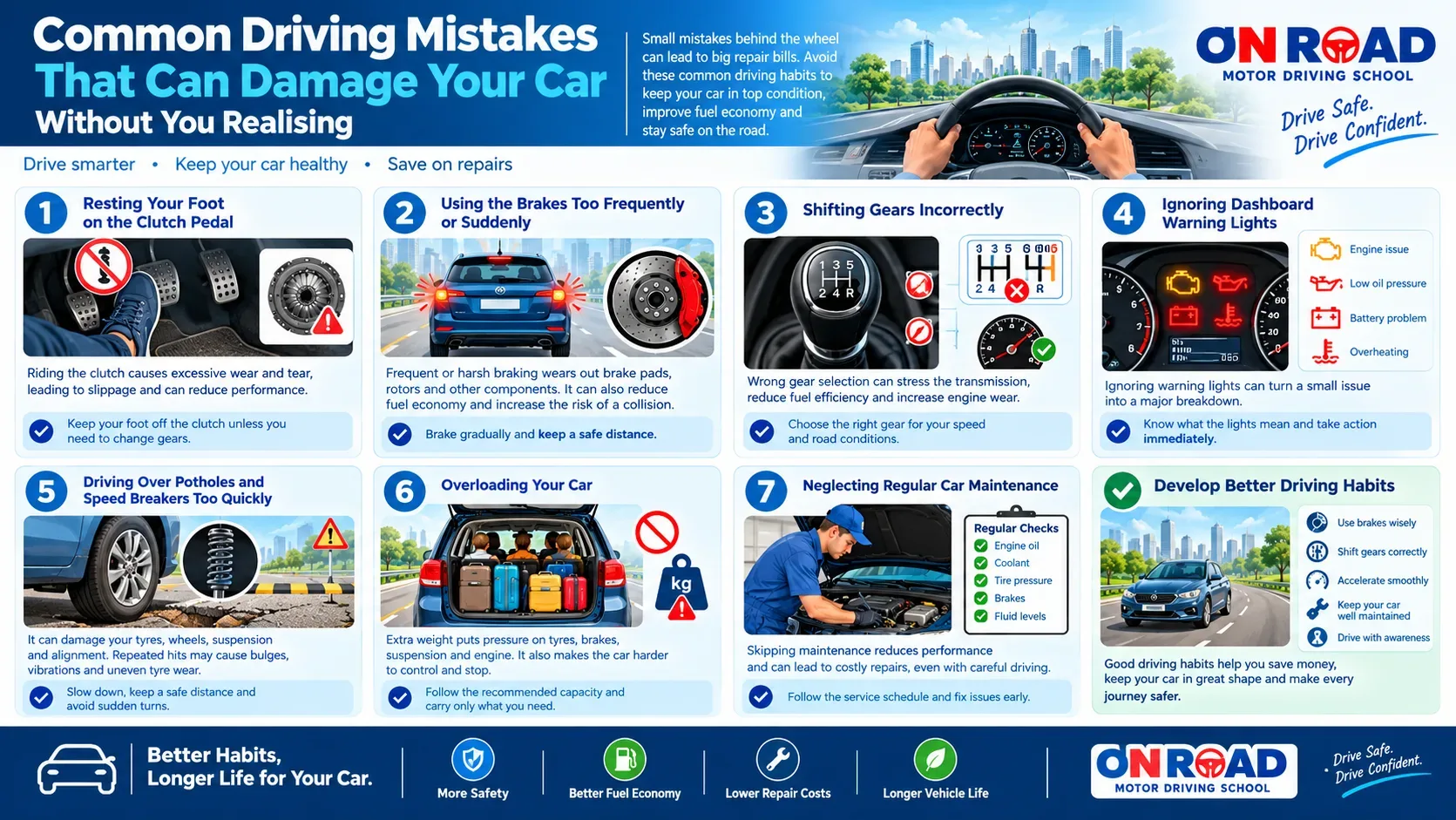
In addition to being able to steer, change gears, and follow all of the required traffic laws, safe driving includes understanding how to avoid developing harmful driving habits. There are numerous common driving errors such as improper use of the vehicle’s clutch and sudden braking that can lead to increased vehicle maintenance expenses, decreased fuel economy, and reduced life span of some of the most critical parts of your vehicle.
For all levels of experience with driving (beginner to expert), knowing how to prevent damage to your car during use is extremely important. Regardless of whether you are a daily driver in Delhi traffic or a frequent user of highways, developing proper driving techniques will aid in keeping your vehicle operational and safe for travel.
Resting Your Foot on the Clutch Pedal
One of the biggest errors people make when they drive a car with a manual transmission is to ride the clutch. When some drivers are going through heavy traffic, they believe that riding the clutch will give them more control over their vehicle. However, riding the clutch will cause excessive wear and tear to the clutch.
Continuous partial clutch engagement will cause wear and tear on the clutch plate, possibly leading to its damage. Wear and tear can ultimately cause clutch slippage, decreased vehicle performance (acceleration), and costly repair bills.
Keep your foot off the clutch pedal unless you need to use it. This will prevent damage to the clutch in your car. When you are going to change gears, make sure you press the clutch all the way down. When you’ve changed gear, slowly release the clutch. Proper clutch control is extremely important if you are a beginner and will be driving a manual car in India where there are many vehicles on the road.
Using the Brakes Too Frequently or Suddenly
Frequent heavy braking is another common type of driving behavior which may cause damage to a vehicle. When you use your brakes frequently in response to a stop light, an intersection, or when driving in a large amount of traffic, you put more pressure on the brake pads, rotors, and other components of the braking system.
Aggressive braking may also make the passengers uncomfortable and increase the likelihood of being involved in a rear-end collision. Due to the frequent sudden stops of other vehicles in Delhi, it is especially critical to maintain a safe distance between your vehicle and the one ahead.
Practice safe driving through continuous observation of potential hazards on the road ahead, as well as an understanding of when there will be a need to slow down, and then using the brakes in a controlled manner, when appropriate. Gradual braking can prevent excessive wear of your vehicle’s braking system, and can also help create a safer driving environment.
Shifting Gears Incorrectly
Improperly shifting gears can put additional stress on your car’s transmission. shifitng into a lower gear when you are going too fast, forcing the shifter, or putting the car into the wrong gear will make it difficult for your car to operate smoothly.
Driving with an inappropriate gear ratio (too high) can cause your car’s engine to labor, and excessive revving can lead to increased wear on your car and higher fuel costs.
Select the right gear for the speed you are travelling and the type of road surface you are driving on. This will help prevent damage to your vehicle’s engine and transmission. Always adhere to the manufacturer’s suggested gear selection, and practice making smooth gear shifts while learning how to drive.
Ignoring Dashboard Warning Lights
Dashboard warning indicators give drivers crucial details concerning their vehicle’s state. When drivers ignore an engine malfunction warning, an overheat warning, a low oil pressure warning, or a battery malfunction warning, they are turning what would have been a small repair job into a large mechanical breakdown.
The same as for a car that is overheating and giving you a warning about its temperature, you should take action immediately if your vehicle has a “low engine oil pressure” light on.
Know what all of those little pictures on your car’s instrument panel mean. Read the manual for guidance if one of those symbols starts flashing at you.
Driving Over Potholes and Speed Breakers Too Quickly
When driving in India, there are many potholes and uneven areas on the roads. Also, the speed breakers are often not well marked. If you drive over any of these problems too fast, then you may cause damage to your tires, wheels, suspension system, and/or wheel alignment.
Repeated hits on the tire may lead to bulges in the tire, a vibrating steering wheel, and/or an irregular pattern of wear on the tire. These issues can decrease the safety of the vehicle and create more expensive repairs.
Slow down as you approach potholes and speed bumps. Maintain a safe distance between yourself and the car in front of you, this will allow you to see potential problems on the road. Do not make abrupt turns, and only change lanes when there is no other cars around.
Overloading Your Car
The additional weight from having too much luggage or too many passengers will increase the load placed upon the tires, suspension, brakes and the engine. Additionally, when a car is overloaded, it may be harder to control the car, stop in a timely manner and have the car be stable overall.
Before you start a long trip, find out how many people are allowed to ride in your car/truck and how much weight it can carry. Place your baggage in a safe place inside the car/truck and make sure that you do not carry anything that is not needed for the trip.
The proper use of your vehicle’s tires (pressure) depending upon the weight being hauled by your vehicle, per the manufacturer’s recommendations, helps you drive more safely and extends the life of your vehicle’s tires.
Neglecting Regular Car Maintenance
Delaying routine vehicle maintenance such as oil changes, tire pressure/wear checks, brake inspections, and regular maintenance visits will decrease your vehicle’s performance and potentially cost you a lot of money in repairs. Even with extreme care when you drive, you cannot avoid all mechanical issues.
Make sure you check your tires for correct air pressure, keep track of how much oil and coolant you have based upon the owner’s manual instructions, and adhere to the suggested maintenance schedule. Report any strange noises, vibrations, fluid leaks or other changes in how your vehicle stops as soon as possible.
Develop Better Driving Habits to Protect Your Car
By avoiding common mistakes while driving, you may be able to prolong the life of your vehicle, cut down on repair costs and increase safety during daily trips. Regular maintenance, proper use of the brakes, correct selection of gears and smooth acceleration are all necessary habits for all responsible drivers.
At On Road Motor Driving School, students have the opportunity to develop safe driving habits, improve their knowledge of the road, and learn how to properly operate a car. By gaining these abilities at an early stage, new drivers can gain confidence in themselves as they begin to take care of their own cars.