



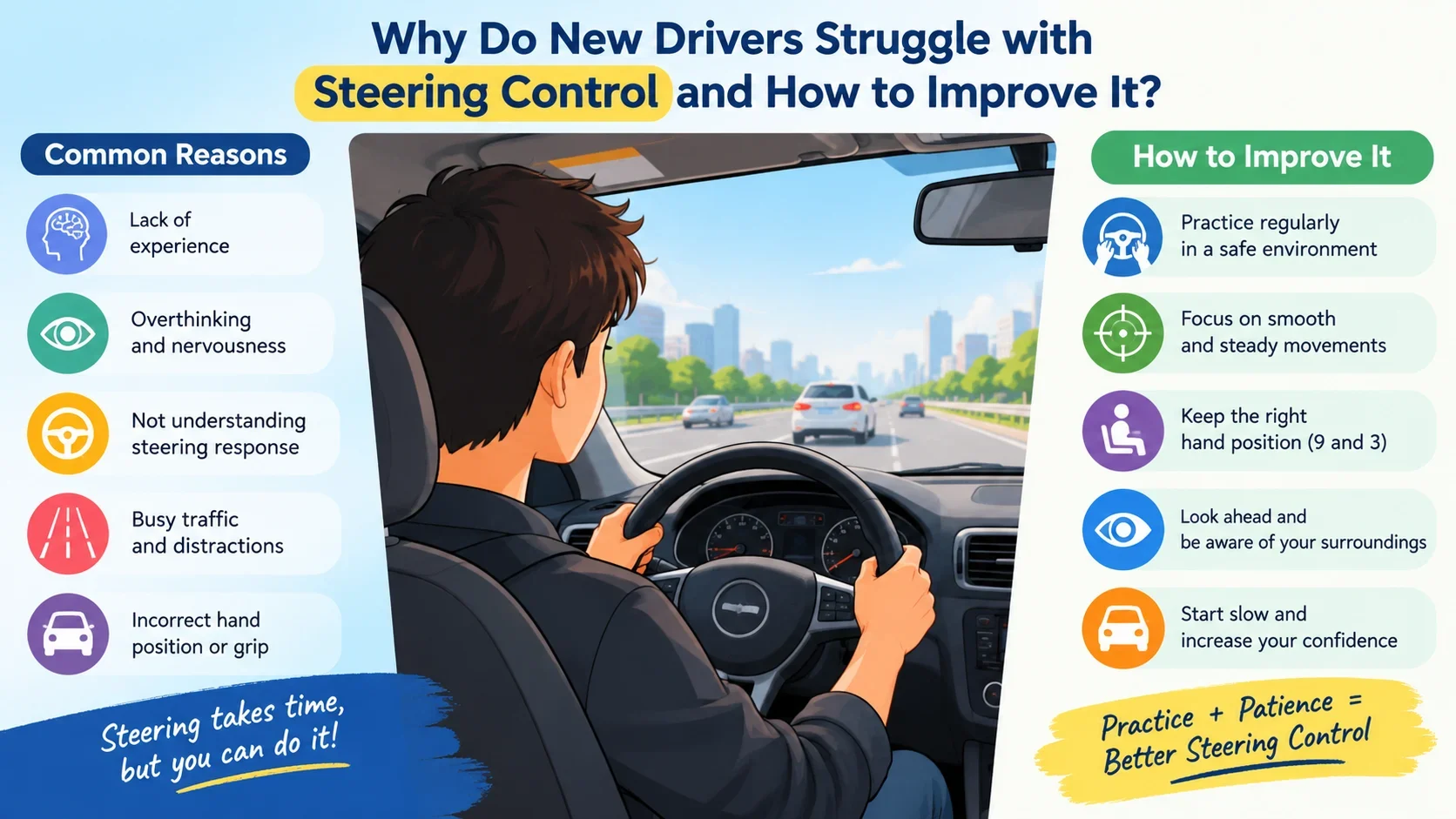
Learning how to steer a vehicle effectively is perhaps the single most critical skill for all beginning drivers. Most novice drivers will have difficulty with making smooth turns, staying within their lanes, accurately assessing the curve of the road, and controlling the steering wheel confidently. All of these difficulties are typical during driving instruction, particularly in situations where student drivers are driving on busy streets, making tight turns, or dealing with heavy traffic.
By learning the correct ways to turn your car on the road you will be able to make the roads safer for everyone, keep control over your car, and feel confident while driving. When you take the time to practice what you learned in driver’s ed, and have someone who is trained in the field of driver education help you with practicing, then you will eventually become a better driver by turning more fluidly and handling many types of roads with greater ease.
Why Do Beginners Struggle with Steering Control?
Beginning drivers often have trouble steering because they have not yet developed an understanding of how to coordinate the movements of their hands, eyes, and feet. When learning to drive a car, beginner drivers may spend too much time focusing on the steering wheel rather than watching the road ahead.
Nervousness can additionally impact steering control. Many learner drivers hold the steering wheel too firmly, make rapid adjustments to their steering inputs, and/or over-steer. All three of these errors can lead to a car moving unsteadily within its designated lane.
Another typical issue is determining the location of the automobile in relation to the road. Beginners with little driving experience often struggle to judge how far to turn, how to drive through narrow roads, or how to keep enough space between themselves and the car in front of them.
Common Steering Mistakes New Drivers Should Avoid
Holding the steering wheel incorrectly makes driving harder and more random. One of the most typical errors made by drivers when it comes to steering, is holding the steering wheel too tightly. When you have a relaxed yet firm hold on the steering wheel, your car will be able to move in a smoother manner and you will be able to control your car much better.
Over steering is an additional area of concern. Steering the car too much when turning can create an instant shift in direction. On the other hand, under steering on a turn will cause you to go wider than what was originally planned.
In addition to being distracted by things on the side of the road, many beginning drivers will stare straight down at the ground in front of their vehicle, rather than gazing farther down the road. If a driver is looking towards where they want to go (i.e., in the direction of their intended route), then they can be able to see upcoming turns, curves, and other potential problems before they happen.
Sudden steering changes should be avoided as often as possible. Smooth, controlled motions keep a car stable and safe for everyday use.
How to Improve Steering Control While Driving
Maintain the Correct Steering Position
The basis for a good level of control over the vehicle through the use of the steering wheel is a comfortable seating position. You will want to position your seat in such a way that you are able to grasp the steering wheel with relative ease and keep each elbow slightly flexed. When possible, you should maintain both hands on the wheel in accordance with the suggested hand placement techniques taught to you by your driving instructor.
Look Ahead Instead of Down
The best drivers are always watching what is coming up ahead of them. By looking farther down the road where you plan on driving, you will be able to see any obstacles such as turns, intersections, parked cars, or changing road conditions before they happen.
During your first few times behind the wheel for driving practice, make sure you are looking at the location you want to go to. When practicing forward looking, check your mirrors regularly, and perform appropriate blind-spot checks prior to changing lanes or making turns.
Practise Smooth Steering Movements
Steering smoothly is crucial to maintaining control of your car. Practice making soft turns in a controlled and safe environment with supervision prior to moving on to more difficult roads.
I’ll show you how to turn the car, steer it around a curve and bring the wheel back to center with no sudden movements. I’ll demonstrate the correct way to turn the car at various speeds and angles.
Understand Your Car’s Position
You will need some time to learn how to determine the size of your vehicle and where it is located. It would be beneficial to practice keeping a steady distance from lane lines and recognizing markers which allow you to place the vehicle in a safe location.
You should start your driving practice in a calm, appropriate place for learning to drive with a certified teacher. After you gain some confidence, begin to use other roads and drive in moderate traffic.
Stay Calm and Avoid Overcorrecting
Driving anxiety makes it easier for you to make errors with your steering. Take a deep breath, keep your hands relaxed on the steering wheel, and pay attention to what’s going on around you while driving, instead of focusing on how often you’re moving the steering wheel.
As long as you are able to make the appropriate, gradual adjustments to your vehicle’s position relative to other drivers, and remain conscious of all surrounding traffic, then it is best to avoid making sudden, extreme turns after having made a slight error. Consistent practice with an experienced driver will provide you with the confidence needed to safely operate a motor vehicle.
Why Professional Driving Lessons Matter
Professional driving instruction helps beginner drivers form proper steering habits early on. Experienced driving instructors can find issues such as hand placement, how to turn correctly, maintaining a good lane position, and placing the car where it should be.
A structured course in driving a car provides a student with the opportunity to practice various types of driving conditions in a controlled environment. Some of these conditions can include; turning at an intersection, driving on a narrow road, changing lanes, and driving in heavy traffic.
For people who are new to driving in Delhi, finding a trusted driving school is helpful to help you learn how to drive in an organized way. A great place to start learning to drive and building your confidence on the road would be at Onroad Motor Driving School.
Conclusion
By being patient and practicing proper technique, beginners will find that they are improving their steering control. If you are new to driving, your driving skills will improve over time if you stay relaxed in the car, watch where you are going, make smooth turns and avoid quick corrections.
The development of effective steering controls is an important step in the development of a safer driving experience.With continued practice and professional driving tuition it will give the ability to deal with everyday road conditions with confidence.