



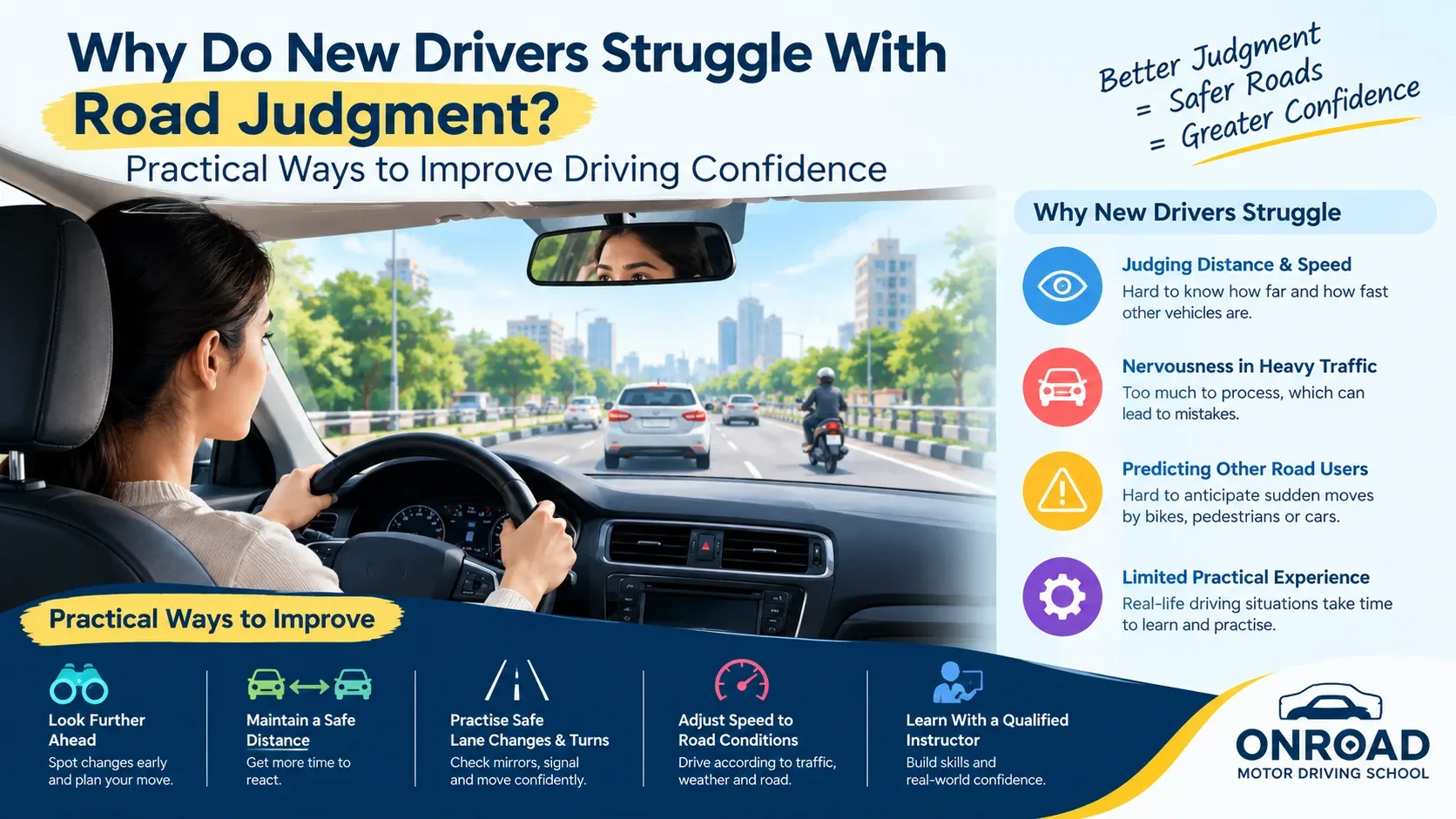
What makes beginning drivers struggle with making good decisions about when to pass, turn, stop, etc.? How can you increase your confidence in driving?
It also includes being able to tell how far away things are from you, understanding how traffic moves around you, knowing what could cause you trouble while driving, and making safe choices. New drivers will develop all of these skills over time through practicing regularly and experiencing different situations on the road. The challenges of driving can be increased by heavy traffic, unexpected turns, and fast-moving cars; especially if you have never driven before.
By understanding why new drivers make poor decisions regarding the road, they will be able to correct their errors, develop better driving habits, and gain more confidence when operating a vehicle on the roads of India.
What Is Road Judgment in Driving?
The assessment of road conditions, as well as the determination of what action to take while operating a vehicle, can be referred to as road judgment. Road judgment may also include the ability to estimate the velocity of other vehicles on the road, maintain an adequate amount of separation between your vehicle and those in front of you, select the correct lane for travel, and anticipate possible dangers.
Good decision-making on roads allows drivers to react to potential issues with a sense of calmness rather than reacting impulsively. This is especially true for those driving on the roads in India as there are many different types of vehicles (cars, motorcycles, buses) sharing a small amount of road space along with cyclist and pedestrians.
Difficulty Judging Distance and Speed
Many beginning drivers find it difficult to determine both the distance to another car and how fast that car is moving. As a result, they have trouble making turns, parking, passing other cars, and switching lanes. Additionally, if you don’t judge the distance correctly you could brake suddenly, or you could follow a car too closely.
Under the proper supervision, learning how a vehicle moves can assist students in maintaining a safer distance from other vehicles.
Nervousness in Heavy Traffic
Drivers who have limited experience on the road are likely to find that driving through a crowded area is overwhelming. The sounds of honking, sudden stops, people crossing the street, and other vehicles moving from lane to lane will create added pressure. When a driver is nervous they may focus on what the car in front of them is doing and ignore other things happening around them.
A learner should begin driving on quieter streets, then move up to busier ones so they can gain self-assurance without becoming overly stressed.
Difficulty Predicting Other Road Users
Drivers need to be able to predict what other drivers, pedestrians, etc., will do in order to drive safely. A motorcyclist can change lanes without warning; a pedestrian can cross the street; and a driver ahead of you can slam on his/her brakes.
By observing the way traffic moves and by identifying potential hazards, novice drivers can use defensive driving techniques. When you anticipate hazards early enough, you will have more time to react safely to those hazards.
Limited Practical Experience
Learning the laws of driving is very important, however practicing those same rules in actual driving environments takes time. New drivers will require practice at intersections, roundabouts, small roads, parking lots, and different types of roads. If you do not have enough practice with these types of driving scenarios, then some of your previous knowledge may seem like it was forgotten.
Look Further Ahead
Avoid focusing solely on the car directly in front of you. Check the road ahead for signals, signs, people walking, cars that are parked, and other things that may cause issues. Checking ahead allows you to spot changes in driving conditions before they become problems, giving you time to plan your next action.
Maintain a Safe Following Distance
Leave sufficient distance between your car and the car directly ahead of yours. The increased distance will allow you additional reaction time to slow down if traffic comes to a sudden halt. In addition, when operating your car in wet weather, reduced visibility, or other difficult driving situations, increase the distance. Additionally, following too closely reduces the amount of time that you have to react to events occurring in front of you, which in turn increases the likelihood of a crash.
Practise Safe Lane Changes and Turns
You should use your mirrors to see behind you before you change lanes. You need to make sure that there isn’t anything in your blind spot. You need to turn on your signals so people can tell what you are going to do. When you have enough room, then you may switch lanes. When you turn, slow down enough to be safe. Watch out for pedestrians who might cross the street. Watch out for other cars that might come toward you. If you drive smoothly, other people will be able to predict what you will do next.
Adjust Speed to Road Conditions
Confidence in your driving is not related to how quickly you drive. When deciding on the right amount of speed for the current situation (e.g., based upon the level of traffic, quality/type of road surface, visibility conditions, weather conditions, etc.) select an appropriate speed limit. Control over the speed you use will give you additional time to notice potential risks and make intelligent choices about how to avoid them.
Learn From a Qualified Driving Instructor
With professional driving lessons, you will be able to practice in real life traffic with a structured lesson plan. Your instructor has the ability to see where you are making errors, then help you learn how to control your car, park, maintain proper lane position, and recognize potential hazards on the road.
Learning to drive safely is facilitated at Onroad Motor Driving School where students are taught how to perform basic driving actions safely. Consistent teaching allows students to better comprehend what they see when driving and to gain confidence while behind the wheel.
Conclusion
Because they have little driving experience, are anxious while on the road, and cannot predict how other drivers will react, new drivers struggle with road judgment. However, if new drivers use improved observation, maintain a safe speed, take practical driving lessons, and practice consistently, they can overcome these difficulties.
It takes time to build your ability to judge how well you are doing with your driving on Indian roads. Professional instruction will help you avoid the most common mistakes that many new drivers make, as well as give you the knowledge to make better decisions. As a result, you will gain confidence in your driving abilities that lasts. Building this foundation of good driving habits early on will allow you to continue to practice responsible driving for the rest of your life.