



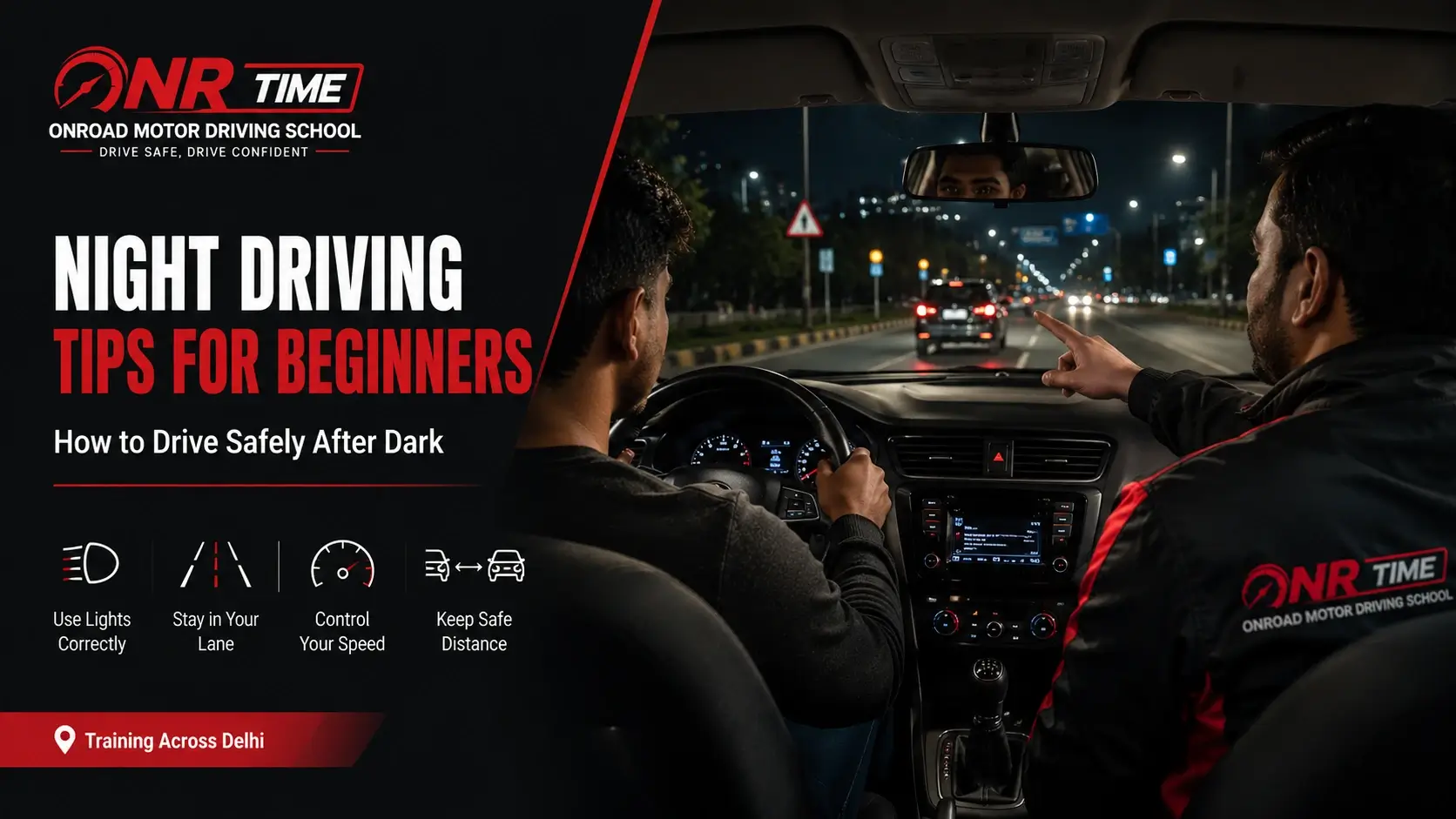
For many novice drivers, evening driving is very difficult to complete because after sunset it becomes completely dark. In a pandemic at night when roads look different, distances are guessed not gauged, and white headlights from oncoming cars can annoy or blind you. As a rule of thumb, driving at night seems to be a hellish experience for most nervous drivers and those with learner license holders across Delhi.
Familiarising yourself with safe night driving tips at an early stage will help new drivers gain confidence, more advanced observation techniques and ultimately establishing safer decision making habits. The professional trainers at On Road Motor Driving School frequently guide budding drivers on how to stay cool, vigilant and composed during low-visibility road environment.
What Makes Night Driving So Difficult for New Drivers
Nighttime driving attitude reduces the depth perception, and there is a thin visibility towards the peripheral sides. It is also the fact that even drivers who plan to drive during the night because they will depend more on headlights, road markings nor reaction timing than natural visibility.
This instills alertness in those learning how to change lanes, ride curves, pass, or parallel park. Fatigue is another more significant factor at night as well, as natural CNS levels decrease over long hours of work or study.
A nighttime drive in the busy Delhi traffic is also about dodging poorly parked vehicles, pedestrians randomly crossing roads, fluctuating high beams and erratic behavior of other drivers.
Controlled Speed at Night
One of the basic night driving safety rules is to slow down a bit relative to day driving. Because visibility is severely limited, drivers need additional time to detect an obstacle in the roadway, side of the road signs potholes or a sudden deceleration in traffic.
A lot of the time, beginner riders feel compelled to keep up with the flow of traffic. It also often escalates panic and diminishes control over the situation.
Going at a pace they can handle helps beginners to stay calm, and then likewise make better decisions steering and braking.
Use Headlights Properly
Improper use of headlights is one of the main reasons novices cannot drive safely at night. A high beam is frequently burned, leading to a blind glare for drivers coming oncoming.
Low beams are safer usually on city roads and medium traffic conditions. High beams must only be carefully used on dark roadways with few traffic visualization.
Because major headlights greatly reduce the visual clarity of a driver at night, drivers should regularly check their alignment and cleanness as well.
Do not look directly at bright lights
Direct headlights from oncoming cars can temporarily impede vision and concentration. New drivers panic when they see a bright glare and accidentally drift out of lane.
Best practice is close to the left-side of road edge with constant awareness of lane lines and movement forward. This allows you to mitigate the glare effect without losing control of the road.
The first thing to perform when did nocturnal is stories and visual discipline for avoidance instruction.
Leave More Distance Between You And Other Vehicles
Lower visibility means a longer stopping distance and also a longer reaction time when driving. This means that sudden breaks are much harder to predict, which is why tailgating at night becomes particularly dangerous.
Because beginning drivers often panic and slam on the brakes, which could even cause some sort of collision when a vehicle stops suddenly; however, the greater distance provides extra minutes to react safely if the traffic slows down unexpectedly. This improves the visibility ahead too, as larger vehicles may obstruct vital road information.
On Road Motor Driving School in Brisbane, professional instructors who recognized that a nervous driver`s best friend is distance management.
Cautious of Law Carriers and Two-Wheelers
Keep in mind that since it’s night outside, some road users like pedestrian/cyclist/two-wheelers find it more difficult to see at night and mostly when there are no good lights. Most of the road users in Delhi are dressed up darkly, or use no reflectors while travelling.
By paying extra attention around intersections, market areas, residential streets and roadside parking zones — these are very beginner mistakes that should not be made. That means executing slow scanning movements, and always checking mirrors whilst not raising the alarm in your body.
Avoid sudden steering reactions as they can create even more hazardous situations than controlled braking.
Avoid Driving When Too Tired
In addition, night driving renders the effects of fatigue on judgment, reaction time and concentration more pronounced. After too many hours behind the wheel or traveling through the night, even experienced drivers become less attentive.
Do night driving practice when tired or drowsy — avoid this if beginning a driver! Practice sessions 5 or even as little as 10 minutes in length with focused attention are far safer and more conducive to building driving confidence.
Ensuring good hydration, the right seated posture, and limited distractions within the car further enhance concentration when driving at night.
The Importance of Getting Professional Training for Driving at Night
Due to the anxiety or lack of experience, a lot of new drivers choose to not drive at night imo But keeping a distance from night roads for lengthy periods is normally whilst it takes time to build selfawareness.
Structured training at On Road Motor Driving School teaches learners about the real-world traffic conditions, how to manage headlights, defensive driving techniques under supervision of instructor and judgment on visibility. Night driving practice help the nervous novice replace fear with controlled awareness and safe habits.
Conclusion
People never do better than when they rehearse good behaviors in promising contexts, and beginers should be paced not pushed. The building blocks of safe night driving are controlled speed, appropriate use of headlights, adequate following distance and defensive awareness.
Professional road practice and gradual exposure are the best way to increase nighttime confidence safely for both learners and nervous drivers in Delhi. In the right habits & under an instructor from On Road Motor Driving School, you can conquer low-visibility driving conditions as a novice, but only if you learn how to properly handle things.