



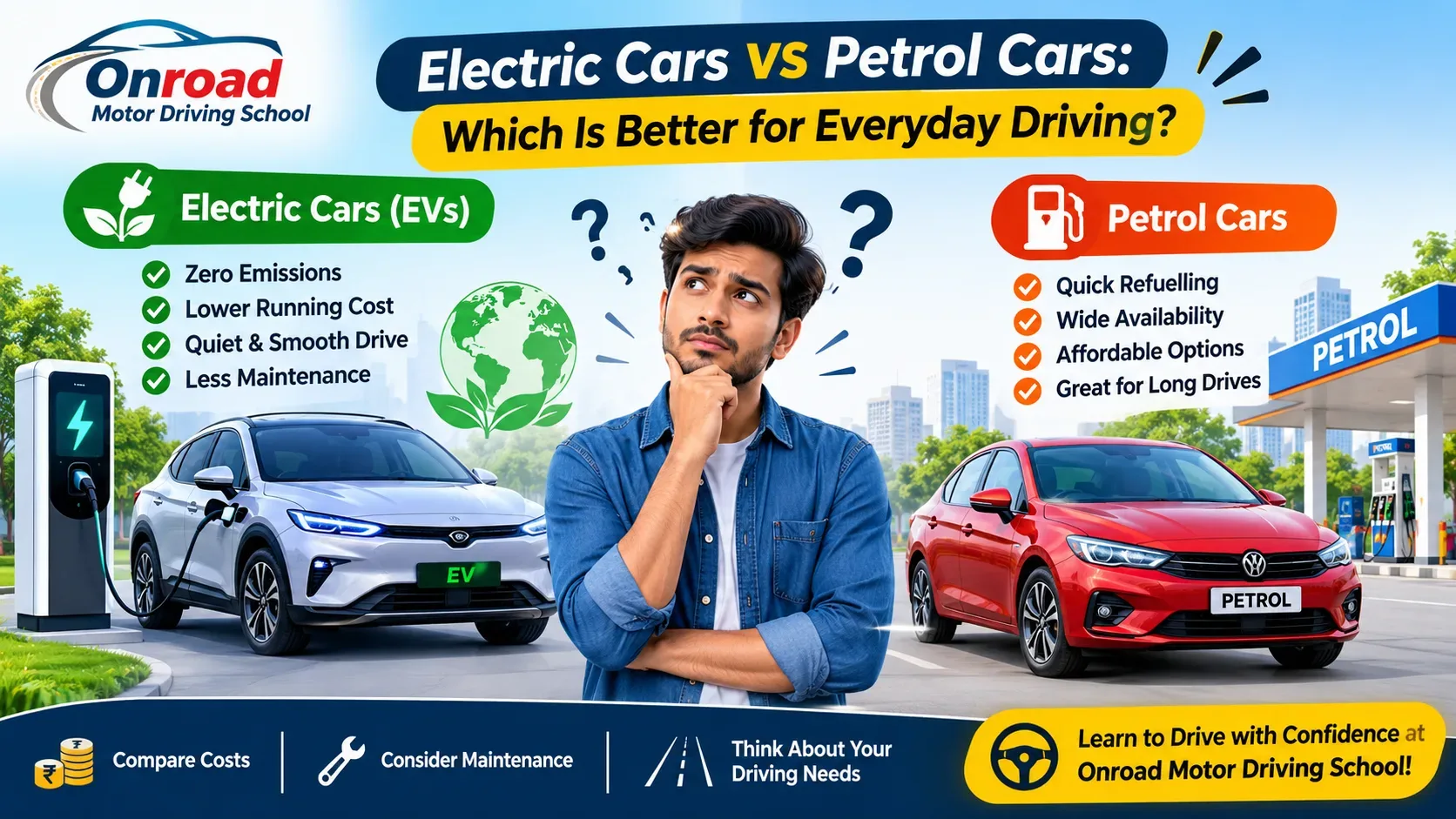
The auto industry has been transforming at an extremely fast pace. In India, there has been a significant increase in the popularity of electric cars. As a result of increased interest in fuel efficient vehicles, reduced running expenses, and environmentally-friendly transportation options, a large percentage of individuals have begun to compare electric cars with petrol cars prior to purchasing their first vehicle.
Both options have their own benefits, depending on how often you drive, what you plan to spend and what kind of life you live. If you’re a new driver, a daily commuter or thinking about buying a car, knowing the difference between electric vehicles and gasoline powered cars will give you the information you need to decide which type of vehicle is best for you. Which is better? That is the real question.
What Is the Difference Between Electric Cars and Petrol Cars?
The major way that electric vehicles differ from gasoline-powered vehicles is in the method used to run each type of vehicle. Gasoline-powered vehicles are operated through the use of an internal combustion engine which operates by burning gasoline to produce energy. On the other hand, electric vehicles are operated through the use of a battery-powered electric motor.
Electric cars (commonly referred to as EVs) will use a home charger or a public charging station to charge. Petrol cars require frequent visits to gas stations.
Electric cars generate little to no emissions when being driven. On the other hand, traditional gasoline-powered cars emit emissions. Therefore, electric cars are becoming a much more viable alternative for those who wish to have a cleaner mode of travel.
Are Electric Cars Better Than Petrol Cars?
There are many benefits that electric vehicles (EVs)offer over gasoline-powered vehicles, particularly for those driving primarily in urban areas. Some of these include being typically quieter, providing a smoother ride, and having fewer moving parts in the engine compartment. These factors can lead to less frequent routine maintenance than what is required on a gasoline vehicle.
People that frequently go on extended trips, or travel to remote locations that don’t have many options for charging electric vehicles, will find that driving petrol-powered automobiles is the most practical option.
Electric Cars vs Petrol Cars: Which Is More Affordable?
When comparing the costs of purchasing an electric vehicle with the costs of purchasing a gasoline-powered vehicle, there are other factors that should be taken into account besides the price at the time of purchase.
Electric vehicles may cost more up-front, but this will vary based on the specific vehicle you purchase and any applicable rebates or tax credits. Additionally, electric vehicle owners can expect to pay less to operate their vehicle as electricity is typically less expensive than gasoline when compared on a per-kilometer basis. This difference in operating cost depends upon what rate you are paying for your electricity and how much gasoline costs at the time.
In contrast, petrol cars might have lower initial purchase costs; however, regular fuel expenses will likely result in higher total ownership costs for individuals that use their car each day.
In addition to differences in fuel costs, there are differences in maintenance costs. Electric vehicles lack the engine oil, spark plugs and other parts you’d find in an engine, so routine powertrain maintenance tends to cost less than maintenance for gas-powered vehicles. In contrast, the cost of battery replacement, the cost of repairing the vehicle and the availability of qualified technicians can vary widely from one type of vehicle to another.
Which is the best car to drive in Delhi?
Electric vehicles have many advantages for everyday urban transportation. They can provide a smooth, quiet ride and excellent acceleration when stopping and starting at intersections or on congested roadways. These are some of the reasons why electric vehicles can be an attractive option for commuters who have to navigate the often crowded streets of Delhi every day.
The popularity of gasoline-powered vehicles continues to grow due to their accessibility to gas stations, the number of dealerships that offer maintenance services for these types of vehicles and the fact that there are options available at various price points.
Your selection will depend on how far you drive each day, what type of parking you have, whether there are charging stations available near you, and how much you will use the vehicle. It would be wise to find out if there are any charging options located close to either your house or job before purchasing an EV in Delhi.
Is it easier to learn electric cars or petrol cars?
Both electric and gas powered vehicles can be good for beginner drivers to learn to drive in. However, their controls will vary.
Most electric vehicles are designed with an automatic-type of driving system that does not have a conventional clutch pedal or manual transmission. Therefore, it is possible for a learner to drive an EV more easily than a standard vehicle if they struggle with managing the clutch and changing gears.
However, petrol-powered manual vehicles assist novice drivers in learning clutch control, how to shift gears, coordinate the accelerator pedal, and many other fundamental driving techniques. This knowledge will serve as an excellent base for operating various types of manual vehicles.
At Onroad Motor Driving School we believe that knowing how to operate your vehicle, follow the laws of the road and understand the risks associated with driving are all essential elements of being a skilled and confident driver.
Which Should You Choose: An Electric Car or a Petrol Car?
Whether to purchase a gas-powered vehicle or an electric vehicle depends on your individual circumstances. An electric vehicle could be a good option for you if you primarily use your car for local trips around town, can find easy ways to charge it, and wish to reduce your day-to-day transportation expenses.
A gas powered vehicle is likely better for you if you are looking to quickly fuel your car, if you regularly drive far away from home, and/or if you would like to have a larger variety of reasonably priced cars to choose from.
The choice of which of these two types of technology will be best for you depends on how much money you want to spend on a vehicle, what kind of life you lead and what type of driving you do. Both types of technology will be part of the future of transportation.
Learn to Drive with Confidence at Onroad Motor Driving School
The most critical aspect of buying the correct type of car for your needs is becoming educated about the correct way to operate a motor vehicle. If you are going to use an EV (Electric Vehicle), or a traditional gas powered car, you need to understand the meaning of the various road signs, what are the traffic laws in your area, how the different components of your car function, and how to practice “defensive driving” to make sure that you are operating as safely as possible.
On Road Motor Driving School encourages novice drivers to develop their confidence in driving by providing them with professional driving instruction and hands-on experience. If you plan to learn how to drive a vehicle in Delhi, building strong driving abilities will be your first step to being able to enjoy the benefits of having access to the road.