



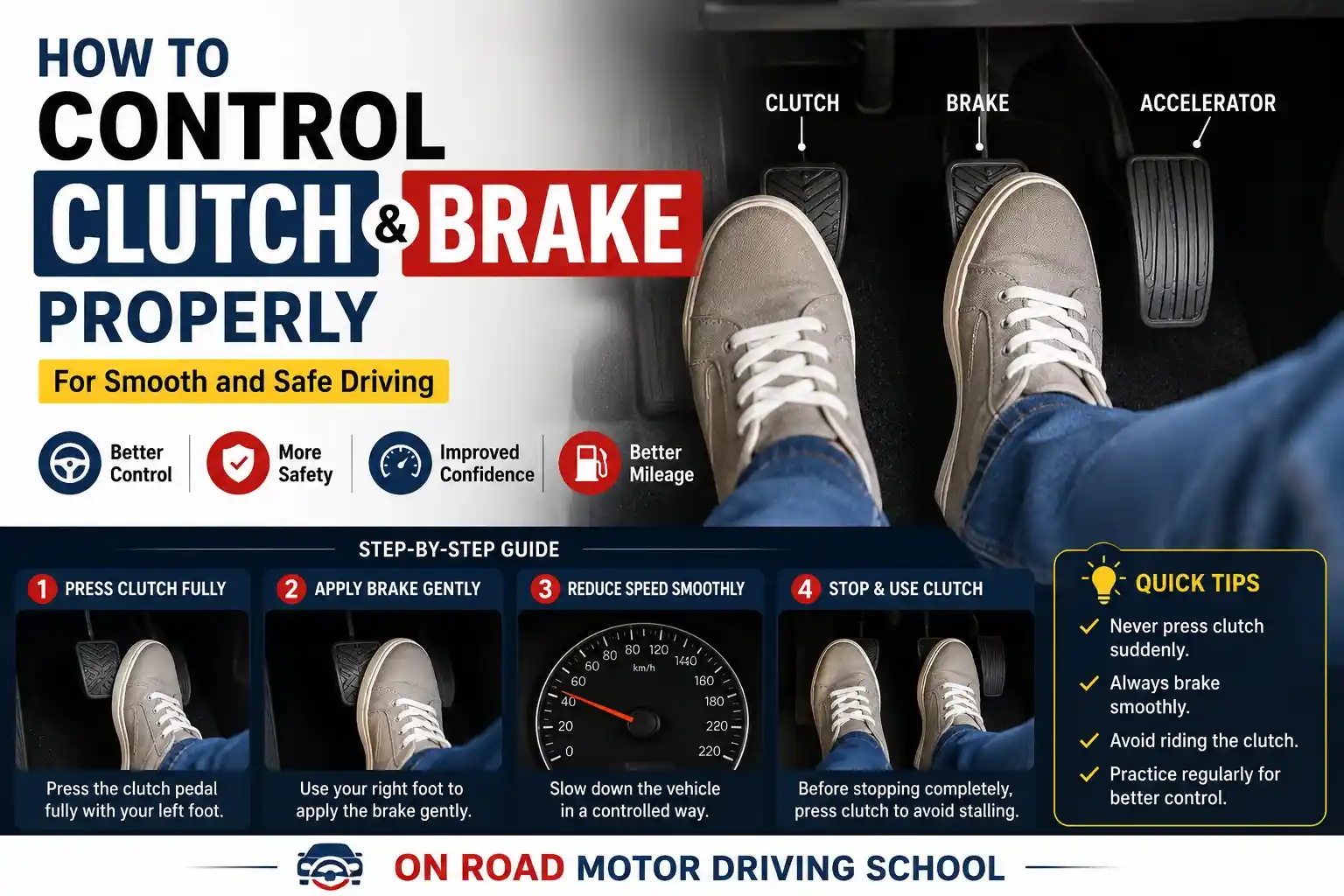
One of the first steps to driving a stick shift is learning how and when to engage the clutch and brake. Newcomers often struggle with issues that are frequently associated because of their improper coordination between these two pedals, such as sudden jerks and engine stalling while accelerating or halting abruptly during the braking process. On Road Motor Driving School
Four, instead of using theoretical ways to teach driver’s education, new drivers are trained on practical techniques that is helpful in building confidence and driving skill.
What are a clutch and a brake?
The clutch and brake both play key roles in how you drive. The clutch is employed to engage/disengage power from the engine and wheels, especially during gear changes or slow-speed driving. It serves a braking system to slow down the vehicle or stop it safely. These pedals need to be worked in conjunction with one another, as using them incorrectly can result in mishaps on the road, especially during traffic.
On Road Motor Driving School
, a perfect and correct balance is achieved between clutch and brake movements so that in real road conditions the learner can drive comfortably.
The Importance of Proper Clutch and Brake Control
Good clutch and brake control prevents jerks of the imminent kind and stalling out. It boosts fuel economy and prevents undue wear of the clutch plate, braking system. The smoother you drive, it feels comfortable for the passengers; and there is more faith in driving.
On Road Motor Driving School Trainers
Aim for teaching basic driving skills so newbies can roll out as competent and responsible drivers.
Learning the Clutch Bite Point
This also makes it necessary for beginners to gain one of the first things what they learn about clutch bite point. The bite point is when the clutch begins to engage engine power from revs into wheel drive. To explain it, put the clutch in all the way down, turn on your car, switch to 1st gear then slowly let go of everyone else gas. You will feel a tingling or instantaneous movement in the vehicle. This is called as the clutch bite point.
A crucial understanding of the bite point gives drivers a sense of when to make the vehicle move naturally without stalling.
Releasing the Clutch Smoothly
The jerking or sudden stopping of the car happens most commonly if a new driver releases the clutch too quickly. You should always release the clutch in a slow and smooth manner while very gently pressing down on the accelerator. This helps in balancing the vehicle and gives better control on driving.
One of the needs at On Road Motor Driving School
Trainers train students by practicing seamless clutch-release techniques in traffic situations to master confidence and fluid driving skills.
Proper Use of the Brake
Knowing how to brake correctly is just as essential for safe driving. One common mistake of the Beginners is braking too hard, causing discomfort and less control. Unless it is an emergency, braking should always be smooth and gradual.
The driver should not directly press the clutch to slow down, first use a brake and after it becomes very low then use the “clutch”. This method allows for preventing the engine from stalling, and helps to keep constant motion of your car.
Coordinating clutch and brake in traffic
This is why traffic driving requires great clutch brake coordination. These people are usually doing half-clutch control in slow traffic, favoring smoother gradients for a higher level of low speed compliance. Half-clutch itself means releasing the clutch halfway without completely engaging it.
While this is useful for traffic jams, regulators say that using it too much can wear out the clutch plate. With the necessary training and constant practice, drivers learn to perform this correctly without damaging their vehicle.
Hill Driving and Clutch Balance
Hill driving is often tricky for newcomers since the car could roll back on inclines. Then it needs an adequate balance of clutch and brake in such cases. The driver is supposed to ease the clutch into bite point, apply a gentle pressure on the accelerator whilst easing off brake. That makes it easier for the car to roll forward without rolling backwards.
The master instructors at On roadway Engine Driving School
give useful hill-driving lessons to learners so that they become confident while driving in challenging road conditions.
Common Mistakes Beginners Should Avoid
Most newbies catch this sort of things like releasing the clutch quickly, sudden braking, riding the clutch all through or looking down at pedals while driving. These habits decrease space for control and cause parts to wear more.
Through regular practice, patience and expert guidance, drivers can prevent these mistakes to drive better.
Guide on the Tips to Improve Clutch and Brake Control
Firstly, the only true way to enhance clutch and brake control is by practice. Before driving in heavy traffic beginner drivers should practice their skills on open roads. Comfortable shoes, a good posture while driving and familiarity with pedal sensitivity can lead to enhanced control over the vehicle.
Training on it with the assistance from On Road Motor Driving School
offices, improving confidence and acquiring professional safe driving techniques.
Conclusion
One of the most essential things you will need to learn for driving a manual car better is how to properly control the clutch and brake. While smooth pedal coordination helps with safety, the jerks aren’t present and is comfortable to drive. Clutch and brake control is something anyone can learn to do well with practice, but if you are a beginner in this area it may take some additional training.
As a skilled driver, thanks to proper driving sessions and actual city experience derived from On Road Motor Driving School
, learners are prepared to be safe drivers in the future.