



Getting stuck in the middle of traffic due to car breakdown is certainly one of the most stressing scenarios for any player, even more so if you are a new driver. Not even seasoned drivers are exempt from unexpected vehicle malfunction such as an engine failure, dead battery or flat tyre on a busy road while the car overheats. The answer to staying calm, keeping yourself safe and not putting other road users at risk is training in how best to manage a car breakdown.
Correctly, the fundamentals of driving are not only about controlling a steering wheel or learning traffic rules but much more than that – As implemented at Onroad Motor Driving school. Another part of being a skilled driver is knowing how to react when faced with sudden situations while driving. Structured driving lessons, defensive skills and road practice prepare beginners for real world challenges behind the wheel.
Stay Calm and Focus on Safety
A vehicle breakdown is alarming, and your immediate response may be panic but the most vital step is to simply relax. Heavy traffic is overwhelming when it stops suddenly, but making unsafe decisions can raise the odds of an accident.
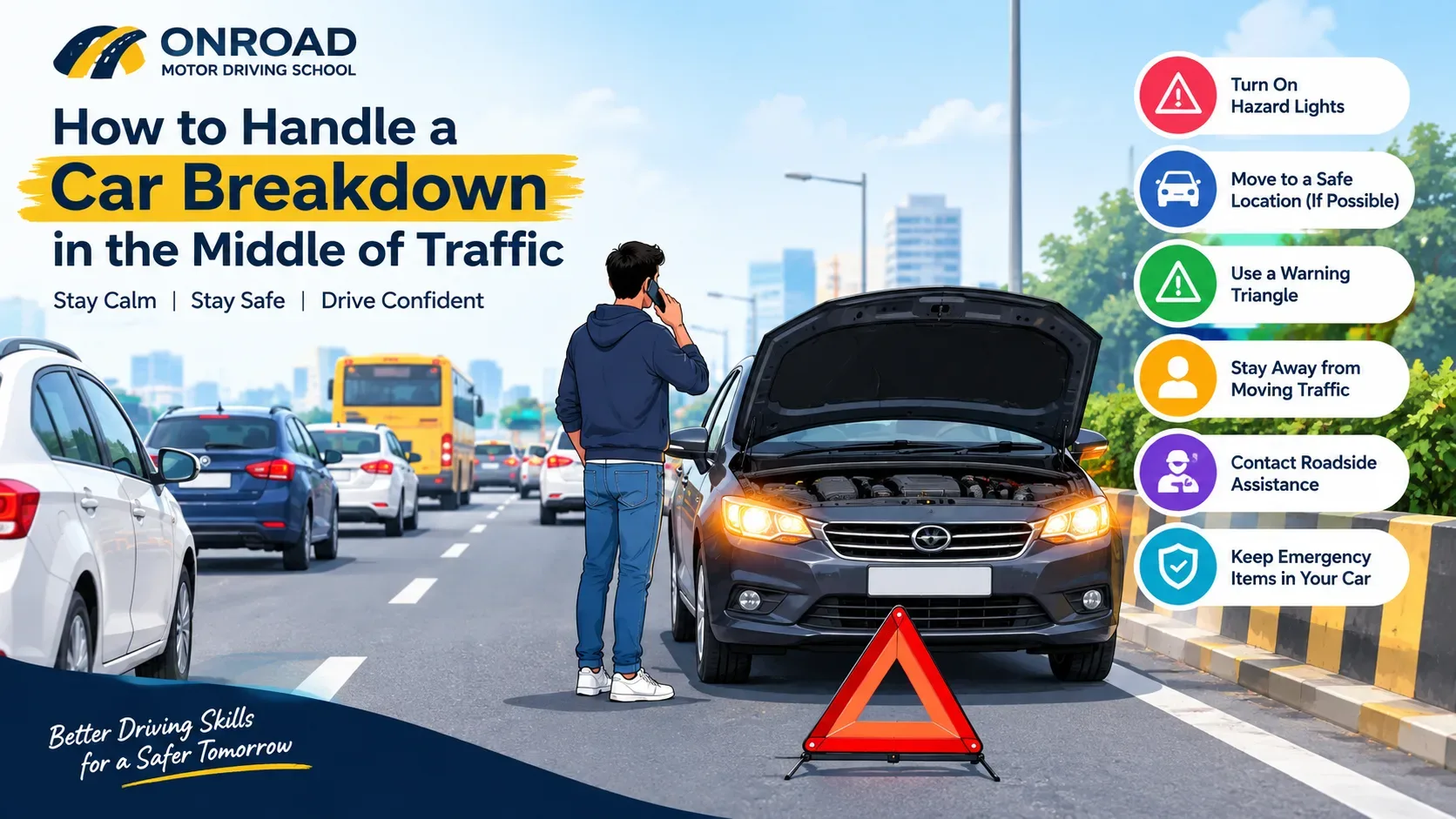
So try to keep your head straight and know what is happening with the car. Activate hazard lights now to alert other drivers in the vicinity that there is a problem with your vehicle. These warning signals alert other vehicles to keep a safe distance and provide enough time for slow down the vehicle or changing lanes without losing control.
It is that confidence in these types of situations which can only come through knowledge, and experience behind the wheel. Hence, this is the reason behind professional driving training in Delhi is designed for preparing learners to tackle various road conditions and emergencies.
CAR MOVING, AND IN OTHER NEED – Move Your Vehicle
If your automobile is stationary however transferring, and it’s secure to take action then slowly drive half way off the street. Do not stop at the center of a busy lane because it will endanger you as well as other drivers.
Mirror, indicator and lookout — This is what we should be doing before changing lane. The problem is that most of those learners also struggle in emergency situations because they don’t know where to turn their vehicle when it starts acting out.
Good driving classes teach crucial skills such as lane changing, mirror checking, road awareness, vehicle management etc., which all prepare drivers for these scenarios.
Development – Use emergency vehicle lights and make your car visible
Once the vehicle is brought to a stop, then it becomes really important that you keep your vehicle visible from far-off so other drivers can see. The hazard lights must be turned on until the problem has been solved or help comes.
When you have safety equipment, such as a warning triangle use it with caution to draw attention of the passing drivers. This is especially true at night, in poor weather conditions or when driving along busy roads where other vehicles are travelling faster.
Being aware of simple driving safety tips allows you to turn minor accidents into worse fatal road crashes.
Do Not Try Repairing in the Middle of Traffic
Most drivers wish to attempt instant repair of their vehicles on the spot however, this can be dangerous in heavy traffic situations. Be in front of cars that are moving and the hood if you want to open a car on the road where there is an active traffic signal.
If the problem is straightforward and you are in a safe location, do simple checks. Though, if you have significant engine issues, electrical problems or the car is overheating—these should always be looked at by a professional mechanic.
A good driver knows how to troubleshoot a problem and when you should call in an expert.
Contact Professional Roadside Assistance
Once your automobile has more than one broken element and walking it poses further risks, you have to call for roadside help. Have important emergency contacts saved for you to request help when necessary.
When you contact for help, detailed information about your location, vehicle information and the problem experienced will be needed. This ensures that the service team gets to you sooner and delivers accurate help.
Responsible driving also means being prepared in case of emergencies.
The Importance of Proper Driving Lessons when Facing Emergencies
Most new drivers think that driving lessons only teach you the basics of controlling your car, getting it parked and passing a driving test. But professional car driving training covers a lot more.
Good driving schools in Delhi train the learner to comprehend traffic behaviour, techniques of defensive driving, safe decision making and handling exigencies while on road.
Beginners become more confident about driving alone and are better equipped to meet such challenges with proper training including dealing with emergency brake, heavy traffic, car breakdowns and other emergencies.
Final Thoughts
Anyone can have a car break-down while in the middle of traffic, but knowing what steps to take is likely going to make that situation far more safe. Every driver should be aware of clear protocols for what to do, including staying calm, making your vehicle visible and moving out the way if safe or contacting professional help.
Being a good driver is not just driving any car well; It means having awareness, confidence and responsibility on the road. We realise that learning practical driving skills in a safe and productive manner is essential from an early stage, which all starts with the professional support of Onroad Motor Driving School for our beginners.