



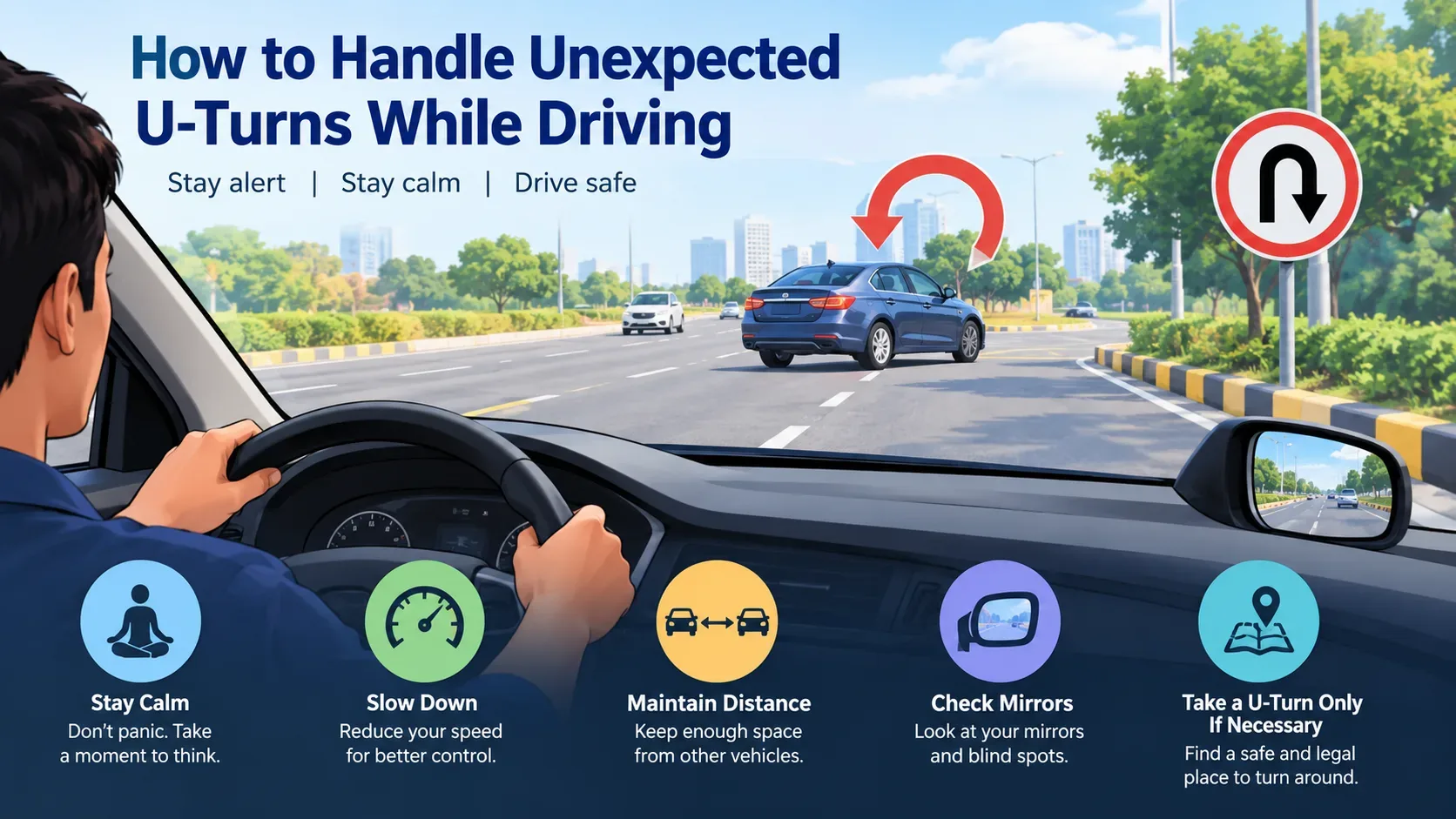
U-turns can be difficult, particularly if you are a less experienced driver learning to assess traffic flow and gaps in the road or react calmly under changing conditions. This is what can happen if a vehicle does an abrupt U-turn, the road needs to be turned around but there is no other way towards it or when someone entering into the crossroad realizes that they have crossed their destination for seconds ago.
Dealing with sudden U-turns when driving somewhere is, therefore, a vital skill that all drivers should master to feel confident behind the wheel. You can mitigate these situations through good observation, controlling your speed accordingly as well as defensive driving techniques.
Be calm and use all available resources
When faced with an unexpected U-turn the first thing you must do is remain calm. New drivers may see a U-turn occurring and instinctively hit the brakes hard, change lanes quickly or swerve around another vehicle.
Assess the situation, instead. Keep your hands both firmly planted onto the wheel at all times, keep control of your vehicle and do not make any sudden steering maneuvers. Finally, staying cool gives you the room for analysing what other road users are doing.
Being a good driver is not only about knowing how to drive. Preparedness also hinges on staying smart when something you did not expect occurs.
Slow Down, And Create Space For More
For instance, when approaching a U-turn area speed is very important. At highway speeds, your reaction time to a vehicle turning across the road you are travelling on will be lessened.
Take it slow especially as you approach intersections, roadworks or at places where U-turning is permitted. Always keep plenty of distance between yourself and the car in front so you have time to brake when needed.
Safe drive is proactive not reactive. Especially on busy roads with sudden changes in traffic conditions, a little extra spacing makes a massive difference!
Watch for the Turn Signal
You are taught that a car expecting to make a U-turn may use its turn indicator, but at no time should you rely solely upon it. Some drivers may signal at the last moment of their turn, or skip signaling altogether.
Keep an eye out for other clues that a car is getting ready to turn. Examine its location, how fast it is going and relatively which direction the wheels are pointing as well if they are actually moving towards centre or turning area over road. Such observation is a key element of defensive driving.
When developing your driving skills, beginners should learn to observe the whole traffic instead of only watching in front of them like a car drone.
Third, Check Your Mirrors and Blind Spots
Always check your mirrors and blind spots accustomed to making lane changes, or moving around a car doing the entire u-turn. They could be a motorcycle, scooter, bicycle or car driving alongside your van.
The new driver skills mirror check For starters, mirrors help you out by giving a good indication of what is going on around your vehicle however; this information will not be 100% accurate.
Never change lanes just because another vehicle has slowed down for a U-turn. You should ensure your entire surroundings before you get moving.
What If You Actually Have to U-Turn?
And sometimes it hits you that you’ve missed your exit, and you’re driving down the wrong road. Your impulse may be to pull a U-turn right away but that could get you killed.
You’re not lost, so don’t just turn into a random U-turn! Continue to drive until you see a legal and safe spot where you can turnaround. Search for the right U-turn openings, intersections and other spots where turning is allowed.
When using navigation while driving, hear what the GPS says but do not get distracted by it. It’s not the end of a world if you miss a turn. Indeed, making a risky U-turn to fix the error may be.
Be Safe, not Sorry
New drivers often fall into the trap of reaching to their destinations in a hurry. That might result in dangerous U-turns, hasty lane changes, emergency braking and wrong choices when driving.
Ensure you give yourself enough time to react, if some other driver suddenly starts a U-turn. If needed, do not rush in and get the vehicle out but wait for it to finish its motion.
Defensive driving is assuming other road users will make a mistake. Your aim must be to get and stay in control of yourself — keeping clear from another individual’s mistake.
Be Extra Cautious When Near Busy Roads
Sudden U-turns are harder to make on busy urban roads, as several vehicles can move in various directions. Other vehicles including motorcycles, buses and pedestrians can also make the nature of the situation tricky.
Slow down and look more when driving in heavy traffic. Be aware of intersections, median gaps and traffic signals, as well as vehicles awaiting to turn.
Professional Driving Lessons If You Are A Learner Or New Driver All learners are advised to take professional driving lessons as an experienced instructor can educate you on how to read real traffic situations and not panic when faced with one.
Practice Makes You More Confident
Experience helps in coping with sudden U turns. Beginners should practice observing traffic, checking mirrors, keeping the right amount of distance, and speed control in their driving lessons.
The point in not merely to learn how to drive a car, This is to build awareness of the road and defensive driving skills that enable you to cope with situations you weren’t expecting.
By practicing and under the right tutor, you can get confident to drive intersections, busy roads with turns and traffic.
Final Thoughts
An important aspect of safe driving is knowing how to respond when you catch your self in an unexpected U-turn while at the wheel. The first thing to do is stay calm, decelerate your car as speed kills in driving and also increase the distance between you and any other vehicles that get too close to yours while checking out for blind spots by using mirrors. You have time to get back on route, taking a U-turn only if necessary.
Safe drivers know that saving a few minutes is not worth the risk. This means that through developing observational skills, good vehicle control and defensive driving you will become more confident in dealing with the unexpected.
For beginners, Onroad Motor Driving School provides professional car driving lessons to help build confidence and improve practical driving skills.