



Introduction
Here we see that making the move from a manual to an automatic car seems to become more and more common and a thing that is necessary especially if you leave in a busy city where convenience is everything. Clutch and gear drive is something most drivers are used to and automatic driving makes many drivers unsure of use. Yet, the transition is a lot less complicated than it seems. However, familiarize yourself with the differences and practice the right methods and you will be confident in no time.
Knowing the Difference From Manual to Automatic
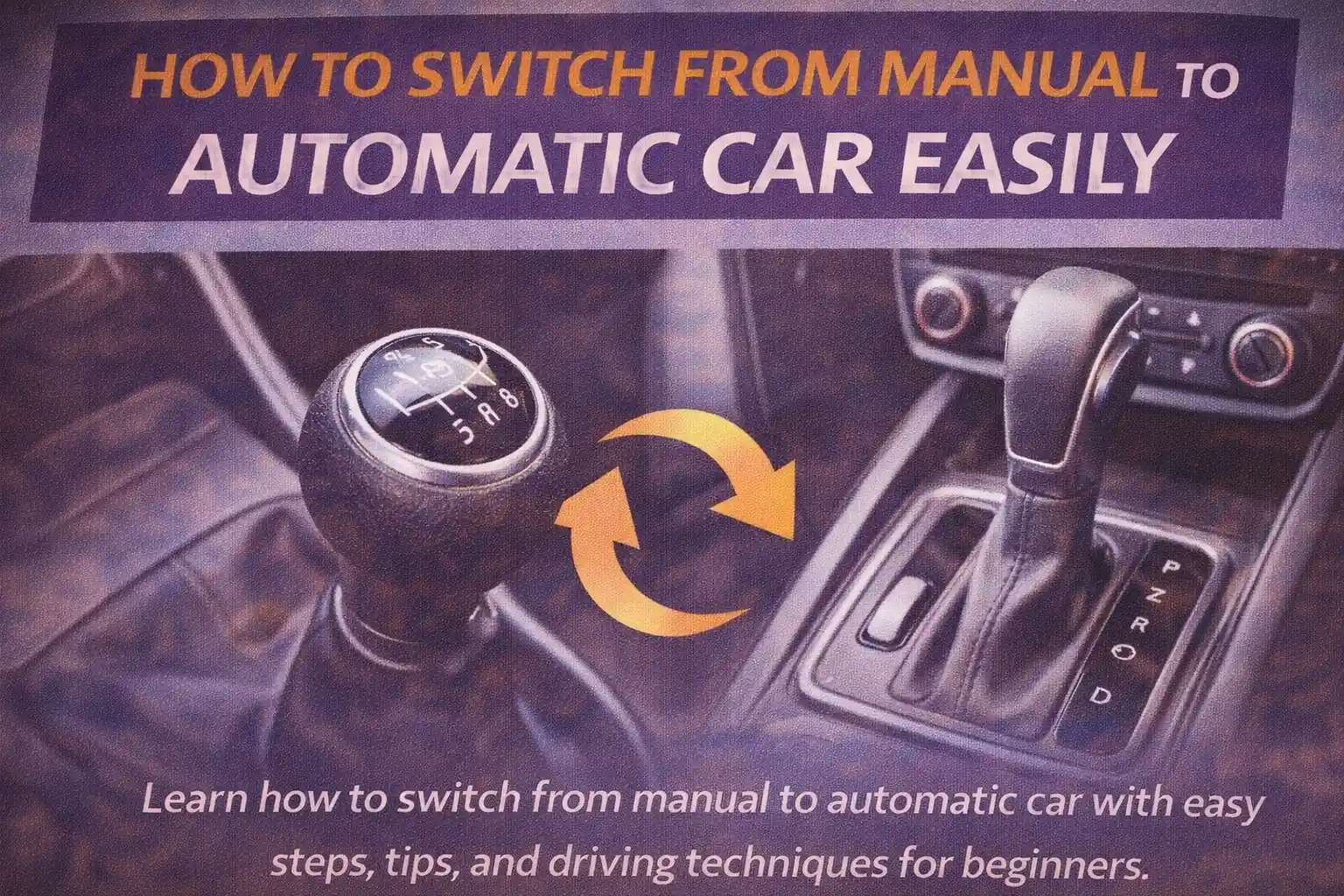
The main difference between manual and automatic car is that there is no clutch and no shifting of gear manually. In the case of automatic vehicles, the transmission system automatically shifts the gear by itself.
Automatic cars have two pedals only — accelerator and brake. It makes driving easy, even when you are stuck in traffic where you have to frequently change gears in a manual car.
Why Switch to Automatic Cars?
Especially in urban traffic, automatic cars are comfortable and make driving easier. It minimises fatigue as drivers do not need to deal with clutch control or gear changes.
Modern learners (especially those who have never touched a clutch in their lives) prefer automatic cars because they are simple to use, and cars made to be automatic do not require a lot of precision. Therefore, they are great for those starting out and daily commuters.
Initial Adjustment Phase
The unlearning of certain habits is the initial response to the transition from manual to automatic. Removed clutch pedal — Therefore leave your left foot by its side and free from duty.
This somewhat confuses a few drivers that may instinctively try to press non-existent clutch. One way to change this pattern is to practice in a safe setting.
What are the Gear Modes in Automatic Cars?
Automatic cars usually have gears like Park (P), Reverse (R), Neutral (N), and Drive (D). Other vehicles may include a couple other modes such as Sport or Low Gear.
Knowing when and how to use these modes is important. Park is used when the vehicle is not in motion, Drive is used for standard driving.
How to Start & Drive an Automatic Car
Starting an automatic vehicle is also not too difficult. The brake pedal down, turn on the ignition, and move the gear to the Drive mode. Gradually let the brake, and the car will start to roll forward.
Pressing on the accelerator gives you acceleration, pressing the brakes slows you down or stops the vehicle. The ease of handling automatic cars in traffic is due to this simplicity.
Common Mistakes to Avoid
One major error is driving with two feet. Note: In automatic cars, we only use the right foot for acceleration and braking.
Another error is moving the gears without stopping the vehicle entirely. That ended up harming the transmission system. Never switch modes such as Reverse or Park without making sure that the car is stationary.
Benefits of Learning Automatic Driving
Automatic driving offers a number of advantages, including less stressful driving, smoother driving experience, and greater focus on the road.
It is particularly advantageous for novice drivers who find the driving process complex. 12. Long drives become easier: Automatic cars also prove to be a boon for long drives.
Importance of Professional Training
Even though driving an automatic car is less complicated to driving and not a lot driving training is needed but you should not neglect driving practice. You will always be guided by the teachers who knows the safety rules and driving techniques for learning.
If you choose a professional car driving school near Delhi, then you will be able to adapt easily and quickly with quite a bit of confidence. The training program will focus on basic skills that will lead to advanced driving skills.
How Does Onroad Motor Driving School Help
We have structured training you can take from Onroad Motor Driving School in old manual driving as well as electronic driving This does not mean that the institutes are not informative; however, now institutes focus on practical as well as safety.
The transition between manual and automatic is gradual and effortless for the pupils. Drivers are taught over a brief period by skilful instructors on real roads, which allows them to build up confidence quickly.
Tips for a Smooth Transition
Before driving in any busy roads, practice frequently in low traffic areas. Pay attention to the (acceleration, braking) response of the car.
Stay calm and avoid overthinking. Since automatic cars simplify the driving process, just trust the system and drive in a natural manner.
Conclusion
If you are switching from a manual then switching to automatic is merely an adjustment in familiarity. Adapting quickly is attainable for anyone by staying clear from common mistakes, understanding the differences, and practicing regularly.
Modern age cars are equipped with automatic transmission which makes the experience comfortable, reliable and convenient. If you provide yourself with a car driving school near Delhi, the transition is even more fluid and you can drive in a natural way in any circumstances.