



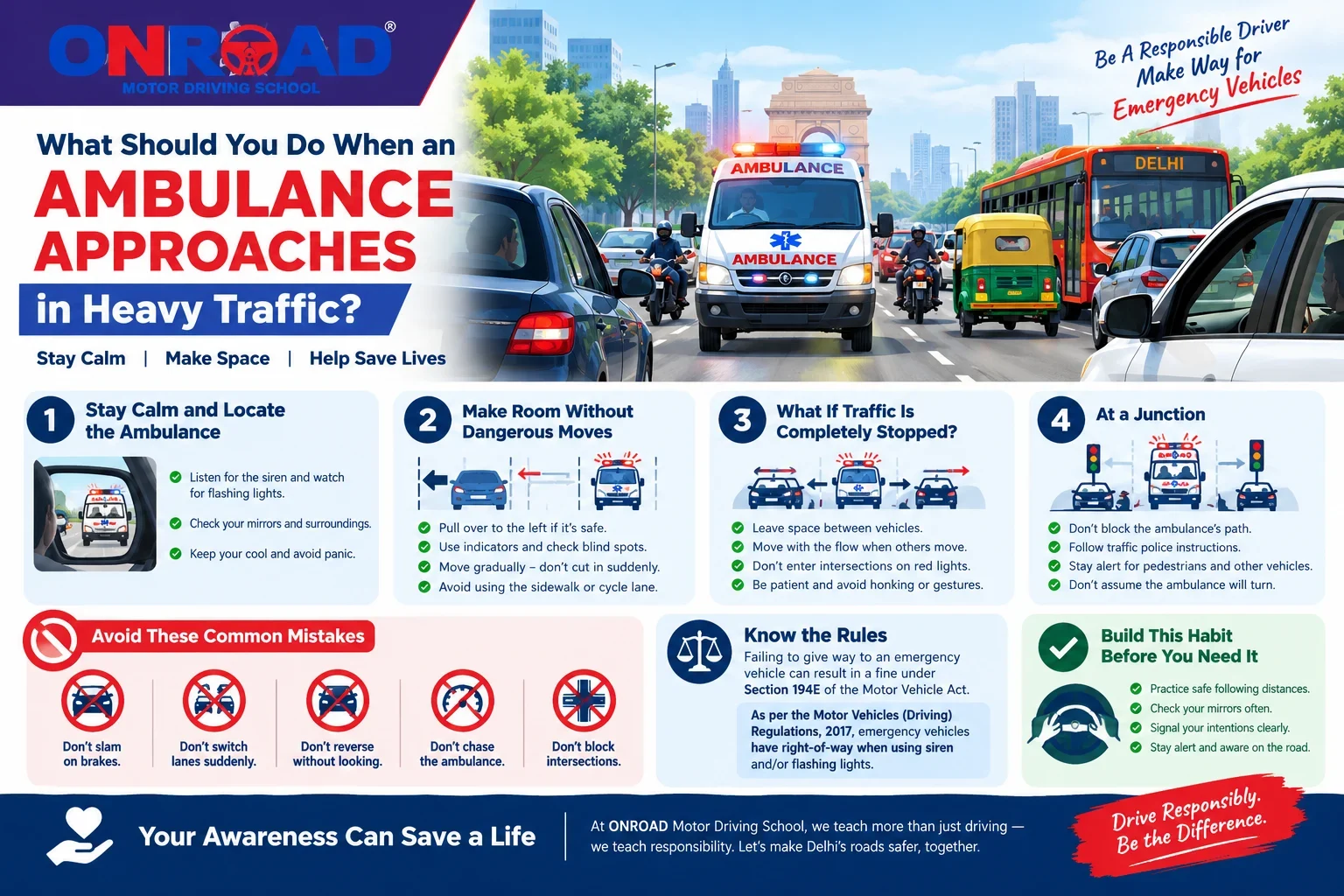
In times of high traffic when an ambulance is approaching you should remain calm and examine what is going on around you. Then, find some space for the ambulance to pass through as soon as it is safe to do so. Do not slam on your brakes, go from one side of other vehicles to the other, or stop the ambulance from getting where it needs to go. In Delhi, there are many types of transportation such as cars, buses, motorcycles, auto-rickshaws, and pedestrians that all use the same roads. This means that if you react properly, emergency services can get to their destination safely and quickly without causing additional problems.
Stay Calm and Locate the Ambulance
Listen for the siren and watch for the flashing light. Look in your mirrors and see if there are any ambulances approaching from behind, from the side, or attempting to pass through an intersection. Don’t simply listen for the siren; look at what’s going on around you with your mirrors and glancing views.
Maintain control of the steering wheel and do not react with panic. Reacting too quickly may lead to a collision.
Make Room Without Making a Dangerous Move
When a driver sees an ambulance coming down the street, he/she should pull over to the left side of the road if he/she can do so safely and practically, following the layout of the road and any directions from the traffic police. The driver should use signals as appropriate, check for blind spots, and make a gradual move to allow room for the ambulance to pass, rather than pulling out suddenly ahead of other cars.
When you are on a narrow street, it can take some time before you are able to proceed. Slow down in a smooth manner, and search for an area of safety where you can pass the emergency vehicle. Examples of safe areas include the wider portions of the street, and spaces next to the curb. Do not attempt to climb onto the sidewalk, enter a cycling lane, or force pedestrian traffic off of the street. If you do not have access to a safe area, do not make unexpected moves and let the ambulance driver determine the best course of action based upon what he/she sees.
What If Traffic Is Completely Stopped?
Leave space between yourself and other drivers as much as possible in congested traffic. Pay attention to how the vehicles around you are moving, and if they start to move off of the road, try to move with them safely. Do not attempt to fit into a space that is too small for your vehicle, nor should you enter an intersection simply so the ambulance has a clear path.
When you are stopped at a red light, you should never try to go through the intersection or ignore the signals that indicate when it is safe to proceed unless a certified traffic official directs you to do so. Prior to entering the intersection, look out for pedestrians, bicyclists and other vehicles that will be crossing your path. If you do not have enough room to pass safely, maintain control of your vehicle and find space to enter the intersection once there is an opportunity to do so. It may take some time for the other drivers to figure out what is occurring; therefore, please refrain from aggressively sounding your horn or making gestures at them.
Avoid These Common Mistakes
Always look back before you step on your brakes. If another car is close behind you, they will likely not be able to stop in time. Also, don’t turn around quickly, go backward without looking, or move back and forth between different parts of the road. All of these could block an emergency vehicle from getting through, or cause an accident.
Do not use a high speed chase of an emergency vehicle to pass through congested areas of traffic. The drivers of emergency vehicles need room to make turns and maneuvers, and when you follow an emergency vehicle too closely you could potentially endanger other motorists on the road. When possible, find a location to stop away from junctions, crosswalks, or driveways. After the emergency vehicle passes, look in all directions including your mirror and blind spot before safely transitioning back into your typical lane.
How Should You Respond at a Junction?
When driving through junctions, drivers need to use additional caution as there could be multiple cars coming from different directions. When the ambulance is behind you, pull over only if you will not be crossing the path of other cars that are traveling in a direction perpendicular to yours. If you are waiting to make a turn, remain as predictable as possible, and do not block the ambulance’s probable route.
Follow all directions given by the police (traffic) or other authorized people. Don’t think that the ambulance is going to turn left or right based on what you have seen, and don’t make your move simply because someone else has begun theirs. Keep an eye out for pedestrians as well, they could react to the siren as well.
Know the Rule and Your Responsibility
If a driver fails to allow passage for an ambulance or other emergency vehicle that is coming up from behind, the driver may face a fine under section 194E of India’s Motor Vehicle Act. Additionally, the Motor Vehicles (Driving) Regulations, 2017 state that an emergency vehicle has right-of-way if it is operating its siren and/or flashing lights. This means that a driver has a practical obligation to move out of the path of an emergency vehicle as quickly as possible, while taking precautions to avoid causing harm to others.
Build This Habit Before You Need It
Safe emergency response begins with daily driving practices. Practice safe following distances, check your mirrors often, clearly signal your intentions, and never block intersections. Practicing these behaviors will make it much simpler for you to respond safely to an approaching emergency vehicle.
All learner drivers need to be practicing their observation, smooth braking, lane awareness, and positioning safely with a certified driving instructor. These same basic skills are just as crucial as controlling your vehicle’s steering and gears while navigating through busy Delhi traffic. On Road Motor Driving School is committed to teaching our students how to drive in a calm, responsible manner so we can help keep all users of the road safe.
Stay calm, watch the approaching ambulance, use signals if necessary and make room for it to pass safely. The action you take may be what gets emergency personnel to someone who requires immediate attention. Do not create an additional emergency by making a dangerous maneuver.