

Learning to drive can be a fun experience; however, you have some responsibilities as well. In addition to learning to steer, shift gears and operate your car, you must become familiar with the road signs that you will see daily. Road signs provide guidance, provide warnings regarding potential hazards, and assist in keeping all drivers safe.
Whether you’re new to driving, or you’re studying for your Learner’s Licence Test, knowing about the most common road signs used in India will help you drive with greater ease. On Road Motor Driving School believes that knowing traffic signs is an essential early step to being a safe and confident driver.
Why Should Every New Driver Learn Road Signs?
What would happen if you were driving down a route that you have never been on before, and all of a sudden you came up on a steep curve in the road, a crosswalk for children, or even a forbidden entrance? How would you know how to react? This is when road signs come into play.
Traffic signs can give you some good advice about what is coming up on your route before you actually get there. Signs can let you know the speed limit, alert you to possible dangers, show you how to drive safely and legally, and save you from making mistakes that you don’t need to make.
When you first start to learn about driving, it is helpful to know what each type of road sign means. Knowing what these types of signs are, will help you pay attention to the environment around you when you drive. It can also help you make good choices while behind the wheel.
Mandatory Road Signs: Know the Rules of the Road
Mandatory traffic signs are designed to inform drivers about the rules of the road (i.e. what they can and cannot do). Following the instructions of mandatory traffic signs will help in preventing driving infractions as well as keeping the roads safe.
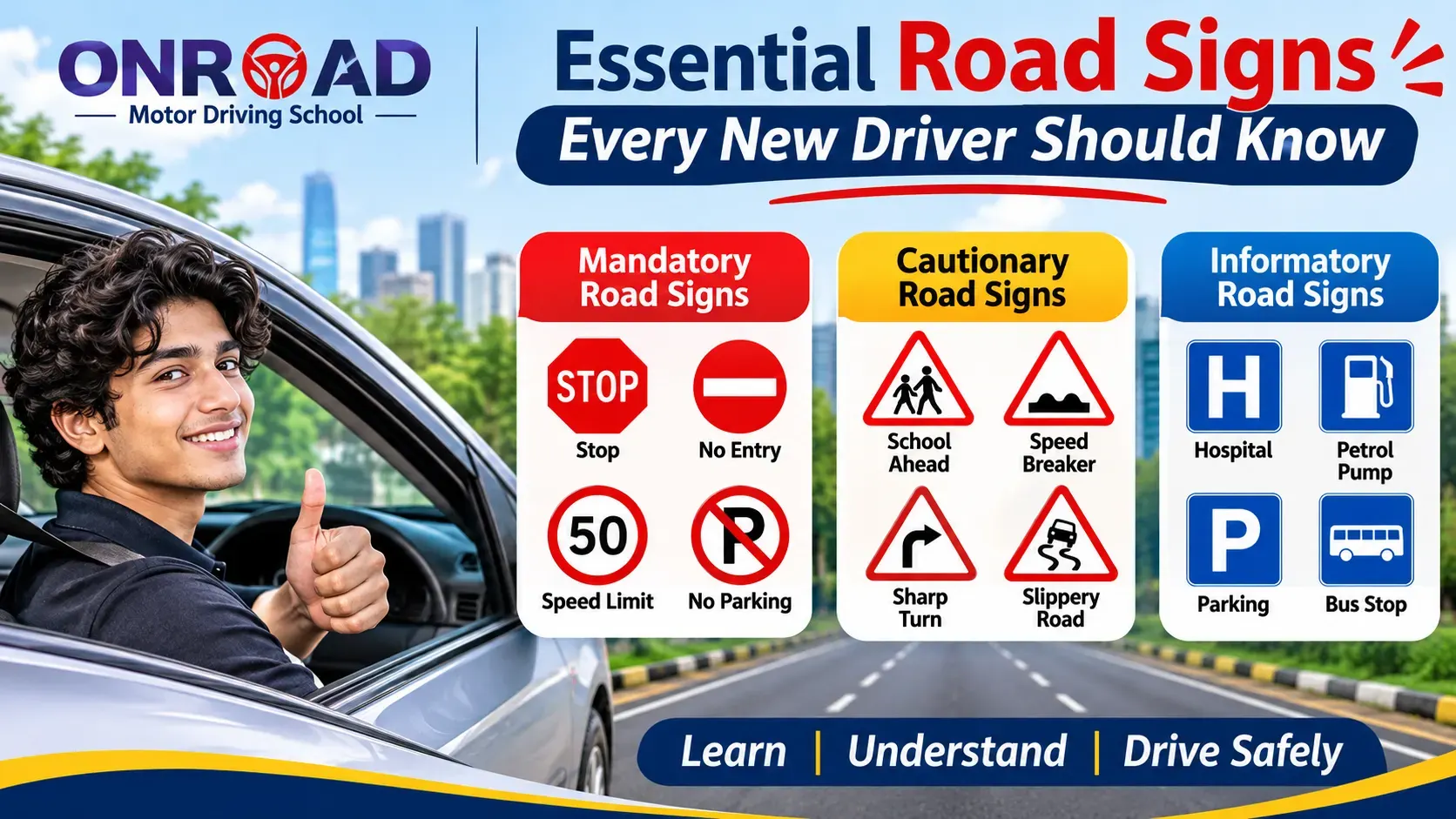
Here are some examples of these kinds of signs: The “Stop” sign, which requires you to bring your vehicle to a complete stop before proceeding; ‘No Entry’ sign This means you are not permitted to drive into a specific area or on a specific road. “Speed Limit” signs tell you how fast you may go on a certain road; “No Parking” signs tell you where you may not park.
Everyday on your drive to work you will also see signs such as “No U-Turn”, “No Overtaking” and “One Way”. Knowing the meaning of all these signs will help you to follow the rules of driving in India and will not confuse you especially on roads with heavy traffic.
Warning road signs: Be prepared for the future
Cautionary signs on the side of the road warn drivers that they may be entering a danger zone or that the road design is changing. This gives the driver time to slow down and get ready for what is coming up.
Warning signs like “School Ahead” are a reminder for drivers to slow down and be careful driving through school zones where children might need to cross the street. ‘Pedestrian Crossing’ signs are to warn drivers of pedestrians crossing the road. Some commonly used warning signs are “Slippery Road”, “Narrow Road Ahead”, “Sharp Turn Ahead” and “Speed Breaker Ahead”.
As a new driver, knowing these kinds of road signs will help you prevent unexpected events and keep you and other drivers on the road safe.
Informatory Road Signs: Find Your Way Easily
Not all road signs tell drivers to stop or slow down. Many of the road signs that are out there help drivers locate key areas and services.
Road signs that provide information can be used to lead drivers to hospitals, gas stations, parking spaces, and bus stops. Additionally, directional road signs are very helpful for drivers who may not be familiar with a road they are driving on. These types of signs will assist the driver in choosing the correct path.
Learning to recognize these signs will help make your daily drive easier, particularly as you continue to gain experience.
How to Recognise Road Signs by Their Shapes and Colours
A very simple method of remembering the various types of traffic signs in India is to look at their shape and color. For example, a red circle means “stop” or “restrictive,” while a blue circle indicates “mandatory” or “required.” Triangular signs that are bordered in red represent warnings regarding potential dangers ahead.
Signs that are rectangular provide direction and other relevant information. A Stop sign is in the form of an octagon, so it can be easily identified while driving.
When you have practiced identifying these types of patterns, then it will be very simple for you to identify the different types of traffic signs.
Learn Traffic Signs Through Practical Driving Lessons
As well as reading about road signs, it is important to be able to identify them when you are behind the wheel. Learning through practical driving lessons will enable you to recognize traffic signs; understand and apply road rules; approach intersections; and handle various driving scenarios.