



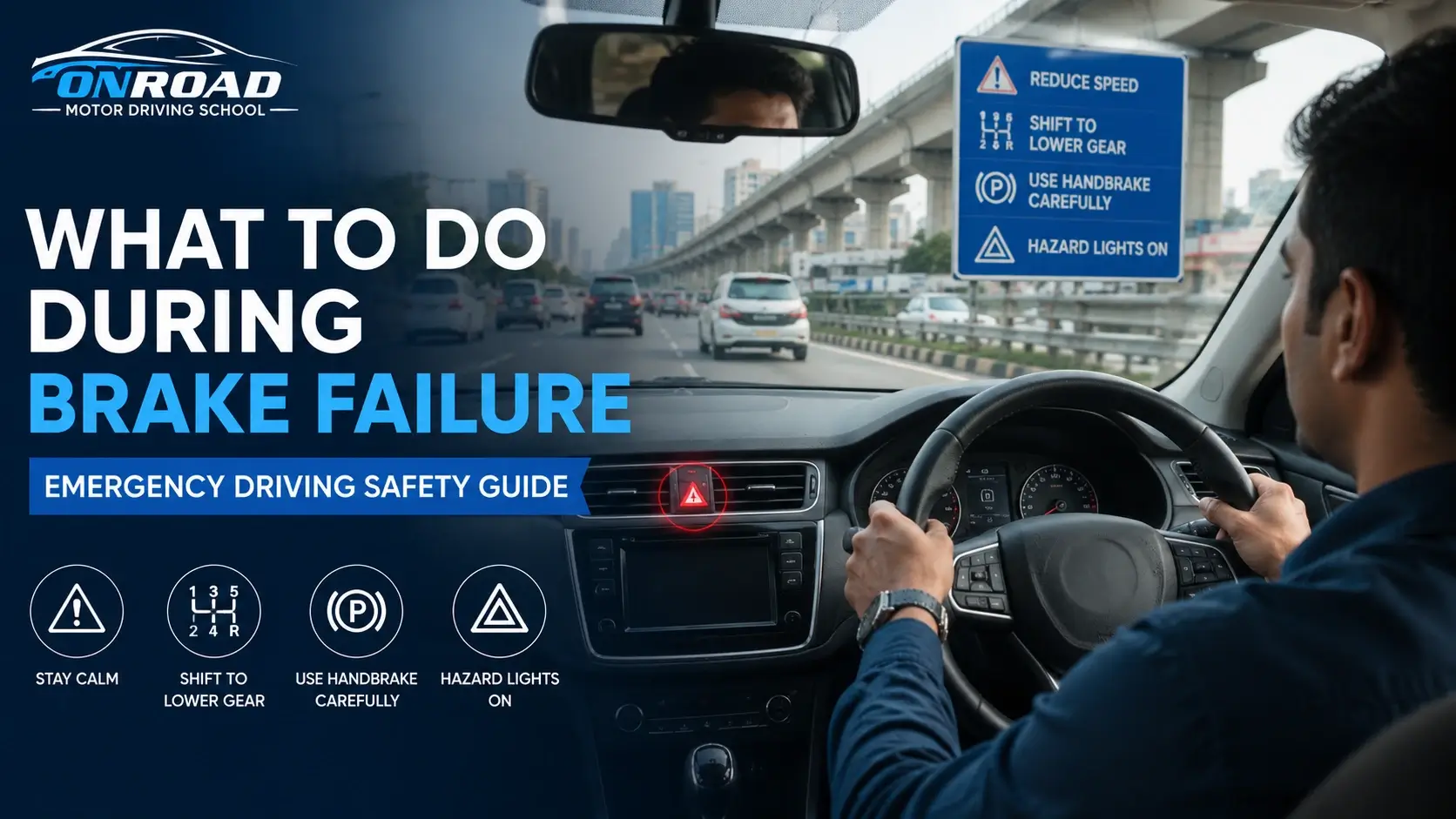
One of the most perilous things that can happen to any driver when they are out on the road is their brakes fail. For new drivers and regular commuters driving on busy roads of Delhi NCR, only shouting “brake” without applying it when required can case a bird because they suddenly get to know that the brake of their vehicle is working proper or slowing down. Training to control an outcome in the event of brake failure can calm nervousness, reduce accidents and help you bring your automobile down safely.
Practical driver training includes some really interesting modules such as the use of winning over emergency driving awareness at On Road Motor Driving School. Their teaching method which focuses on road safety prepares students to face real-life driving events with ease.
Understanding Brake Failure While Driving
What is Brake Failure?Brake failure occurs when a vehicle’s braking system stops functioning properly. This can happen due to brake fluid leaks, overheated brakes, separated brake pads, damaged brake lines or mechanical failure.
All of this makes brake failure more dangerous in Delhi traffic conditions, where the driver’s practice is to stop suddenly. Traffic can model heavy congestion, flyovers, sharp turns and erratic driving behavior that gives motorists little reaction time.
The most crucial step in brake failure is absolutely resisting panic. They can result in poor steering control and dangerous decision making which usually happens because of sudden emotional reactions.
Reel Inconsistent Brake Failure Rash Immediately
Nod-4: Remain Composed and Keep a Firm Grip on the Steering Wheel
Panic makes drivers oversteer or jerkily change. Grip tight on the steering wheel and try to keep the balance of your vehicle. Do not steer within changing lanes unless required.
Activate your hazard lights right away to inform surrounding drivers that your vehicle is facing an emergency.
Pump the Brake Pedal
Brake System Flags Partial Pressure Loss — In the case where moisture enters the fluid or an internal leak develops and partial pressure loss occurs within one half of a dual-circuit brake system, rapidly pumping the brake pedal may restore hydraulic pressure during emergency braking attempts for short periods of time. In some cases this could slow the car enough that control is regained.
More modern cars are equipped with ABS, but firm pressure, even if several times (pumping), can still rule out whether there is any braking response.
Shift to Lower Gears
One of the safest emergency brakes in case of brake failure, engine braking. Decrease one gear at a time progressively so that you can slow the vehicle down.
If you are driving manual transmission, the driver must change them step by a way starting from the high gear down to lower gears without releasing the clutch with too much force. Automatic transmission drivers should select lower drive modes such as “L” or “2” depending on the model of the vehicle.
This method works great where traffic is traveling at higher speeds such as on a highway.
What to Do When Car Brakes Fail
Use the Handbrake Carefully
Ross calculates if you do it by such nature، the handbrake should be applied slowly and steadily. An abrupt pull can lock up the rear wheels and skid the vehicle, especially in the rain.
Modern vehicles commonly have electronic parking brakes, which can vary in operation depending on the vehicle system. Prior to emergencies, drivers need to know how their parking brake operates.
Look for a Safe Escape Route
Watch up the road for open space; empty lanes, shoulders on the side of the road, uphill sections that might slow your vehicle safely.
Stay clear of busy pedestrian areas or tight spaces in traffic. These types of situations make defensive driving awareness all the more critical since the objective is not simply stopping the car but preventing others from getting hurt.
At On Road Motor Driving School, professional instructors teach students the need for being aware of vehicles on the road and managing their car even when they face minor emergencies that are common in Delhi roads.
Use Friction to Reduce Speed
Gently rubbing the tires against roadside barriers or gravel shoulders, and flooring it on rough surfaces until their stitches give should slow you down, a little at a time if needed. This should only be done as a last resort where no safer stopping alternatives are available.
Your goal is not to camber it progressively, hit deadstop.
How to Avoid Common Causes of Brake Failure
Most drivers in fact tend to ignore early signs of brake failure. Signs of trouble with the braking system include soft-feeling brake pedals, grinding noises, dash brake warnings and shuddering or delayed response when stepping on the brakes.
Here are the most common causes that can lead to sudden brake pressure loss; One of them is leaking fluid in the braking system. Prolonged exposure to heavy braking down a long hill can also cause temporary brake fade.
A vehicle must undergo regular servicing for safe driving purpose. Deciding to delay a brake inspection is never a good idea, especially before starting highway trips or long-distance traveling.
Avoiding Repairs That Prevent Proper Braking
No amount of maintenance can save you from an emergency when it comes to brakes, which continues being the best preventive measure in these cases. Drivers should regularly check brake fluid levels, timely replace worn brake pads, and avoid aggressive driving habits that overheat the braking system.
Choosing safe driving habits also help take pressure off some vehicle components. Common sense, maintaining proper following distance and anticipating traffic flow help eliminate the need to brake abruptly.
Professional training in emergency driving techniques can bolster a learner driver’s confidence and response control dramatically. Safety-oriented lessons in a formal format allow you to better handle unforeseen road scenarios.
Conclusion
Knowing how to react when your brakes fail can mean the difference between a controlled emergency stop and a tragic accident. What is so important that every driver needs to know is each phase of staying calm, proper downshifting, careful handbrake usage and road awareness.
Defensive driving knowledge is a must for Delhi NCR drivers who have to deal with traffic jams and uncontrollable road conditions. On Road Motor Driving School is a Driver Services Provider dedicated to building your real driving confidence through practical, road oriented safety training in modern road conditions.