



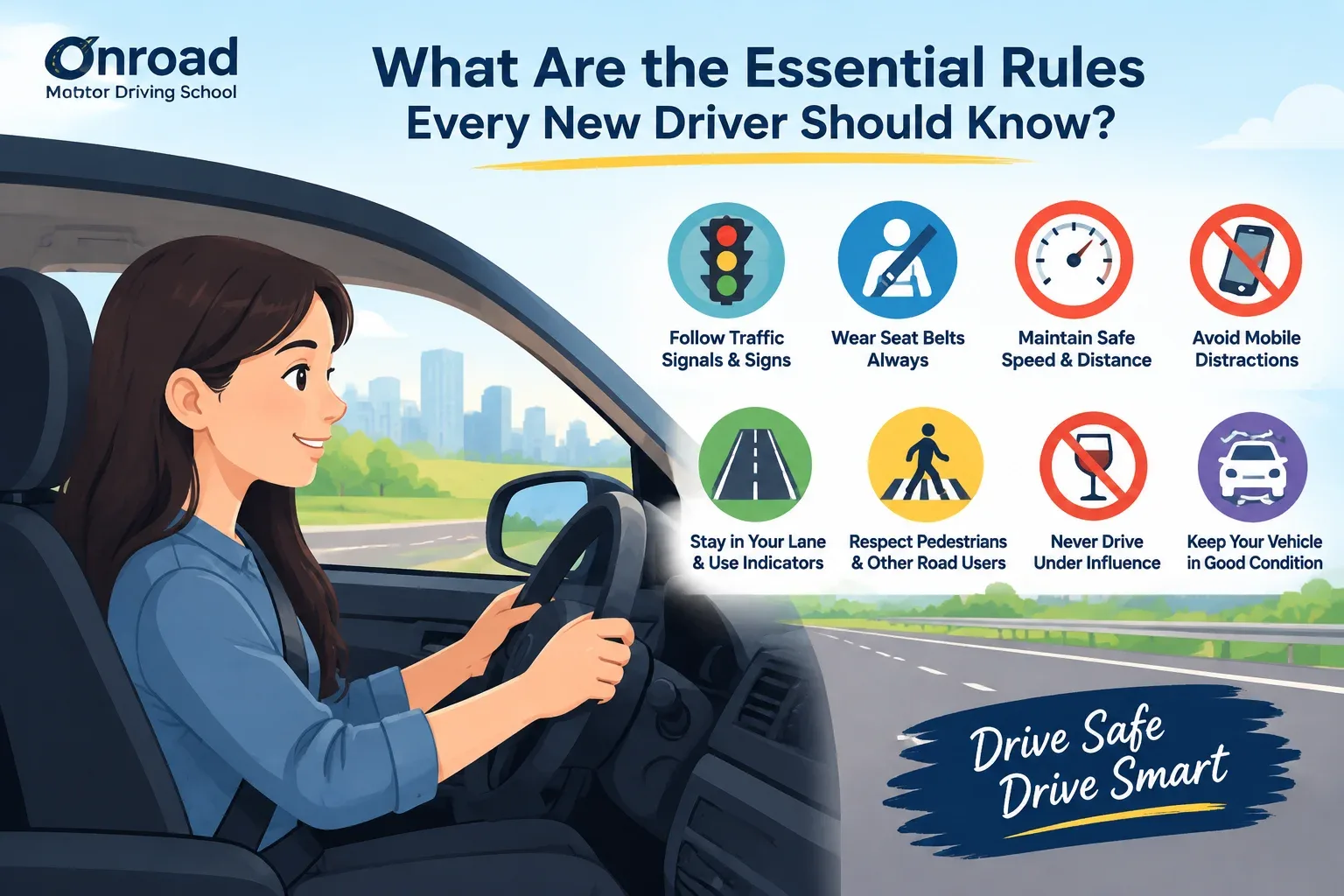
Learning to operate a motor vehicle is a major accomplishment; however, becoming a safe operator takes more than just being able to use a vehicle. To become a safe operator, all beginning operators must learn about the rules of traffic, signs on the road, speed limits, and defensive driving methods. By following these basic driving rules, new operators can help prevent collisions, protect their passengers and gain confidence while operating a motor vehicle.
In order for those who are going to be driving on their own, it is necessary to know the rules of how people use the roads safely in India. Having regular practice and taking driving lessons from professionals can assist beginners in learning what responsibilities come with being a safe driver.
Understanding Traffic Signals and Road Signs
The understanding of traffic signals is an essential driving rule for new drivers. A red light means a driver has to come to a complete stop, whereas a green light permits a driver to proceed if there are no obstacles on the road. A yellow signal indicates that a driver needs to be ready to stop when they can safely do so.
Learners need to know what a stop sign looks like, as well as no-entry signs, speed limit signs, crosswalks for pedestrians, and one-way streets. By obeying all traffic signals and road signs you can avoid accidents and drive safer. Learning from a professional driver will allow beginners to learn about road signs and make proper choices based on the current situation of the traffic.
Wearing Seat Belts for Every Journey
The simple act of wearing a seatbelt is the most fundamental principle of driving safely. A seatbelt can protect you from suffering severe injuries if you are involved in an accident that causes your vehicle to stop abruptly or collide with another object. All drivers should make sure that all of their passengers wear seatbelts when they are supposed to do so according to local laws.
Prior to turning on the engine of the vehicle, you should adjust both your driver’s seat and all of the mirrors so that you have an unobstructed view of what lies ahead on the roadway. You should then buckle your seatbelt, and verify that any other occupants in the vehicle are correctly secured.
Maintaining Safe Speed and Distance
Every new driver must learn how to control their speed. When you go too fast, you lose the ability to react quickly and it becomes much harder to keep control of your car. It is important to always stay within the speed limits that are posted on the side of the road, and to change your speed based upon the flow of traffic, the weather, what you can see, and the state of the roads.
Extra caution should be taken when driving on residential streets, school zones, busy markets, and narrow roads. To allow yourself sufficient time to respond to a sudden stop in the flow of traffic, maintain a safe separation between you and the vehicle in front of you. When it is raining or you are experiencing poor visibility conditions, increase the amount of space between you and the vehicle in front of you to enhance safety.
Avoiding Mobile Phone Distractions
Using a mobile phone while driving will take your attention away from potential hazards on the road. When you use your mobile device to check messages, answer calls, or adjust the settings for GPS while driving, you are taking your focus off the road which can lead to higher chances of having an accident.
Begin your trip with a pre-planned route and put down your cell phone. When it is necessary to use your phone (to call someone) or find a new direction, pull over in an area that is safe and legal to park.
Following Lane Discipline and Using Indicators
Beginner drivers need to keep themselves in their designated lanes, minimize the number of times they change lanes, and use turn signals when making turns or moving into another lane to maintain smooth traffic flow and decrease the risk of collisions.
Always look in your mirrors and check your blind spots when you want to make a turn. When making a lane change, indicate what you intend to do, and provide enough space for other drivers to react. Please remember, indicating does not mean that you have a “right-of-way.” Learning to use your mirrors and indicators correctly will help you to learn where your car is relative to others around it.
Protecting Pedestrians and Other Road Users
Pedestrians, cyclists and motorcycle riders are all at-risk on our roads. Beginning drivers should pay close attention to pedestrians while driving in school zones, residential neighborhoods, intersections, and pedestrian crosswalks. Drive slower when you approach a pedestrian crossing and allow pedestrians the right of way if that is what is stated in the applicable traffic laws.
Children and pedestrians can come out of nowhere when you are driving past parked cars. Do not drive aggressively, and only use your horn if it is absolutely necessary. Driving responsibly takes patience, observation, and awareness.
Never Driving Under the Influence
Drinking when you have consumed either alcohol or other drugs that impair your ability to drive makes everyone on the road unsafe. Alcohol impacts an individual’s ability to concentrate, coordinate actions, react quickly, and make decisions. In India, there are specific laws regarding driving under the influence (DUI). These laws establish maximum levels of blood alcohol content that drivers may have in order to operate a motor vehicle. Violations of these laws can lead to severe penalties.
It is important to avoid drinking alcohol prior to operating a motor vehicle and to refrain from driving if you are tired or taking prescription drugs that may affect your level of awareness. Responsible driving requires focus and quick responses to unforeseen circumstances.
Practising Defensive Driving Techniques
Defensive driving is about being aware of potential dangers on the road prior to those dangers becoming a crisis. Always watch ahead of you, be aware of what other drivers are doing and leave yourself enough distance to react properly. Don’t do dangerous things like overtake at high speed, sudden braking and aggressive driving.
When you approach an intersection, watch for cars coming toward you and people walking around. Stay calm, don’t get mad at other driver’s mistakes. Practicing on a regular basis with a qualified driving instructor will help you develop better road awareness, judgement, and confidence.
Learn Safe Driving with Onroad Motor Driving School
The basics of on-road driving are built upon a firm grasp of traffic regulations. However, practical application will help build confidence. Onroad Motor Driving School provides students with opportunities to gain basic driving skills, enhance their ability to control vehicles, practice parking techniques and increase their knowledge of road safety.
The way to build confidence as a driver is through regular practice and the help of professionals. No matter if you’re a new driver or want to be able to drive alone, contact Onroad Motor Driving School to find out what driving lessons they offer and begin your journey to becoming a better, safer driver.